

Uzbekistan wants to introduce a mandatory deposit for bottles and cans
Beverage buyers in Uzbekistan may start paying a deposit for plastic and glass bottles, as well as aluminum cans. The money will be refunded after the empty containers are returned. The authorities propose making such a system mandatory, as voluntary packaging collection has not been implemented in practice.
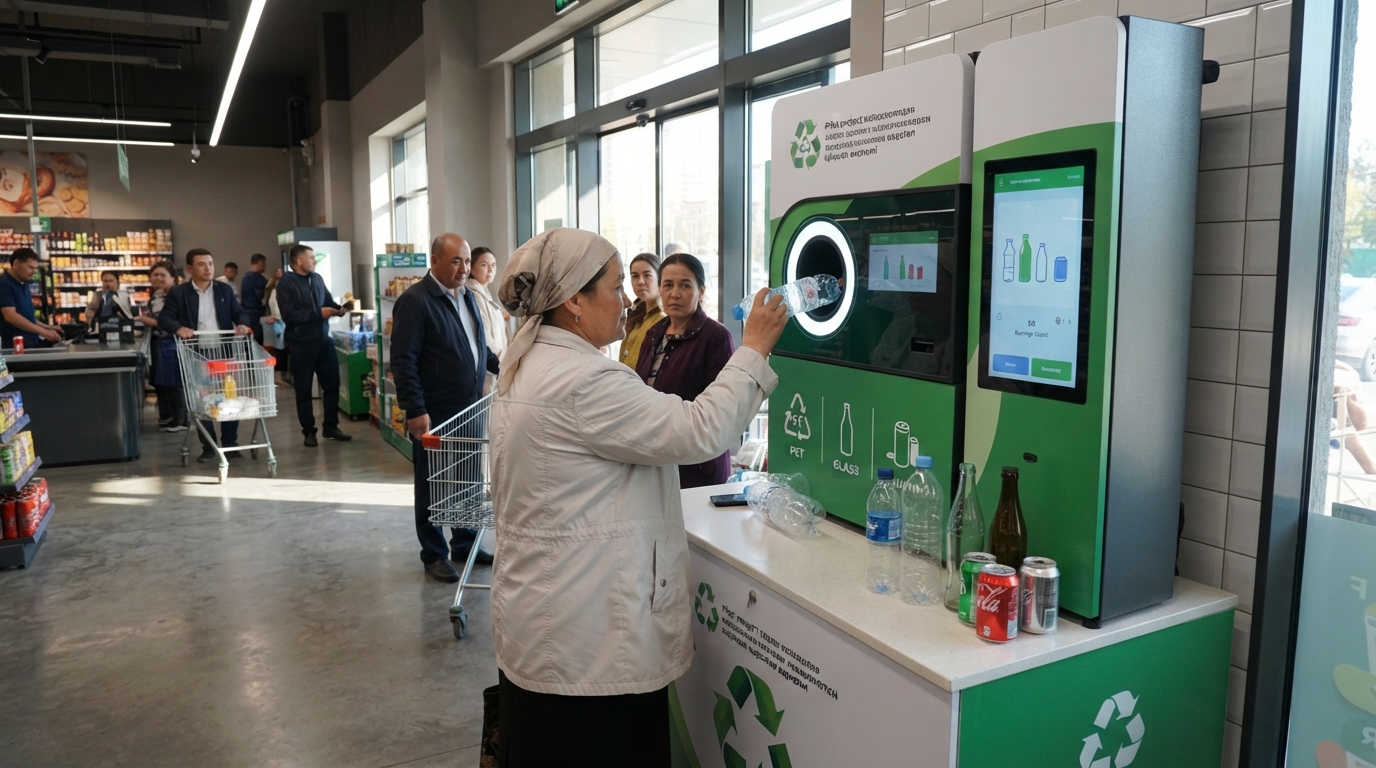
Uzbekistan intends to introduce a mandatory deposit for bottles and cans
In Uzbekistan, it was proposed to introduce a mandatory deposit-return system for plastic and glass bottles, as well as aluminum beverage cans. This was announced on October 20 at a meeting of the Legislative Chamber of the Oliy Majlis by Iskandar Kutbiddinov, Deputy Chairman of the National Committee for Ecology and Climate Change, while presenting the draft of the new edition of the law "On Waste."
According to him, the current system does not create sufficient economic incentives for the separate collection of packaging.
"It is necessary to introduce a mandatory deposit system for plastic and glass bottles, as well as aluminum beverage cans. The voluntary scheme has not been implemented in practice, and the recycling rate for such waste remains low — just 6.2%," he stated.
A deposit system means that a deposit for the packaging is included in the price of the product, which the buyer can get back after returning the empty container to a special collection point. For example, in some European countries, plastic and glass bottles can be returned through reverse vending machines installed in or near stores to reclaim the amount paid at the time of purchase. The packaging collected in this way is sent for recycling.
According to Kutbiddinov, this will help stimulate the separate collection of waste, increase the volume of raw materials for recycling, and reduce environmental pollution.
"Producers and trade organizations need to be provided with a phased transition period to create the appropriate infrastructure," he noted.
The meeting did not specify what the deposit amount would be, who would operate the system, where containers could be returned, or when the new rules might come into force.
It is also currently unclear in what form the mandatory deposit system is secured in the draft law approved by deputies in the first reading.
In September, the Waste Management and Circular Economy Development Agency, together with the Norwegian company TOMRA, launched a pilot project to accept used containers through special reverse vending machines — reverse vending machines.
On September 23, the first devices began operating in Tashkent and the Surkhandarya region. In the capital, one of the reverse vending machines was installed in front of the building of the National Committee for Ecology at 7A Bunyodkor Street, in the Chilanzar district.
The machines accept plastic and glass bottles, as well as aluminum cans. For each unit of container, a reward of 150 sums is provided, which can be received on an electronic wallet via the Click payment system or directed to charity.
If the pilot project proves effective, reverse vending machines are planned to be gradually installed in crowded public places in Tashkent and other regions.
At the same time, the current mechanism differs from the proposed deposit system: presently, residents receive a reward for returning used containers without paying a deposit when purchasing a beverage. The amount of the future deposit has not yet been announced.
The mechanism for returning used containers using deposits was previously included in the list of promising innovative projects provided for by the presidential decree of May 31, 2023.
In January 2025, the then Ministry of Ecology also proposed to gradually expand the responsibility of producers and importers of plastic products for the collection, sorting, and recycling of waste.
In particular, the department advocated for the mandatory recycling by non-alcoholic beverage manufacturers of 50% of the plastic packaging used by 2026, 75% by 2027, and 100% by 2028. These targets and deadlines were proposed by the ministry; however, at the meeting on October 20, it was not specified whether they are reflected in the new edition of the draft law.
The document presented to the deputies provides for the expansion of the responsibility of manufacturers and importers for waste from certain types of goods and packaging. In specified cases, it is also proposed to apply a recycling fee.
"This is aimed at reducing waste generation, stimulating recycling, and ensuring the participation of manufacturers and importers in covering waste management costs," Kutbiddinov explained.
According to the data he presented, 15.1 million tons of household waste were generated in Uzbekistan in 2025, but the share of its sorting was only 5.2%.
The representative of the department noted that a unified system connecting the separate collection of waste at the places of its generation with its transfer to recycling enterprises has not yet been formed in the country.
The new edition of the law "On Waste" consists of nine chapters and 60 articles. In addition to regulating packaging recycling, it provides for the classification of waste by degree of hazard, clarification of the responsibilities of state bodies and operators, new requirements for landfills and waste transfer stations, as well as changes in the financing of the industry.
On October 20, the Legislative Chamber approved the draft law in the first reading. For the new rules to come into force, the document must undergo further legislative procedures.