

Uzbekistan to increase hazardous waste recycling rate to 20% by 2030
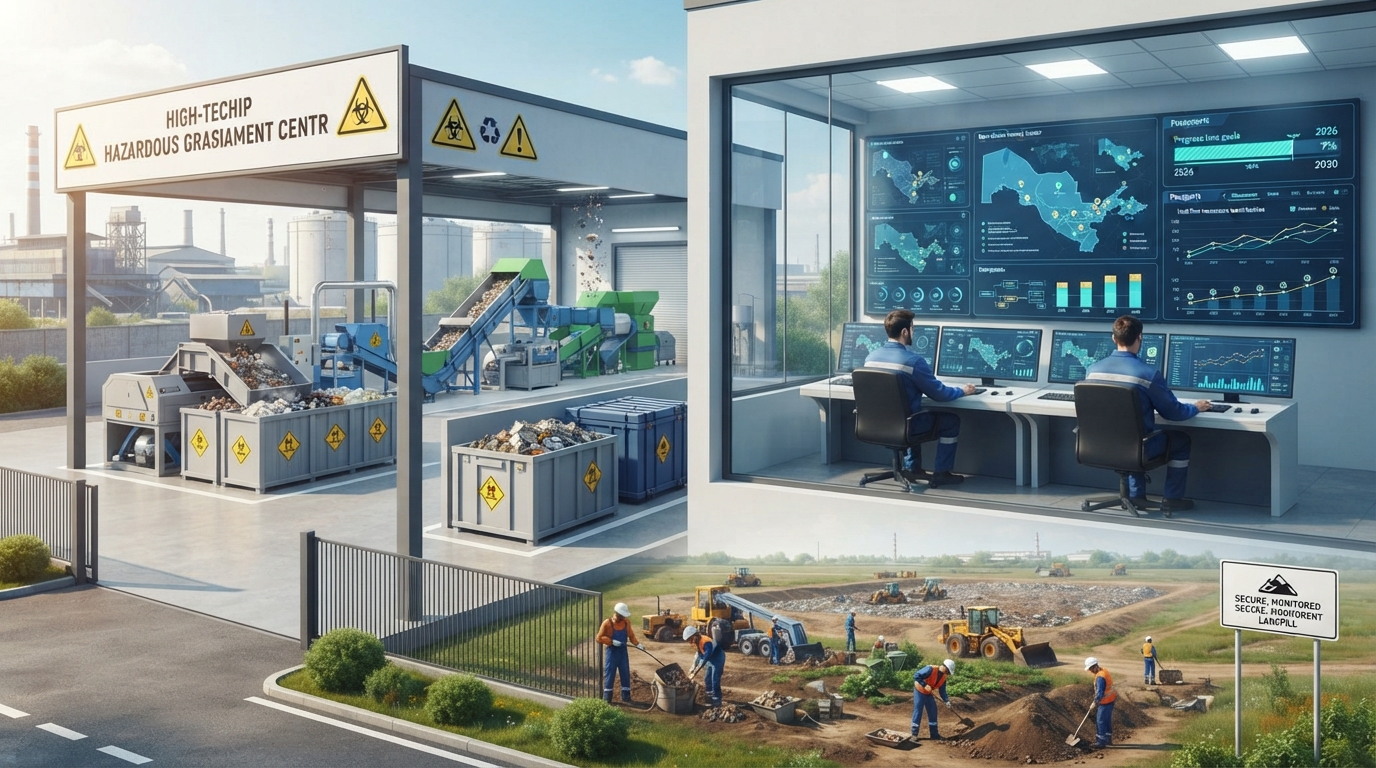
By 2030, Uzbekistan plans to increase the level of hazardous waste recycling to 20 percent. This is stipulated in the Presidential Decree “On Measures to Increase the Efficiency of Hazardous Waste Management”.
According to the document, one of the main priorities is to increase the volume of recycling of radioactive and chemically hazardous waste of hazard classes I–IV generated at mining, metallurgy, chemical industry, oil and gas and power plants, and to safely and minimally dispose of non-recyclable waste.
In accordance with the resolution, starting from January 1, 2027, organizations generating hazardous waste will develop annual plans agreed with the territorial departments of the Agency for Waste Management and Circular Economy Development based on the conclusion of an environmental expert examination. These plans provide for measures to reduce the volume of waste, increase the share of recycling, and transfer it only to specialized organizations with the appropriate authority and infrastructure for neutralization, utilization or burial. Enterprises with the appropriate infrastructure and authority will be allowed to carry out these works independently.
Also, starting from October 1, 2026, enterprises generating hazardous waste will form statistical reports at the end of the year and submit them to the territorial departments of the agency. In addition, at the end of each quarter, by the 20th of the following month, they will enter the annual plan indicators and information on the volume of waste generated and their further movement into the agency's information system. Control over the implementation of these requirements will be carried out by the State Environmental Control Inspectorate under the National Committee for Ecology and Climate Change - Ecopolice.
By the resolution, the Hazardous Waste Management Directorate will be established within the Agency for Waste Management and Circular Economy Development under the National Committee for Ecology and Climate Change. Also, the Republican Center for Radioactive Waste Storage under the Institute of Nuclear Physics of the Academy of Sciences will be transferred to the agency system.
In addition, special facilities decommissioned will be transferred to the Agency free of charge, along with the necessary funds for their ecological restoration. A separate extra-budgetary treasury account will be opened for the Directorate, and funds will be directed to the reclamation of facilities and long-term monitoring.
The resolution also pays special attention to the digitalization of hazardous waste management. The National Committee for Ecology and Climate Change will launch a special information system by January 1, 2027. Through the system, a digital passport will be created for waste of hazard classes I–III, and the process from their generation to disposal will be monitored in real time.