

Uzbekistan studied Kashgar's customs infrastructure
A representative of the Customs Committee of Uzbekistan examined the operation of the customs zone, logistics infrastructure, and cross-border trade in Kashgar.
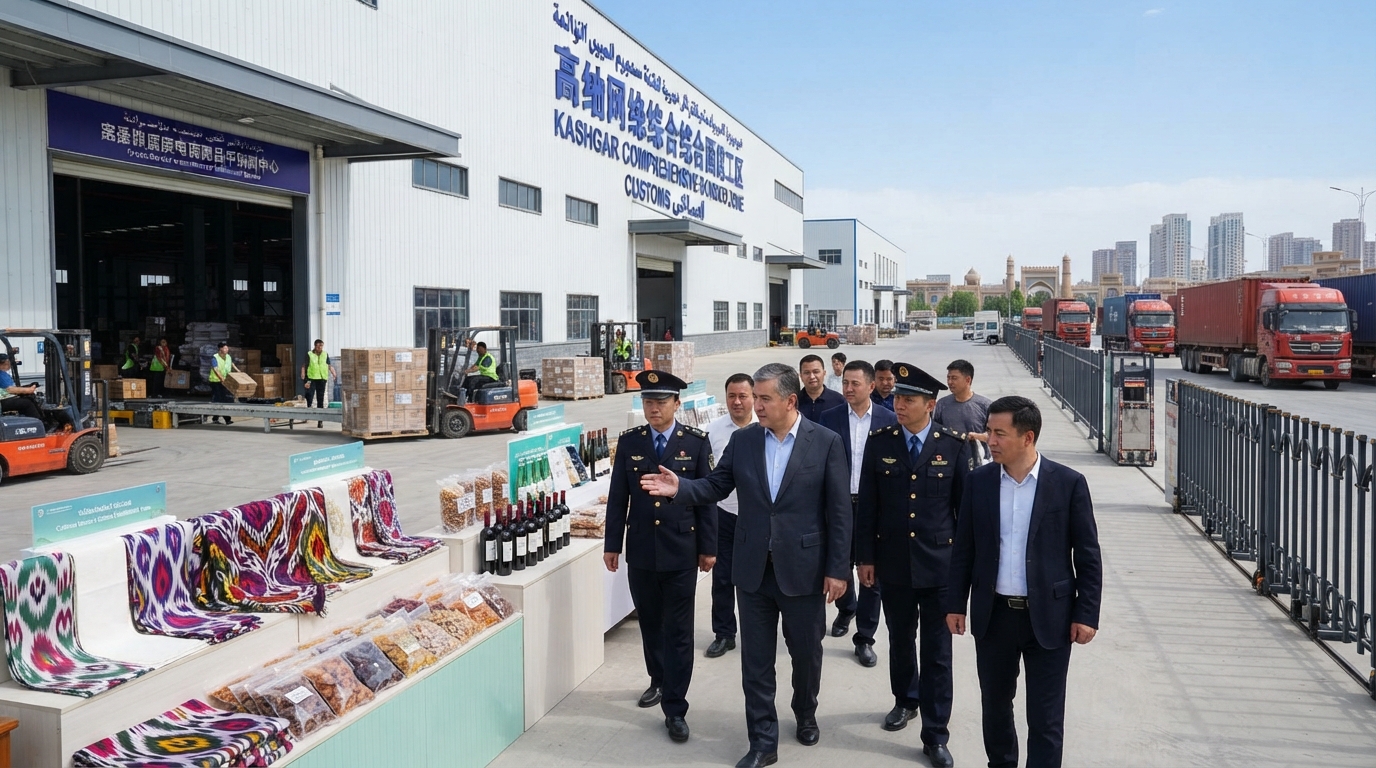
K. Kadirov, a representative of the Customs Committee of the Republic of Uzbekistan in China, inspected the customs, logistics, and cross-border trade infrastructure in Kashgar, located in the Xinjiang Uyghur Autonomous Region.
During the visit, special attention was paid to the Kashgar Comprehensive Customs Zone and prospects for promoting Uzbek goods in the regional market.
The Kashgar Comprehensive Customs Zone is a key element of the city's foreign trade and logistics system, particularly in the western direction. It provides conditions for the storage of goods under customs control, logistics operations, processing, international trade, and cross-border e-commerce.
The zone offers approximately 500,000 square meters of production and warehouse space, housing more than 670 enterprises. In addition to trade and logistics activities, export-oriented manufacturing is actively developing here, including electronics assembly and food and textile processing.
The Kashgar Customs Clearance Center employs 38 employees responsible for processing customs declarations, including operations related to border customs posts. This center also houses services integrated into the Single Window system, as well as representatives of the integrated customs zone and logistics sector.
During the visit, the infrastructure for cross-border e-commerce was also examined. Specifically, the processes of receiving, identifying, sorting, temporary storage, and preparing goods for export were reviewed.
Special attention was paid to the Kashgar Exhibition and Trade Center for Import and Export Goods for Cross-Border E-Commerce. This center displays and stores foreign products, offering the option to view them offline and order them online. Currently, over 3,000 products are on display.
The Customs Committee representative also viewed an exhibition of products from Uzbekistan. Opportunities were considered for displaying and storing Uzbek goods in Kashgar, as well as selling them through both traditional trade channels and cross-border e-commerce.