

Uzbekistan strengthens measures to prevent the transmission of zoonotic pathogens in protected natural areas
Reducing the risk of zoonotic pathogen transmission in protected and conserved areas requires coordinated action from the conservation, veterinary, and public health sectors. In order to strengthen the relevant capacity, a practical training on the "One Health" approach and biosecurity was held in Tashkent on September 21–22, bringing together protected area specialists, as well as experts in wildlife, livestock, health [...]
Uzbekistan strengthens measures to prevent zoonotic pathogen transmission in protected areas
Reducing the risk of zoonotic pathogen transmission in protected and conserved areas requires coordinated action from the conservation, veterinary, and public health sectors. To strengthen the relevant capacity, a practical training on the One Health approach and biosecurity took place on September 21–22 in Tashkent, bringing together protected area specialists, as well as wildlife, livestock, ecosystem, and human health experts from across Uzbekistan.
Zoonotic disease transmission occurs when a pathogen spills over from a wild or domestic animal to a human. Reducing the likelihood of such transmission requires understanding and managing risks at the interfaces where wildlife, livestock, humans, and the environment interact, in line with the One Health approach.
"Nature conservation is an essential part of the One Health approach. By maintaining the health of ecosystems and wildlife populations, and by better understanding where and how wildlife, livestock, and humans interact, we can help prevent and reduce the risk of zoonotic disease transmission," said Dao Nguyen, Senior Programme Manager, IUCN Species Conservation Action. "Protected areas, and the people who manage and study them, play a key role in linking biodiversity conservation efforts with broader health security."
As part of its national One Health prioritization process, Uzbekistan has identified eight priority zoonotic diseases: Crimean-Congo hemorrhagic fever, anthrax, rabies, brucellosis, zoonotic tuberculosis, plague, influenza, and echinococcosis. During the training, these and other country-relevant examples were used to examine potential disease risks at the human-animal-environment interface, as well as the role of protected area staff in identifying and communicating these risks.
"People working directly with wildlife—such as rangers, inspectors, and researchers—are often the first to notice unusual animal behavior, signs of disease, or mortality events. Strengthening their capacity to recognize risks, document observations, and promptly report them to the relevant authorities can make a vital contribution to early warning and coordinated response," said Elena Bykova, Senior Researcher at the Institute of Zoology of the Academy of Sciences of the Republic of Uzbekistan. "Sometimes we, as practitioners and researchers, underestimate the risks of zoonotic pathogen transmission and may overlook important biosecurity measures in our daily work. Trainings like this are crucial because they help us better understand the risks we face, raise awareness, and ensure that practicing good biosecurity becomes an integral part of our daily routine," Bykova noted.
The training was attended by about 20 participants, including rangers, inspectors, and researchers from the Saigachy Comprehensive Landscape Draft Reserve, the Southern Ustyurt National Nature Park, the Chatkal State Biosphere Reserve, and the Zarafshan National Nature Park. They were joined by representatives and experts from the National Committee of the Republic of Uzbekistan on Ecology and Climate Change, the Institute of Virology, the Institute of Zoology of the Academy of Sciences of the Republic of Uzbekistan, and the Agency for Livestock and Pasture Development under the Ministry of Agriculture of the Republic of Uzbekistan.
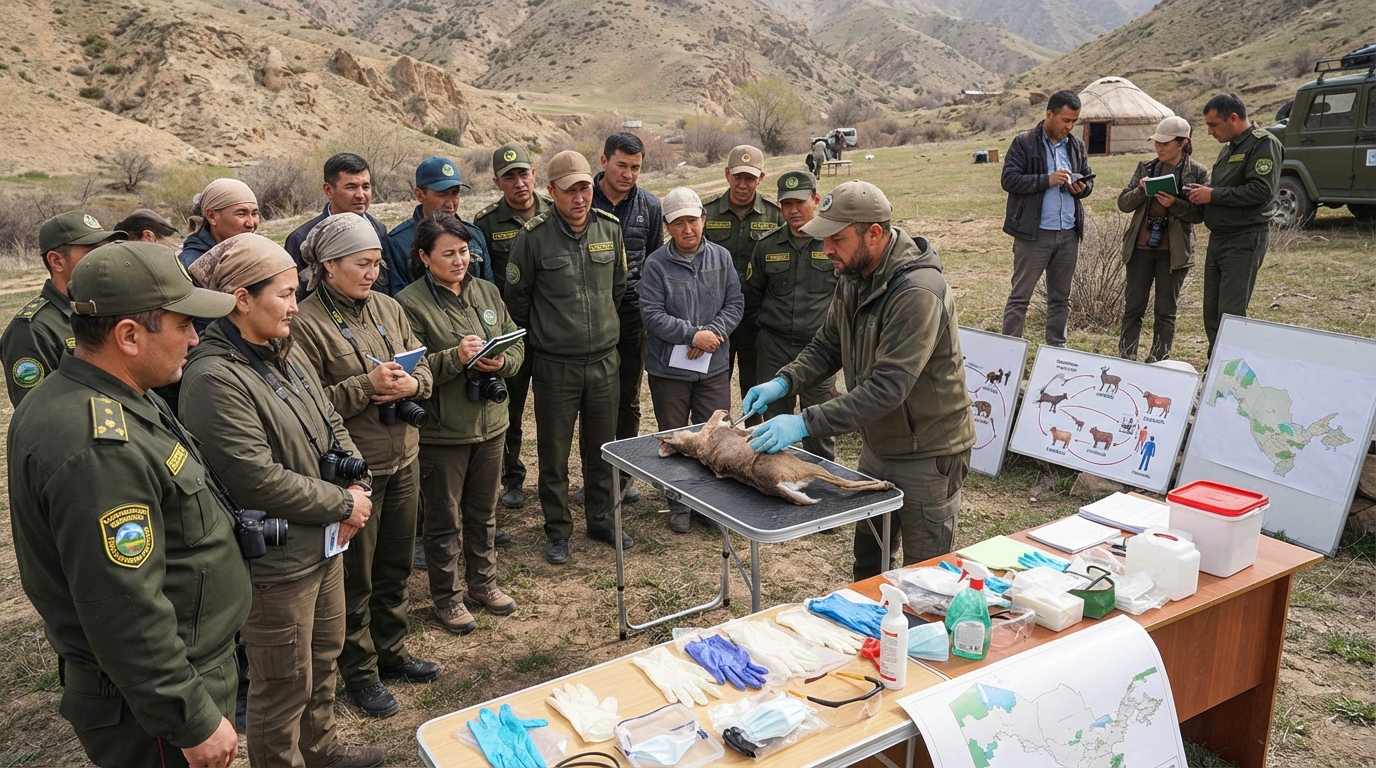
Through technical sessions, practical exercises, and realistic scenarios, participants addressed biosecurity, safe animal handling, surveillance and early warning, outbreak investigation, and wildlife disease risk analysis, as well as sustainable tourism and community engagement. Practical sessions included the selection and safe use of personal protective equipment, as well as risk assessment of wildlife mortality events. Participants also learned about relevant IUCN guidelines on the One Health approach and their practical application in protected and conserved areas. "I am very glad that the training on One Health and biosecurity was held in Uzbekistan, as it addresses issues of great importance for both local communities and nature conservation. Our park has an elongated shape, is unfenced, and borders residential areas, from where livestock can enter the park territory and interact with wild animals. We also face the problem of stray dogs, which can pose a risk of disease transmission. I hope this training will strengthen our capacity to manage these risks and contribute to improving the health of ecosystems, wildlife, and local communities," said Aleksandra Zaslavskaya, researcher at the Zarafshan National Park.
"Reducing the risk of zoonotic pathogen transmission is most effective when everyone understands both their own role and when to involve other specialists," said Dr. Mark Valitutto, wildlife veterinarian and biosecurity specialist, One Health science, who conducted the training. "A protected area staff member might be the first to notice something unusual, a veterinary specialist can investigate the potential implications for animal health, and public health professionals can assess the potential risks to humans. Our goal is to ensure that information is shared quickly and safely with those best equipped to respond."
At the conclusion of the training, participants developed One Health action plans for their respective protected areas. Drawing on the results of a field exercise and the knowledge gained over the two days, they identified practical measures to strengthen surveillance, manage potential spillover risks, and improve coordination among conservation, research, and biosecurity professionals.