

Uzbekistan seeks new sources of gasoline and diesel supplies due to risks of import disruptions
Uzbekneftegaz is discussing supplies of gasoline, diesel fuel, oil, and gas condensate with China's CNPC. The company stated the need to diversify imports to supply the domestic market. Earlier, gasoline supplies to Uzbekistan dropped sharply amid attacks on oil refineries in Russia.
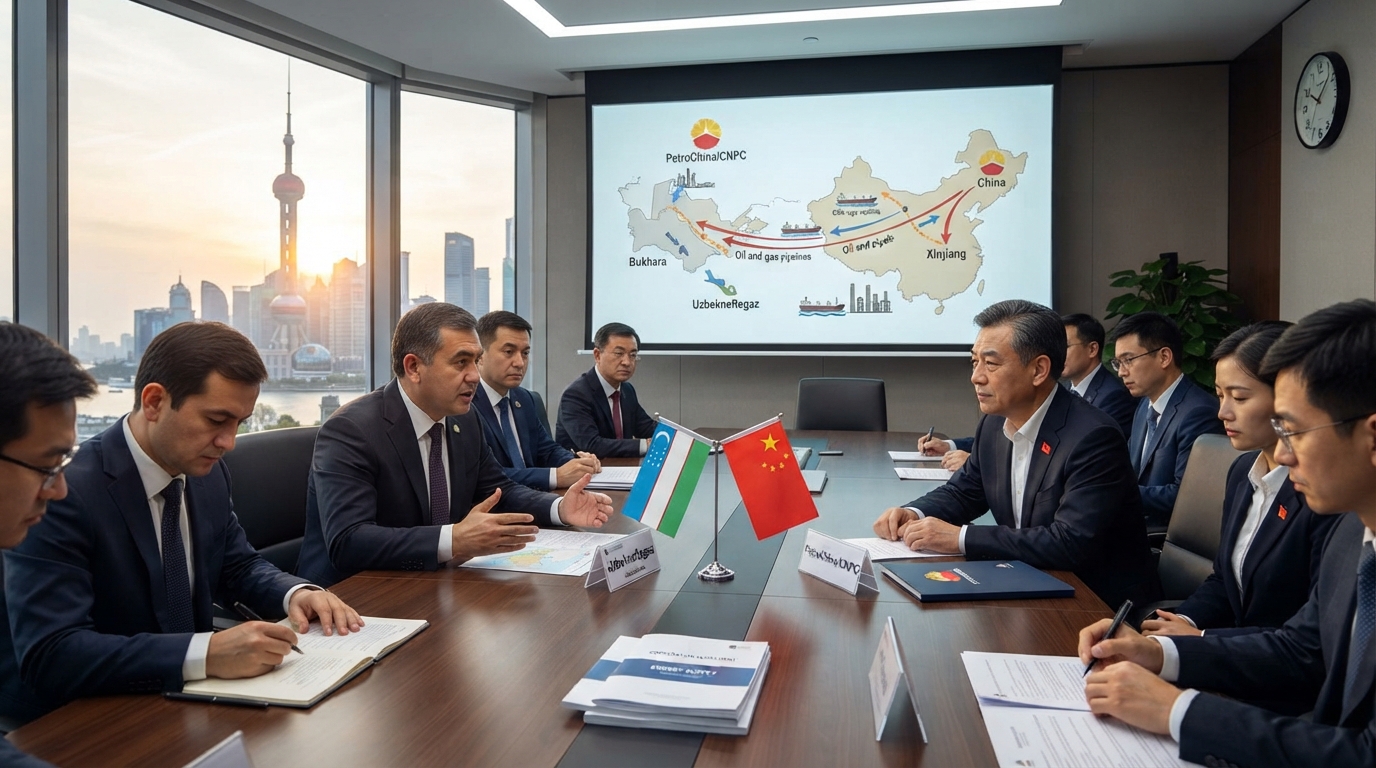
Uzbekistan searches for new sources of gasoline and diesel fuel supplies due to risks of import disruptions
Uzbekneftegaz is conducting negotiations with Chinese companies on supplies of AI-92 gasoline and higher, diesel fuel, as well as on increasing imports of crude oil and gas condensate for processing at the Bukhara Oil Refinery.
Farid Muminov, Deputy Chairman of the Board of Uzbekneftegaz, announced this at a press conference on October 27.
According to him, the company is studying new fuel procurement destinations to reduce dependence on current supply channels and guarantee a stable supply to the domestic market.
"Today, there are various risks associated with the stable provision of petroleum products to the population. To eliminate these risks and prevent their occurrence, we are considering the diversification of imports," Muminov stated.
He specified that negotiations are underway, including with PetroChina, a subsidiary of the China National Petroleum Corporation (CNPC).
"We held talks with PetroChina. We discussed the supply of petroleum products — gasoline and diesel fuel, as well as increasing imports of crude oil and condensate for processing at our Bukhara Oil Refinery," the deputy chairman of the company reported.
This primarily concerns gasoline with an octane rating of 92 and higher. Thus, the negotiations cover both the purchase of finished fuel for the domestic market and the supply of raw materials for its refining directly in Uzbekistan.
Muminov noted that the volumes of future supplies will depend on domestic demand. Negotiations are still ongoing.
When asked whether the diversification plans are related to the situation on the Russian fuel market, the company representative did not directly confirm such a dependency, limiting his explanation to the need to reduce risks in supplying the country with petroleum products.
On October 20, Abdugani Sanginov, Chairman of the Board of Uzbekneftegaz, held talks with a CNPC delegation led by its President Zhou Xinhuai.
The parties discussed the possibility of organizing long-term supplies of petroleum products for Uzbekistan's domestic market, expanding cooperation in the oil and gas sector, and accelerating the implementation of joint projects.
According to Uzbekneftegaz, the total volume of cooperation with CNPC has exceeded $1 billion. This amount includes import contracts, service operations, and joint projects, not just purchases of petroleum products.
The meeting also addressed geological exploration, well drilling, seismic surveys, improving gas production efficiency, digitalization, and the supply of modern equipment.
In these areas, Uzbekneftegaz cooperates with companies within the CNPC structure, including Xibu, BGP, CCDC, and CNLC.
Gasoline imports plummeted in the summer
Negotiations with Chinese companies are taking place against the backdrop of a decrease in gasoline supplies from abroad and an increase in its cost in Uzbekistan.
As Gazeta previously wrote based on data from the Customs Committee, in January–August 2026, Uzbekistan imported 721.5 million liters of gasoline — 41.2% more than in the same period last year. The cost of supplies grew even more significantly — by 48.6%, to $437.4 million.
However, after April, monthly imports fell sharply. While approximately 141.8 million liters of gasoline entered the country in April, the figure was 72 million in May, 50.7 million in June, 18.6 million in July, and only 11.4 million liters in August.
Thus, in August, the import volume proved to be more than 12 times lower than the April level. Compared to August of last year, supplies decreased by 76.8%.
At the same time, the average cost of imported fuel increased significantly. According to Gazeta's calculations, in April it was about $576 per 1,000 liters, and by August it reached almost $995. The increase over four months was about 73%.
The reduction in supplies was accompanied by rising gasoline prices on the domestic market. According to the National Statistics Committee, in August average gasoline prices rose by 1.9% month-on-month and by 20.2% year-on-year.
In September, the Ministry of Energy explained the sharp decline in imports by the shutdown of oil refineries in Russia. "85–90% of imports came from Russia. After the shutdown of oil refineries in Russia, the volume of imports indeed fell sharply," the agency reported.
At that time, the authorities were already working on alternative fuel supply routes, including Azerbaijan, Turkmenistan, and Belarus.
Russia also introduced restrictions on the export of gasoline and other petroleum products. However, as the Ministry of Energy previously stated, the bans should not apply to supplies to Uzbekistan under intergovernmental agreements.