

Uzbekistan proposes single digital platform for rail, air and bus travel
Tashkent Times is an English language online-newspaper that brings all latest Uzbekistan news
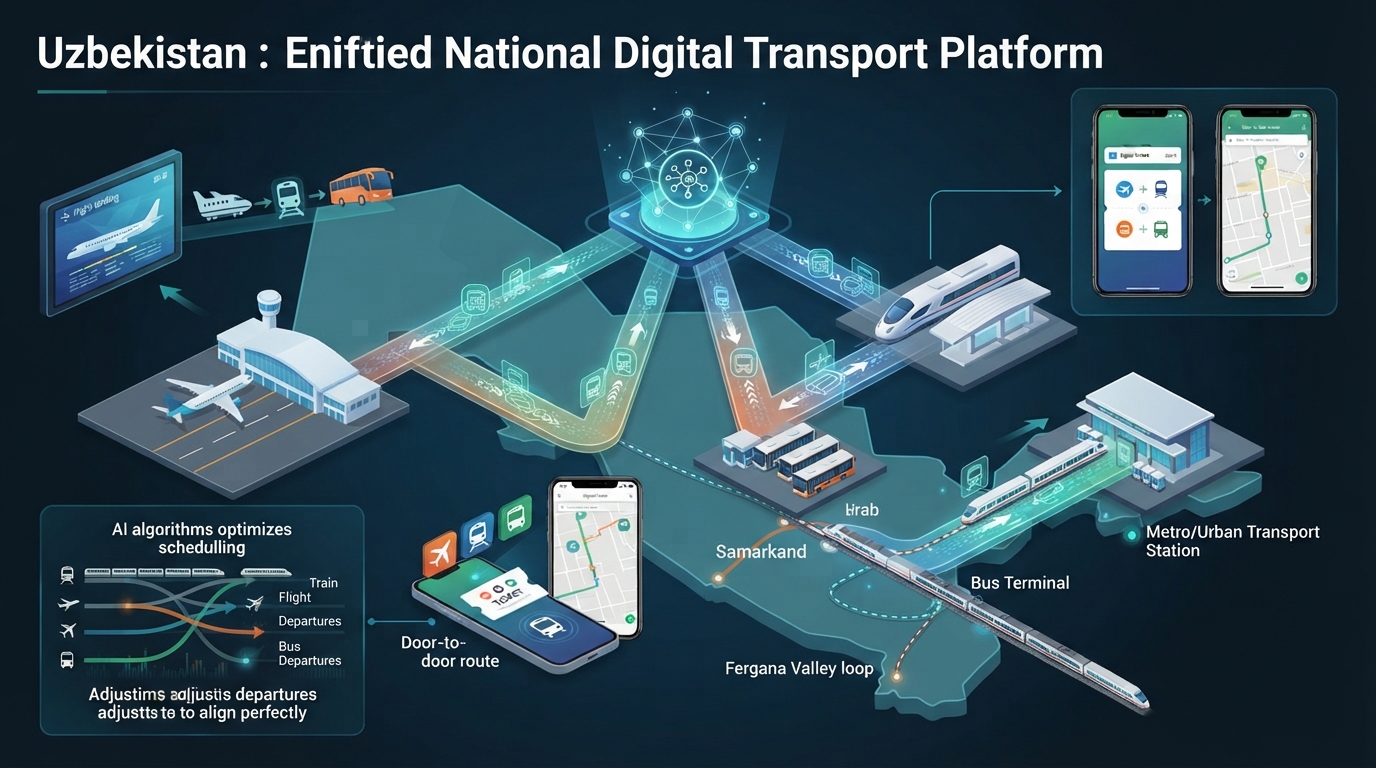
Uzbekistan has put forward a plan to launch a unified national digital transport platform, Bir Yol, starting Jan. 1, 2028, integrating rail, air, bus and urban public transport services, according to a draft resolution prepared by the Ministry of Transport.
The draft is open for public discussion until Nov. 11.
Under the proposal, passengers would be able to use the platform to check routes, timetables, ticket prices and seat availability. It also calls for door-to-door trip planning, with electronic tickets and transfer services organized through a single order and payment.
A pilot of the single-ticket system is scheduled to begin on July 1, 2027, on the Tashkent airport-Urgench airport-Khiva railway station route.
The draft also suggests aligning domestic flight schedules to provide smoother connections for travelers passing through Tashkent International Airport to other destinations in the country. The time between a flight’s arrival and the next departure would be optimized, while still accounting for airport operating procedures and aviation safety requirements.
Passengers in transit would be issued a single electronic ticket, checked in to their final destination, and have their baggage sent there without needing to collect it at the intermediate airport.
According to the document, train, air and road schedules would be adjusted with the help of artificial intelligence, and bus departure times would be coordinated with train and flight schedules.
These measures are part of a draft resolution approving a strategy through 2030 for the comprehensive development of domestic passenger transport by rail, air and road.
The same draft was previously reported to include extending high-speed electric train service on the Tashkent-Andijan route to Samarkand by the end of 2027, and increasing services on the Fergana Valley loop route twofold by the end of 2028.