

Uzbekistan presents tourism potential in Moscow, highlights MICE sector
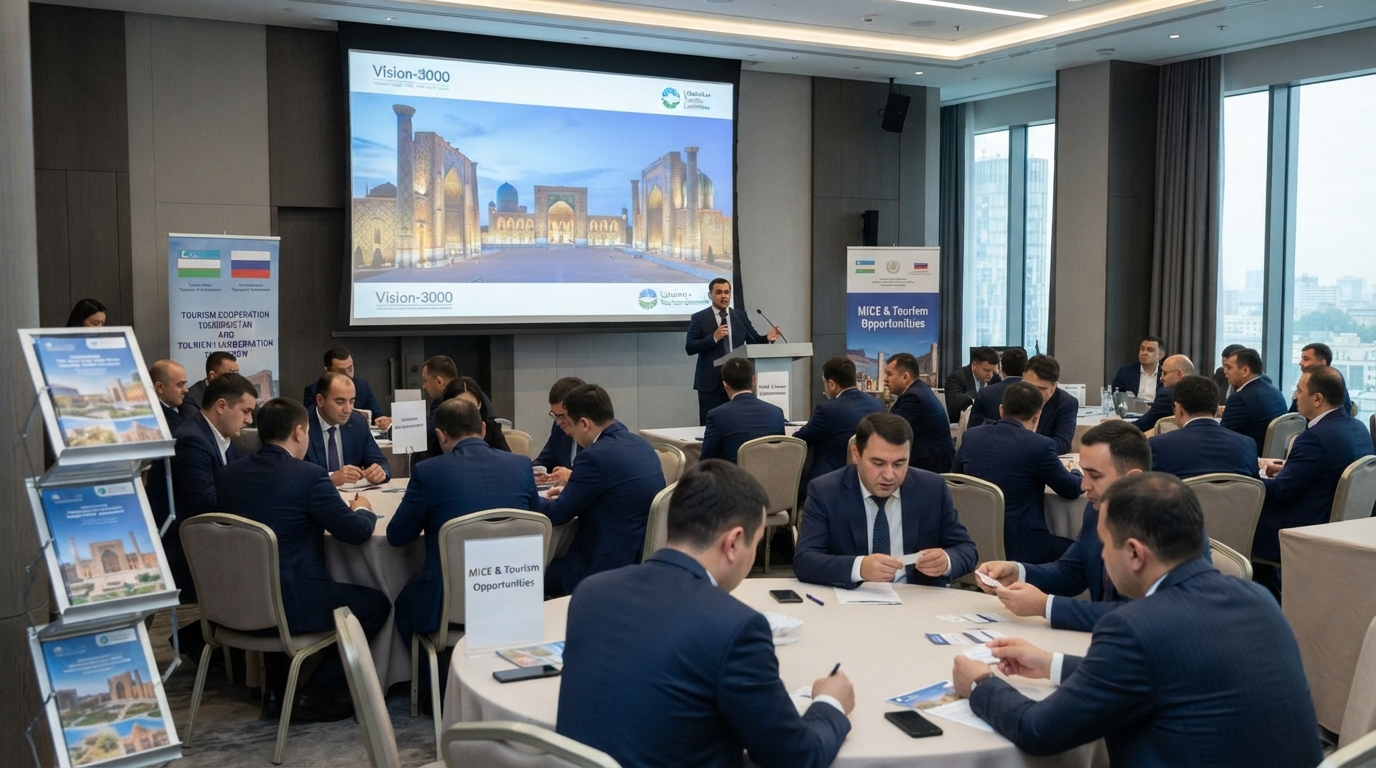
Uzbekistan showcases tourism potential in Moscow, puts spotlight on MICE sector
Uzbekistan’s tourism potential was showcased in Moscow at an event held on the initiative of the international discussion club Vision-3000, with representatives of Russian regions, tourism companies and media taking part in the meeting, UzA reports.
The presentation highlighted Uzbekistan’s historical and cultural heritage, key tourism destinations, tourism infrastructure and travel opportunities for Russian visitors. Participants were also informed about the growth of tourism ties between Uzbekistan and Russia and about measures intended to boost tourist flows. Statistics on visits by Russian tourists to Uzbekistan in the first seven months of the year were presented at the meeting, though no specific figures were included in the information released.
Among the factors supporting travel from Russia to Uzbekistan were direct air links between the two countries, visa-free travel, the lack of a major language barrier and Uzbek national cuisine. The presentation also covered opportunities for developing MICE — meetings, incentives, conferences and exhibitions — as well as pilgrimage and event tourism. Event tourism was illustrated with the Melon Festival held in Khiva on August 9. During the festival, the city received a certificate confirming a Guinness World Record for the largest melon tasting.
A major part of the Moscow presentation was devoted to Uzbekistan’s MICE tourism sector. Russian partners were given information about the 31st Tashkent International Tourism Fair, set to be held in the Uzbek capital from November 25 to 27. Details about the fair were shared with interested Russian organizations for further talks with its organizers about possible participation.
Participants also watched promotional materials prepared by the National PR Center under Uzbekistan’s Tourism Committee. The videos featured the country’s cultural and historical sites, tourism destinations and modern infrastructure. The presentation also included information about the recently built Center for Islamic Civilization in Tashkent, and participants were shown a tour of the complex as part of the materials introducing Uzbekistan’s tourism infrastructure and cultural attractions.
After the presentation, representatives of Russian regions, tourism companies and media exchanged contacts and discussed possible areas of cooperation. The talks included potential joint tourism and information projects between organizations from Uzbekistan and Russia. The Moscow event was intended to promote Uzbekistan as a tourism destination in the Russian market and to develop cooperation between tourism industry representatives from the two countries.