

Uzbekistan is preparing a transition to a national carbon regulation system
Uzbekistan discussed the implementation of an emissions trading system, the allocation of carbon allowances, and mechanisms to support industrial decarbonization.
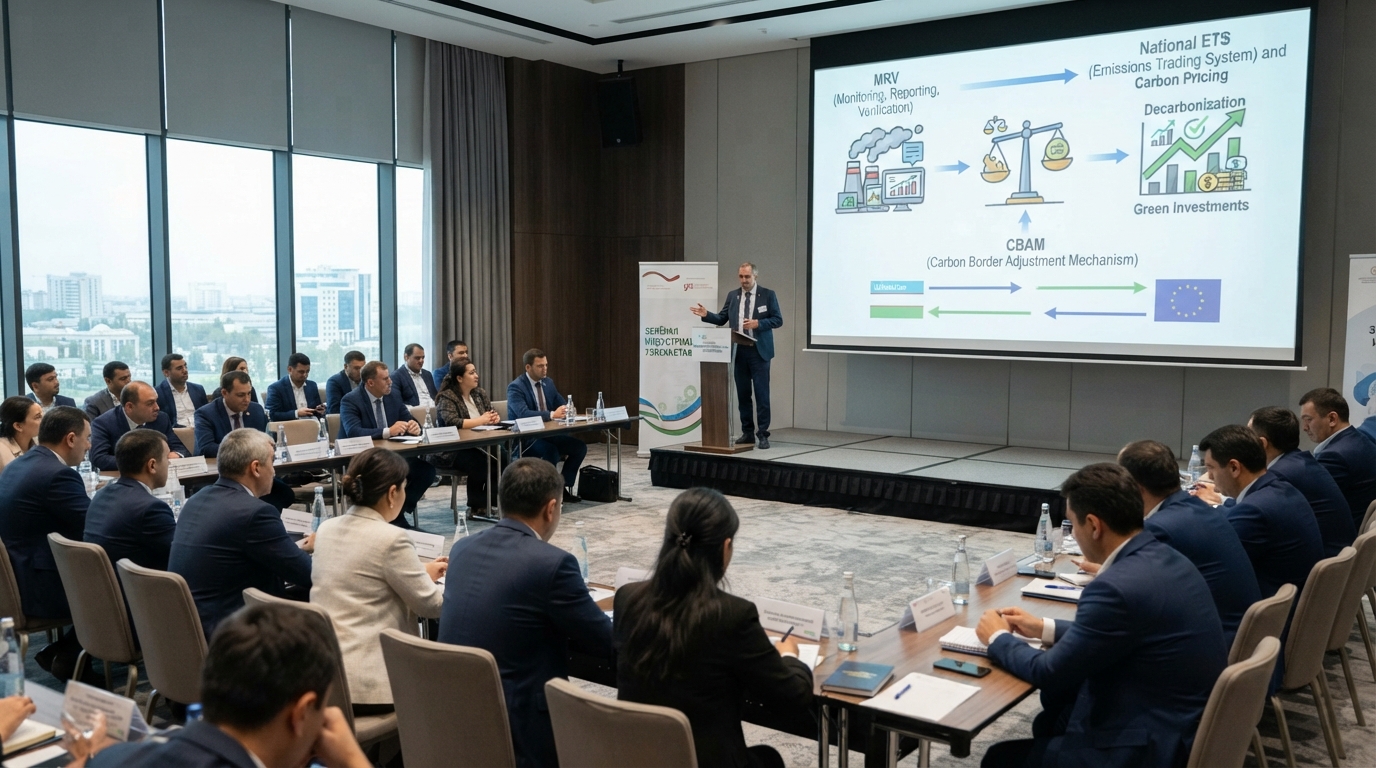
Uzbekistan prepares to transition to national carbon regulation system
Uzbekistan discussed the transition from the emissions monitoring, reporting, and verification (MRV) system to national mechanisms for carbon pricing and industrial decarbonization. A workshop on this topic was held on November 3 with the participation of representatives from ministries, government agencies, and industrial enterprises.
The event was organized by the Ministry of Economy and Finance of Uzbekistan, the Green Economy Project Center under the ministry, and the German Society for International Cooperation (GIZ) within the framework of the "Green Industrialization" project. Zsolt Lengyel acted as an international expert.
Participants focused their main attention on the practical application of the emissions trading system (ETS) and carbon pricing mechanisms to modernize industry, accelerate decarbonization, and fulfill Uzbekistan's national climate commitments (NDCs).
During the workshop, the experience of EU countries in implementing MRV systems and carbon regulation mechanisms was examined. Using the example of the German authority DEHSt, participants were shown the operational principles of emissions trading, database management, monitoring and independent data verification, as well as the allocation of allowances, including through auctions.
The differences between emission allowances and project-based carbon credits were addressed separately, along with methods to prevent double counting.
Participants also discussed opportunities to direct revenues from carbon pricing toward industrial decarbonization and the stimulation of green investments.
Another topic was the EU's Carbon Border Adjustment Mechanism (CBAM) and its impact on the competitiveness of Uzbek manufacturers, primarily companies producing mineral fertilizers and other export products. Measures to ensure that carbon payments remain within the country's economy were also discussed.
Following the workshop, the need to establish a reliable historical emissions database at the enterprise level was emphasized.
Such information should serve as the foundation for developing quota allocation rules and implementing national carbon pricing mechanisms.