

"Uzbekistan is a good example of an aviation photographer community." How the first Spotting Festival went
Centrum Air held a Spotting Festival, which brought together aviation photographers from Uzbekistan and abroad. Among them were the heads of the JetPhotos and Flightradar24 services. A representative of JetPhotos called the local community of spotters an example for others. He noted that shooting bans "do not help anyone."
"Uzbekistan is a good example of an aviation photography community." How the first Spotting Festival went
Uzbekistan's aviation photographer-spotters serve as a good example for their colleagues from other countries in terms of cohesion and mutual support. This was stated by Simon de Rudder, senior screener and one of the leaders of the world's largest aviation photo database.
This week, the Dutch expert arrived in Tashkent to take part in the first Spotting Festival, organized by Centrum Air airline jointly with JetPhotos and
In a number of countries, there is fierce competition among photographers: they do not share data on arrivals and interesting aircraft with each other, and they try to be the first to publish photos, de Rudder noted. In Uzbekistan, the situation is different.
"I think Uzbekistan is a good example of how an aviation photography community should work. You can feel the harmony here, spotters help each other and shoot together. And when some unique aircraft arrives, they agree on who will be the first to send the shot to JetPhotos. This is a good example of how a community works, and I think it is also visible in the quality of the photos," he said.
The spotter community of Uzbekistan stands out for its cohesion and hospitality.
In JetPhotos traffic statistics, Uzbekistan ranks 62nd in the world (the US is first, the UK is second). In September, 23 thousand visits to the site came from Uzbekistan.
"Honestly, I am surprised: I expected more. I believe that Uzbekistan has the potential to become more visible both on our website and on Flightradar services (which use aircraft photos from the JetPhotos database — ed.)," Simon de Rudder shared.
A representative of Gazeta at the meeting drew attention to a strange situation in the country: airlines welcome shooting their aircraft, as it is one of the ways of promotion, but law enforcement officers still stop photographers, many of whom are minors.
They are taken to the police station, asked why they are photographing airplanes, asked to delete photos, and required to write explanatory notes. At least two such cases occurred in the past week, and in both, there were foreigners among the spotters. At the same time, back in 2022, the government allowed aviaspotting with the formulation
"in order to form a positive image, increase the tourism potential and investment attractiveness of Uzbekistan, and increase the recognition of domestic airports and airlines among the international public."
De Rudder noted that although the situation today is better than before, such restrictions are harmful:
"Bans on photographing civil aircraft do not help anyone. Airlines rapidly entering your country bring tourists and spotters, thereby reviving the economy."
De Rudder assessed the spotting platform at Tashkent airport as well located, but too low — the fence gets into the frame. At the same time, he recalled that many airports in the world do not have such platforms at all, and it is important to maintain the benevolent attitude of the authorities toward this increasingly popular hobby.
"As an airline, we would also be glad if there were relaxations regarding spotters who shoot near airports," added Nikolay Koshkarev, Deputy Marketing Director of Centrum Air. "Personally, I dream that in airports across the entire post-Soviet space, such terraces and spotting platforms as in Zurich, Geneva, Munich, and many other cities will appear. I think we all need to wait a little longer."
In a conversation with Gazeta, de Rudder admitted that, like many foreign spotters, he is passionate about Soviet aviation. According to him, when spotters from Uzbekistan shoot, for example, an Il-76 that was not previously in the database, such shots often make it to the main page of the site. Spotters immediately shoot new aircraft of Uzbekistan airlines well in 90% of cases, he said.
He spoke about the approach to building the new Warsaw airport. According to him, he and other spotters were invited to discuss the project to find out where it would be convenient for photographers to shoot aircraft, taking into account sunlight and other parameters. De Rudder expressed hope that other airports would follow this example.
Previously, de Rudder considered spotting a dying hobby, but now he has changed his mind. He has been photographing planes himself since the early 2000s: starting with compact cameras and then moving to professional equipment. According to him, 10–15 years ago, older people mostly gathered at the platforms near the runway, and this caused him concern.
"I was standing at the Geneva airport among five gray-haired men over 50. They were only interested in old McDonnell Douglases, and they didn't care about the new Dreamliners and A350s. The cameras were just lying on the ground, they didn't even touch them. And I thought: this hobby will die, in 10 years only Dreamliners will remain — and it's all over. But today I see that many young people have come to spotting. It has become extremely popular, and our queue for photo screening confirms this," de Rudder said.
Every day, about 40 thousand aviation photos from all over the world are waiting to be screened, he reported. The average waiting time for a photo in the queue is 16 days. This sometimes causes complaints from spotters, but about 40 screeners working on a volunteer basis cannot review, check the accuracy of information, and approve photos faster, especially when it comes to new aircraft.
Brian Mendl-Lawrence, a spotter from Munich, has been spotting since 2009. In a conversation with Gazeta, he said that the arrival of young people in aviation photography is very good. At the same time, in his opinion, the community loses when people do not appreciate other people's shots.
"When I started spotting, there were no social networks and this 'who has what' thing. I'm glad that many young people are coming, it's a great hobby. But, in my opinion, the fun gets ruined when people don't appreciate what other spotters have caught. You have to understand that you will never catch everything. If someone has something special, just be happy for them," Mendl-Lawrence shared.
According to de Rudder, Flightradar24 management realized a few years ago that JetPhotos needed to be given more attention, as its popularity, as well as interest in the hobby, is only growing. Now the main task is to cope with the increasing flow of users while maintaining a close community spirit.
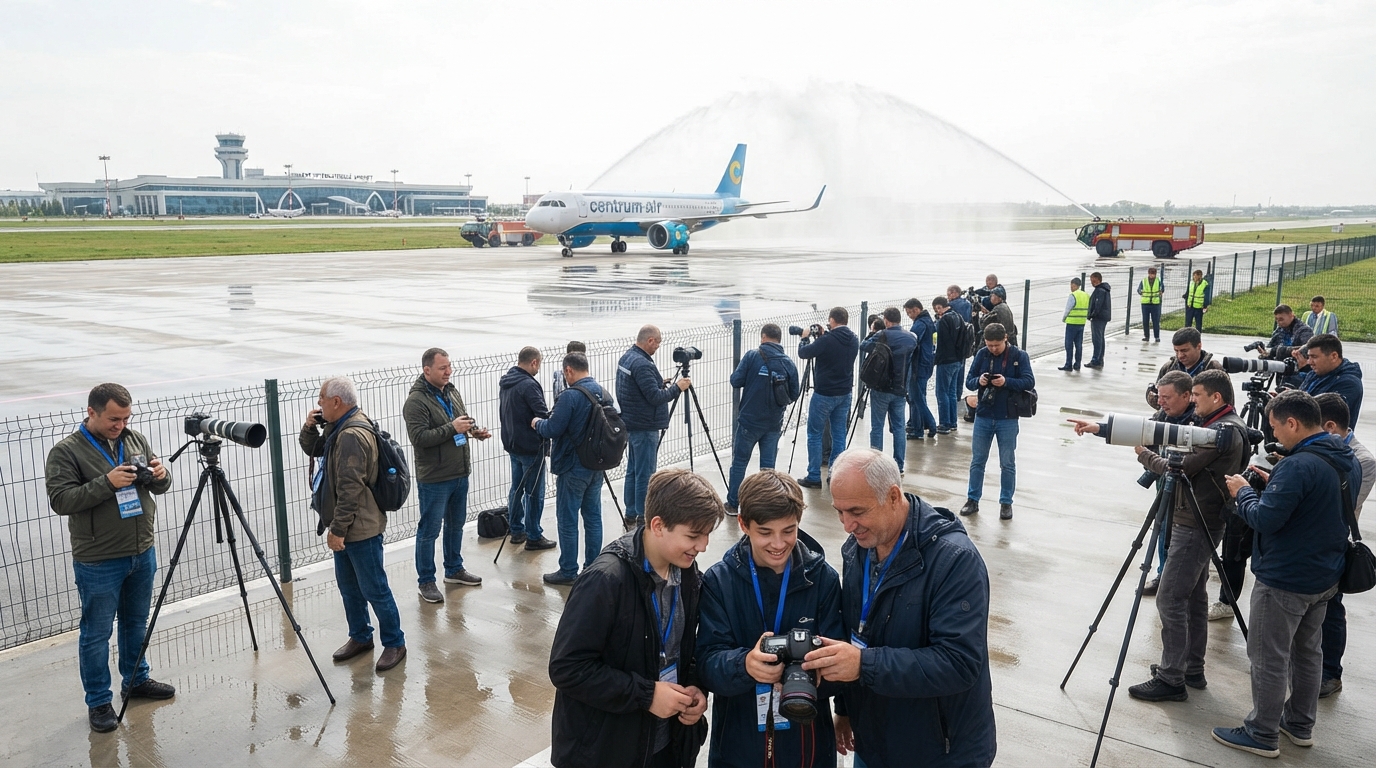
The Spotting Festival lasted two days and combined theoretical and practical parts. Spotters from different regions of Uzbekistan, as well as from neighboring and distant countries, came to the meeting.
While presentations and informal discussions took place on the first day, the participants spent the second day on the apron of Tashkent International Airport. They were joined by Flightradar24 co-founder Mikael Michal Robertsson from Sweden.
Despite the pouring rain, more than 20 photographers shot takeoffs, landings, and taxiing of aircraft for several hours. In addition, spotters gathered in separate groups on the third and other days to photograph airplanes and simply socialize.
Nikolay Koshkarev from Centrum Air reported that the airline switched to a soft low-cost carrier model in October and counts on close cooperation with the spotter community.
By 2029, Centrum Holding (which includes the cargo airline My Freighter) plans to increase its fleet to 100 aircraft. The holding currently has 26 aircraft, including 16 passenger and 10 cargo planes. Deliveries of A320neo and A321neo aircraft directly from the factory are expected in the near future, which, according to him, spotters will be able to photograph.
"As we are moving to a low-cost model, we are starting a new stage of work with micro-influencers, bloggers, and spotters. We want the spotter community to also join the team of brand ambassadors: shoot new aircraft, liveries, first flights, talk about them on their social networks together with us, support the company and all of Uzbekistan's aviation," Koshkarev noted.
By tradition, new aircraft are greeted with a water arch.