

Uzbekistan has proposed using AI to fight poachers and establishing a network of protected areas in Central Asia
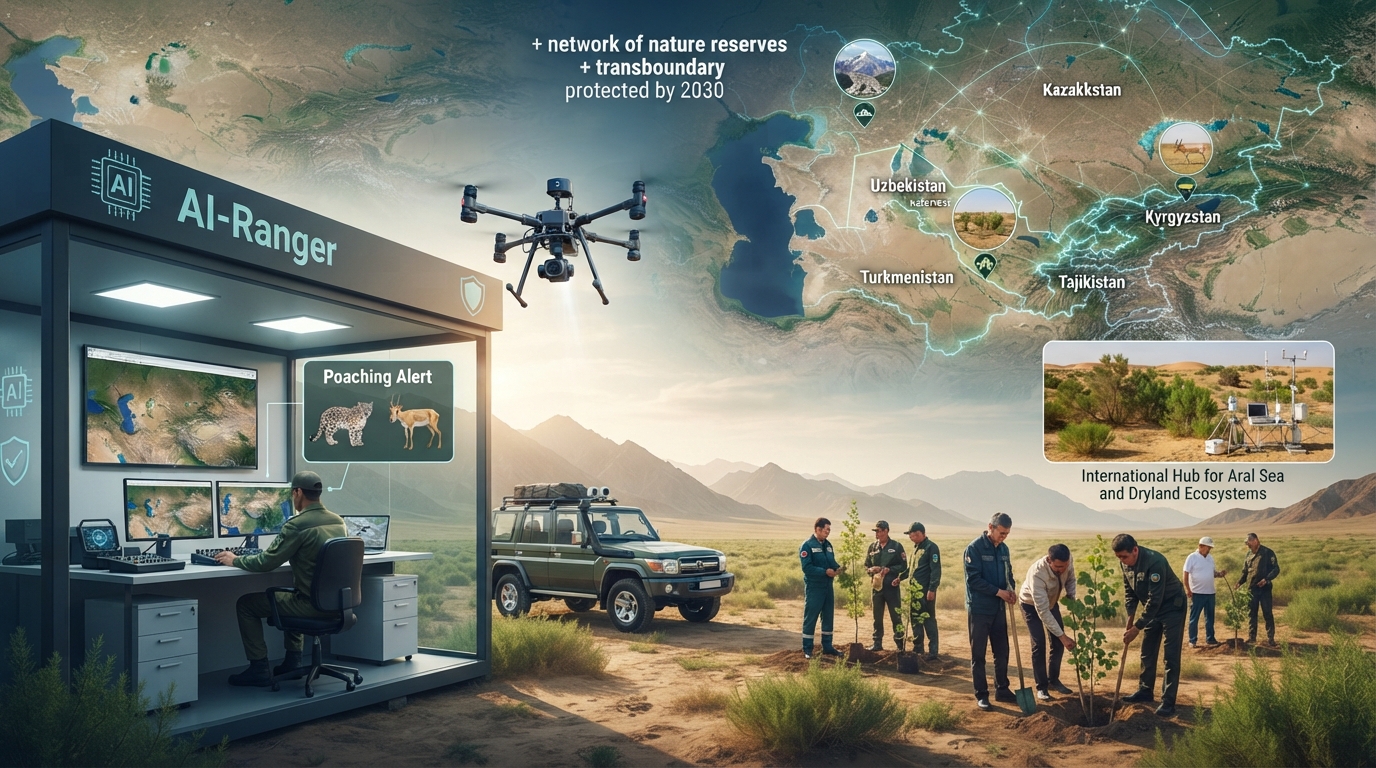
Uzbekistan has proposed using AI in the fight against poachers and forming a network of nature reserves in Central Asia
Uzbekistan has proposed establishing an international scientific center for arid territories, opening an artificial intelligence school for nature conservation, and uniting protected areas of Central Asia and the Caucasus. These ideas were presented at the Leaders for Nature summit in Yerevan, where ways to halt biodiversity loss and preserve natural ecosystems were discussed.
A delegation from Uzbekistan participated in the summit, led by the President's Advisor on Ecology and Chairman of the National Committee on Ecology and Climate Change, Aziz Abdukhakimov.
At the summit, Uzbekistan voiced three initiatives. The first involves the creation of an International Hub for Ecosystems of Arid Territories. Its tasks will include scientific research, the restoration of degraded lands, and the conservation of desert biodiversity, including in the Aral Sea region.
The second initiative concerns the development of technologies for nature protection. Plans include opening the Central Asian and Caucasian School of Artificial Intelligence based at Green University, as well as launching the AI-Ranger program. Using AI, satellite monitoring, and drones, specialists will be able to detect poaching, illegal logging, and wildfires.
The third proposal is to form a network of transboundary protected natural territories in Central Asia by 2030. It will cover five priority landscapes and give countries the opportunity to jointly restore ecosystems, protect animal migration corridors, and preserve rare species, including the saiga antelope and the snow leopard.
Abdukhakimov also reported on the results of ecological reforms in Uzbekistan. According to him, the share of protected natural areas grew from 4% in 2016 to approximately 15%. Under the "Bio Meros" program, a target has been set to increase this figure to 20% by 2030 and to 30% by 2035.
The country has also tightened state environmental control, established an Eco-Police force, and increased fines for violations of environmental legislation. In addition, over the past four years, spending on biodiversity conservation has more than tripled, reaching $1 billion.
Earlier, Uzbekistan proposed that South Korea join forces in fighting desertification and restoring degraded lands. Among the initiatives are the creation of a "Green Belt of Central Asia," a regional carbon hub, and a unified program for the conservation of saxaul forests.