

From "Yashil Makon" to a carbon hub. Uzbekistan proposed a new format of "green" cooperation to Korea
From "Yashil Makon" to a Carbon Hub: Uzbekistan Proposes New Format of "Green" Cooperation to Korea
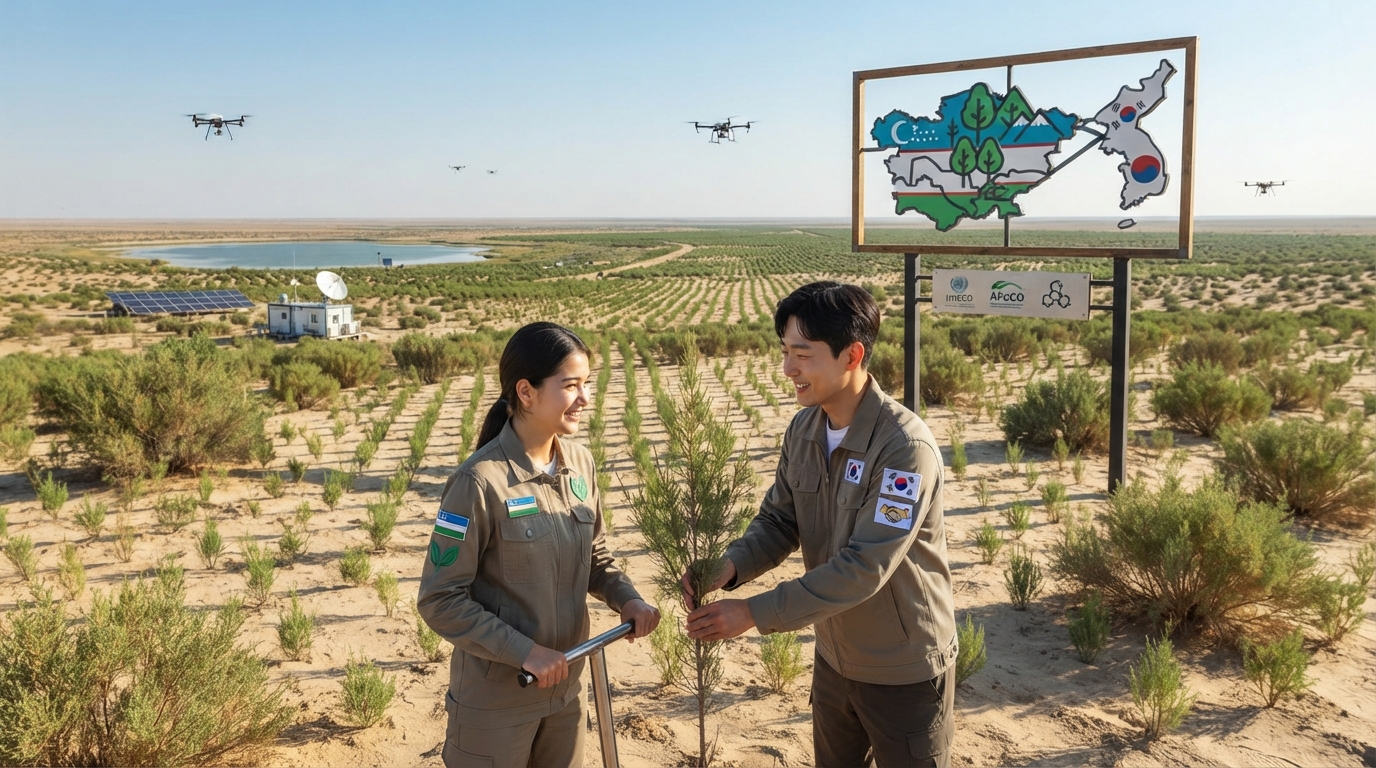
Uzbekistan has launched an initiative to unite the efforts of Central Asian countries and South Korea in combating desertification, restoring degraded lands, and developing forestry projects. The proposals include the "Green Belt of Central Asia," a regional carbon hub, and a unified program for the conservation of saxaul forests.
These initiatives were announced at the Korea-Central Asia Ministerial Forum on Forestry and Climate and the Ministerial Dialogue, which took place in the Republic of Korea. Uzbekistan was represented at the meetings by the Advisor to the President on Ecological Issues and Chairman of the National Committee on Ecology and Climate Change, Aziz Abdukhakimov.
During the negotiations, the results of ecological projects in Uzbekistan were presented. Within the framework of the "Yashil Makon" nationwide project, more than one billion saplings have been planted in the country. Over this period, the greening level has increased from 8% to 14%, with plans to bring it to 30% by 2030.
A significant volume of work is also being carried out in the Aral Sea region. Forest plantations have been established on approximately two million hectares of the dried bed of the Aral Sea. With the support of the World Bank, a project to restore forest landscapes and develop ecotourism infrastructure is also being implemented.
Within the framework of the Ministerial Dialogue, Uzbekistan proposed creating a new format, "Korea – Central Asia: Green Cooperation," and moving towards the practical implementation of the "Green Belt of Central Asia" initiative. It is proposed to identify pilot areas, as well as timelines and financing mechanisms, jointly with South Korea, the UNCCD, and the Asian Forest Cooperation Organization (AFoCO).
Special attention was paid to saxaul forests. Uzbekistan proposed developing a regional program for their conservation and modernization. It will include genetic research, modern seed production technologies, satellite monitoring, and artificial intelligence. In addition, there are plans to create a Unified Digital Atlas of Saxaul Plantations.
Another initiative is related to attracting investment in land restoration. Uzbekistan proposed establishing a regional carbon hub with the participation of Korean companies and financial institutions.
Furthermore, in cooperation with the United Nations Convention to Combat Desertification and the United Nations Framework Convention on Climate Change, it is proposed to develop the Arid Lands Carbon Standard. It should take into account the specific characteristics and high cost of implementing carbon projects in desert and arid regions.
Following the meeting, the Research Institute for Combating Desertification and Desert Economy Development under Green University was designated as a regional scientific and practical platform. On this basis, it is planned to conduct joint research, field trials, and pilot projects involving scientists from South Korea and Central Asian countries.
The initiative for cooperation in green development and climate change adaptation was put forward by Shavkat Mirziyoyev at the first "Central Asia – Republic of Korea" summit in Seoul. He proposed launching a climate and carbon partnership format between Central Asia and Korea.