

The President put forward proposals in five areas of cooperation within the "Central Asia – Korea" format
On September 16 in Seoul, President Shavkat Mirziyoyev took part in the first "Central Asia – Republic of Korea" summit.
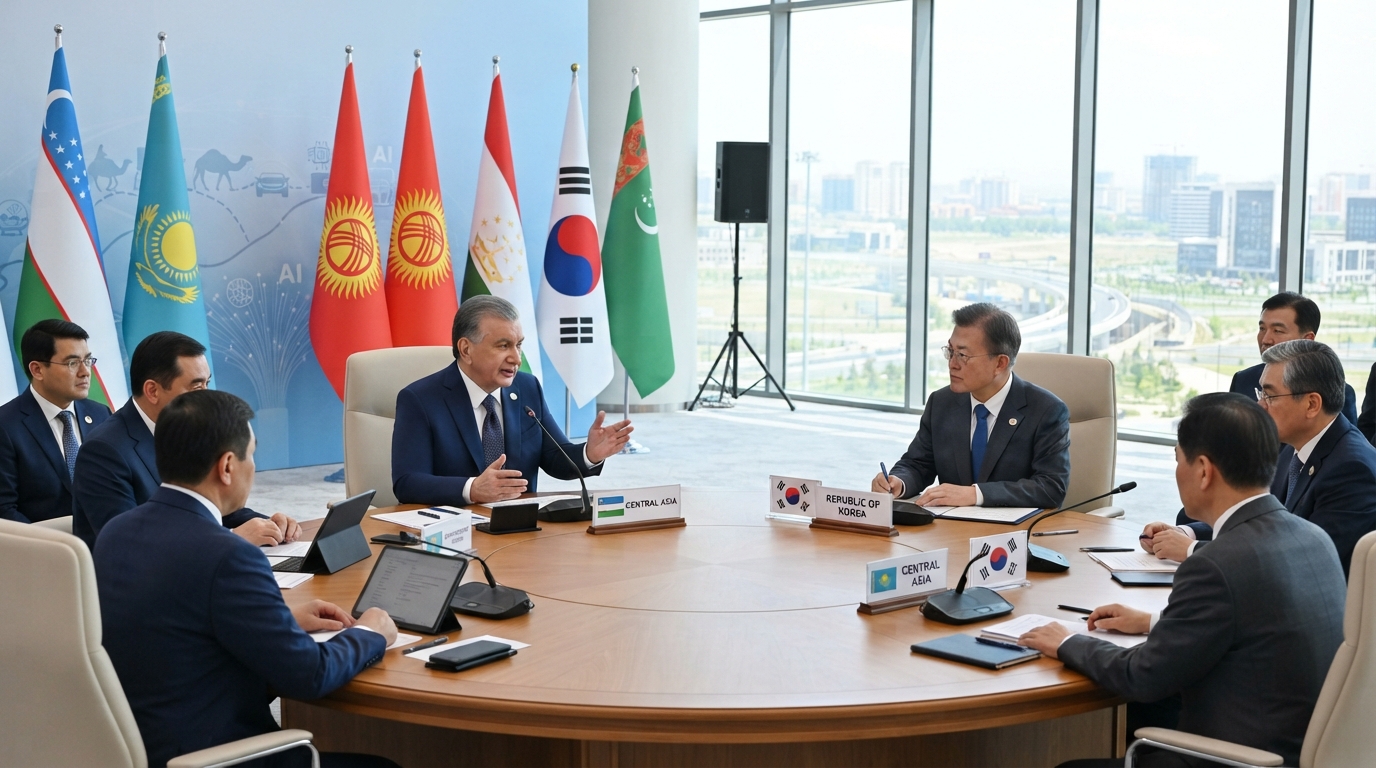
The President announced initiatives in five areas of cooperation within the "Central Asia – Korea" format
In accordance with the agenda, the prospects for expanding mutually beneficial cooperation between the countries of Central Asia and the Republic of Korea were discussed, focusing on priorities such as security, complementary practical cooperation, and the enhancement of humanitarian exchanges.
In his speech, the President of Uzbekistan emphasized that back in 2007, the Republic of Korea, demonstrating strategic foresight, was one of the first to recognize the immense potential in Central Asia for close, mutually beneficial partnership in a multilateral format.
"We sincerely appreciate the significant contribution of the Korean side to the industrialization of our countries, the modernization of infrastructure, and the creation of a solid foundation for sustainable development," Shavkat Mirziyoyev noted.
The origins of these strong ties go back centuries and originate along the caravan routes of the Great Silk Road. The foundation of this strong friendship lies in close life values: deep respect for the older generation, the cult of honest labor, and love and devotion to one's native land.
"A bright symbol of solidarity and mutual affection between our peoples is the Korean diaspora, which has become an integral part of the multinational family of Central Asia," the leader of Uzbekistan stated.
The main task of today was outlined — not only to maintain the achieved momentum of cooperation but also to turn these successes into a foundation for qualitative progress forward.
Combining the powerful potentials of Central Asia and the Republic of Korea is capable of opening new horizons for building a mutually beneficial partnership.
In this regard, the President of Uzbekistan put forward proposals in five strategic areas of cooperation.
The first area involves forming a long-term horizon for partnership planning.
"In today's world, the speed of global changes increasingly outpaces the ability of states to adapt to them. Artificial intelligence is changing the labor market and entire industries. Climate and water risks require solutions for decades ahead. New demands are emerging for education, infrastructure, technology, and human capital," the head of state concluded.