

Uzbekistan and Korea expand cooperation in materials science
The Institute of Materials Science of the Academy of Sciences of Uzbekistan and KORAM signed a memorandum on joint research and testing of new materials.
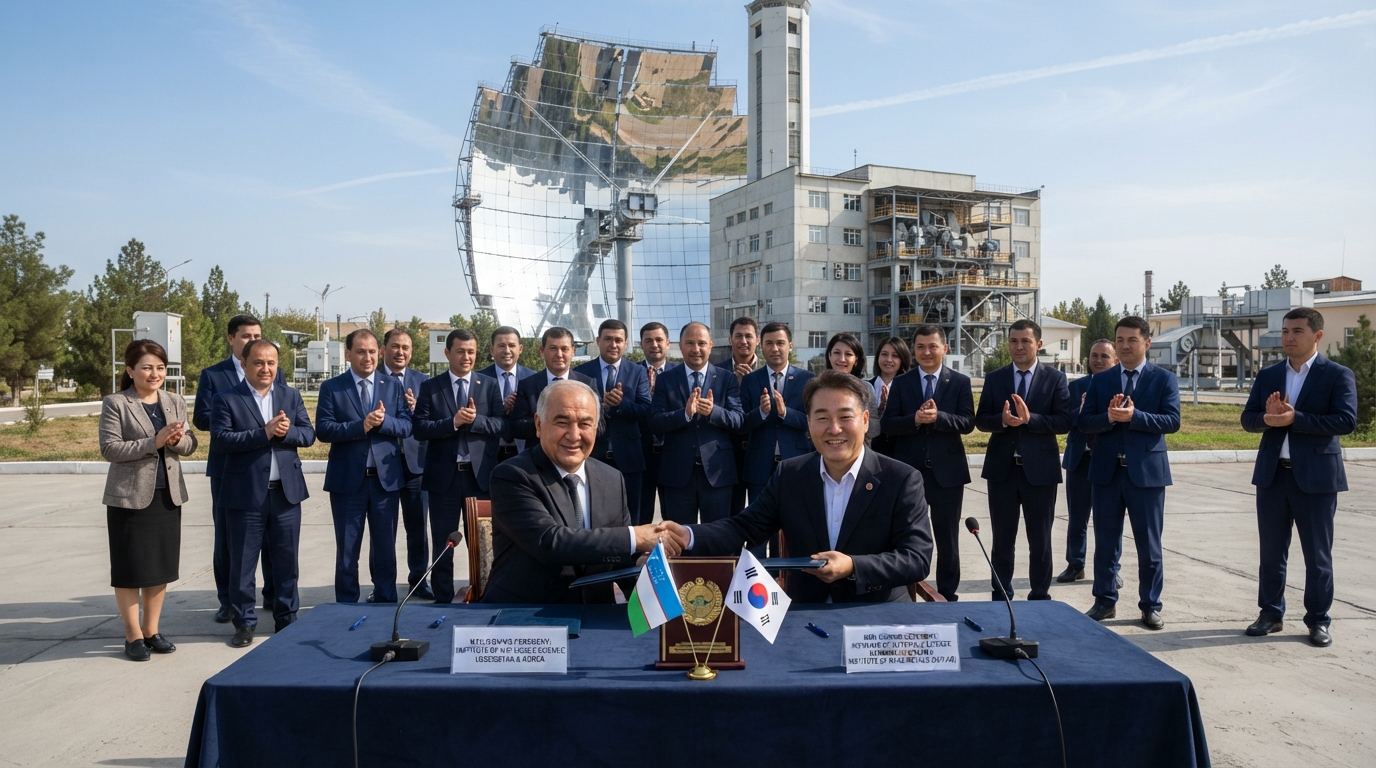
Uzbekistan and the Republic of Korea are deepening their partnership in materials science.
The Institute of Materials Science of the Academy of Sciences of Uzbekistan and the Korea National Institute of Rare Metals (KORAM) signed a memorandum of understanding aimed at organizing the testing of high-tech and aerospace materials.
The document was signed on August 13 at the unique "Large Solar Facility" scientific complex owned by the Institute of Materials Science, according to the Academy of Sciences of Uzbekistan.
The meeting was attended by representatives of the Academy of Sciences of Uzbekistan, the Institute of Materials Science, the Agency for Industrial Cooperation and Public Procurement, the Agency for Innovative Development, and the Uzbek Technological Metallurgical Plant. The Korean delegation was led by Professor Bum Sung Kim, representing KORAM.
A key issue on the agenda was the strategy for transforming the Institute of Materials Science from a traditional academic institution into a full-cycle innovation system. This model entails sequentially completing all stages: from fundamental research and applied development to pilot production, certification, and subsequent commercialization. Participants were also shown methods for melting and synthesizing materials using high-temperature solar systems.
The parties focused on advancing research in the fields of advanced smart materials, rare and critical metals, high-entropy alloys, and two-dimensional materials. Lithium extraction technologies and the creation of a modern infrastructure for materials testing and certification were also discussed.
Following the meeting, the Institute of Materials Science and KORAM reached an agreement to cooperate in organizing the testing of high-tech and aerospace materials. The signed memorandum is intended to lay the foundation for the implementation of joint scientific and technological projects.
During the discussions, the parties also explored the prospects for the practical application of KORAM's expertise in the further development of the Institute of Materials Science and the creation of the necessary infrastructure for research, testing, and the subsequent commercialization of developments.