

Utility tariffs, expensive taxis, new appointments, and legal signs — news of the week
Utility tariffs, expensive taxis, new appointments, and legal signage — news of the week
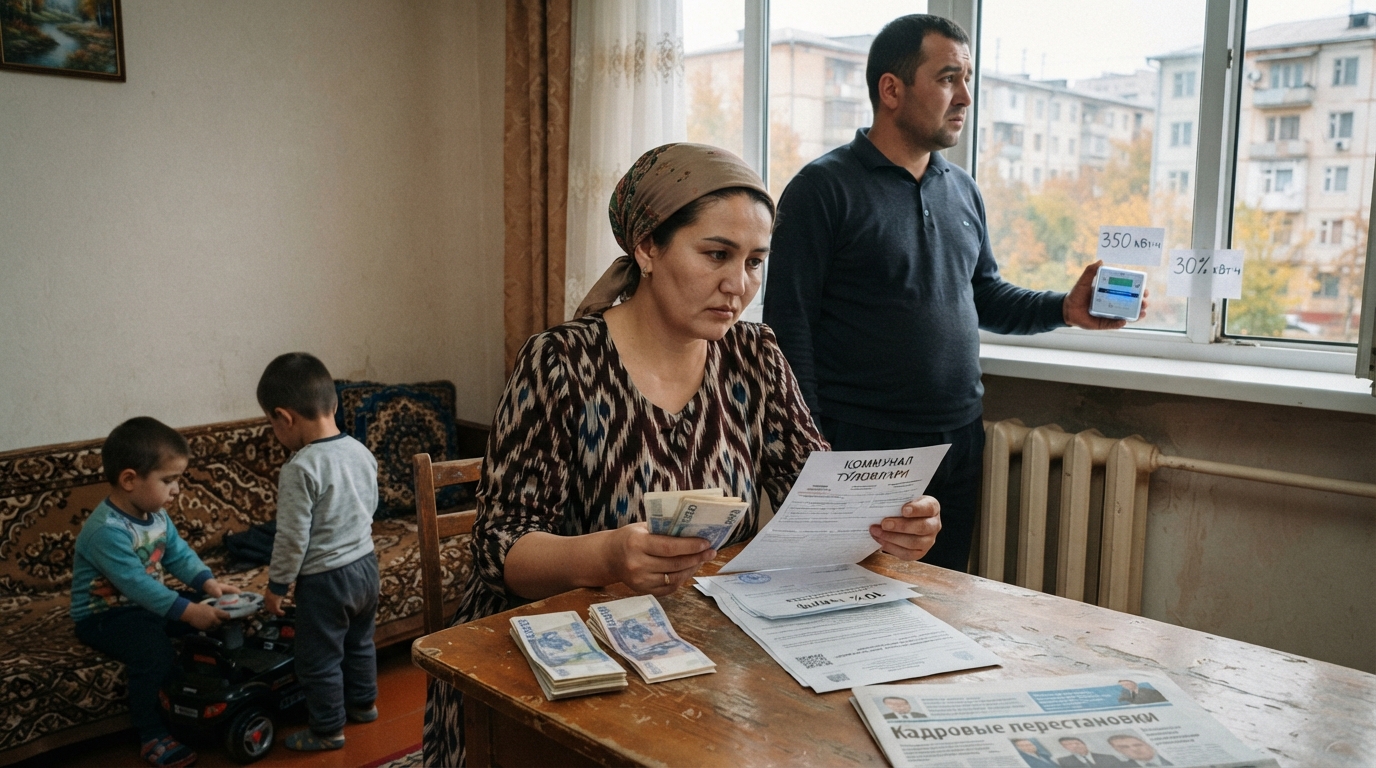
Utility tariffs may increase by 30%, but the authorities are simultaneously proposing new measures to support the population. Why was the decision made to raise the basic electricity allowance to 350, rather than 500 kilowatt-hours? And how were nearly 800 thousand citizens recalculated utility debts amounting to 22 billion soums? The Anti-Monopoly Committee will investigate the sharp rise in taxi prices. Personnel reshuffles continue in the capital and regions — from district khokimiyats to the Ministry of Defense. We will also report on why the rules for placing signage have been simplified for businesses.
**Heating prices are rising: Uzbekistan proposes raising tariffs by 30%**
Residents of the country are being prepared for another revision of utility payments: the authorities explain this by the need to gradually bring tariffs in line with the prime cost of services.
According to the draft resolution, starting November 1, 2026, heating and hot water in Tashkent could become 30% more expensive. At the same time, the authorities plan to modernize the infrastructure and reduce the prime cost of heat supply. Public discussions will run until October 28. The main question is whether the increase in payments will be accompanied by a noticeable improvement in service quality.
**One million soums against the backdrop of rising tariffs: Uzbekistan proposes new support measures**
While utility expenses are set to grow, the authorities are proposing to support families whose budgets might be hardest hit by the tariff increase.
According to the draft, needy families could be paid 1 million soums each in November. It is also proposed to expand access to compensation for electricity and gas and extend payments until April 2028. Thus, the tariff increase is accompanied by an attempt to mitigate its consequences for vulnerable categories of the population.
**350 instead of 500 kWh: why is the basic electricity allowance not being raised higher?**
For residents of regions without a stable gas supply, who heavily depend on electricity in winter, it is proposed to increase the basic consumption allowance from 200 to 350 kWh per month.
According to Khurshid Mustafayev, Deputy Minister of Economy and Finance, about 60% of residents in non-gasified areas consume up to 300 kWh in winter. The new norm could cover about 4 million households without natural gas and more than 600 thousand consumers with an unstable gas supply. However, for families heating their homes with electricity, the question of whether 350 kWh is sufficient remains open.