

Tariffs in the heat supply will be brought to a level that covers the prime cost
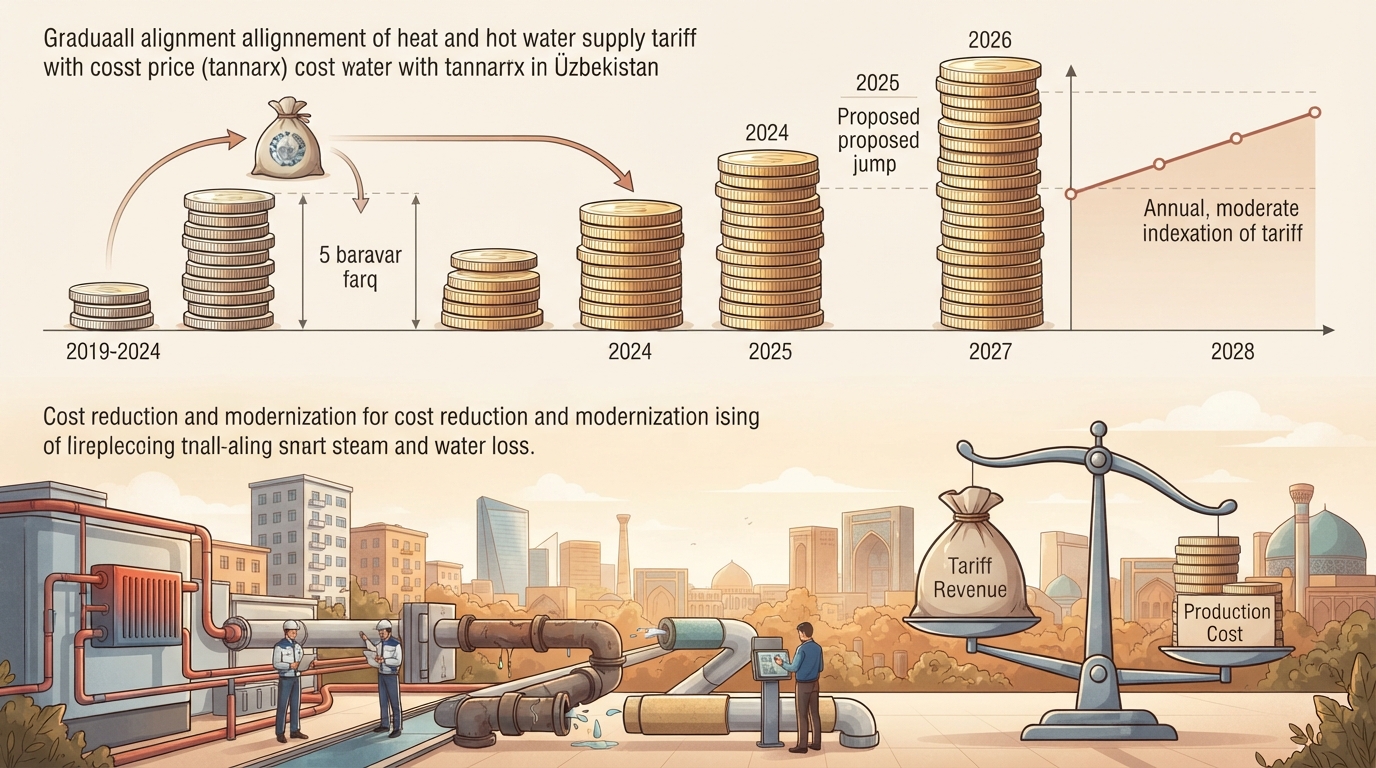
In Uzbekistan, it has been decided to gradually bring heating tariffs to the cost level by 2030. Current tariffs for the population cover about 20 percent of the cost. To bring this to 100 percent, it is planned, on the one hand, to liberalize tariffs, and on the other hand, to reduce the cost by at least 30-40 percent through modernizing networks, reducing losses, and improving management.
Heating supply tariffs to be brought to cost-reflective levels
Starting 1 November 2026, Uzbekistan plans to significantly increase hot water and heating tariffs, and from 1 May 2028, index them annually based on inflation, but at a rate not exceeding 10 percent. A draft government decision to this effect has been released for public discussion.
Deputy Minister of Economy and Finance Khurshid Mustafayev explained the reasons for this decision at a press conference on 15 October.
“First of all, I would like to say one thing: heating and hot water tariffs in Tashkent did not change from 2019 to 2024. Tariffs remained unchanged for five years, but the cost of energy resources, wages, and services provided increased. Based on this, tariffs were raised by 15 percent in 2024, and twice by 15 percent in 2025. In 2026, it is proposed to increase tariffs by 30 percent.
In the following year, it will be considered again based on this, and starting from 2028, heating and hot water tariffs, just like electricity and gas tariffs, will be indexed every year from 1 May at the rate of inflation, but not exceeding 10 percent.
Currently, there is a fivefold difference between the cost of heating and hot water services and the price at which they are sold to the population. For legal entities, the tariff is closer to the cost price, but for the population it is much lower. The difference in between is subsidized from the state budget. As you know from global experience, the delivery of a product that is not sold at its cost price cannot be guaranteed,” Mustafayev said.
According to a presidential decree adopted on 11 March 2025, reduced tariffs applied to the population for heating supply services are expected to be gradually brought to the cost level by 2030. According to the deputy minister, this cannot be achieved solely by raising tariffs; by 2030, the cost price must be reduced by at least 30-40 percent.
“Reaching the cost price is not achieved through tariffs alone. First of all, the company will develop programs to reduce costs. It is also stated in that decree: every year a program will be developed and implemented to reduce the cost price by no less than 15 percent. Secondly, currently there are also losses in the heating service – everyone knows this – and after conducting a technical audit of those losses, a modernization program will be developed to reduce losses. As a result of this, the cost price can be reduced by at least 30-40 percent,” he said.