

Utility money without control: why violations in homeowners associations and management companies remain without a clear answer for years?
Property owners' money is collected monthly, but achieving transparent reporting and accountability for potential abuses is far from always possible. How many cases of alleged embezzlement in the housing and utility sector have reached the courts over the past five years? A trick question: have there been many high-profile cases of alleged embezzlement in homeowners' associations (HOAs) in Uzbekistan over the past five years, and […]
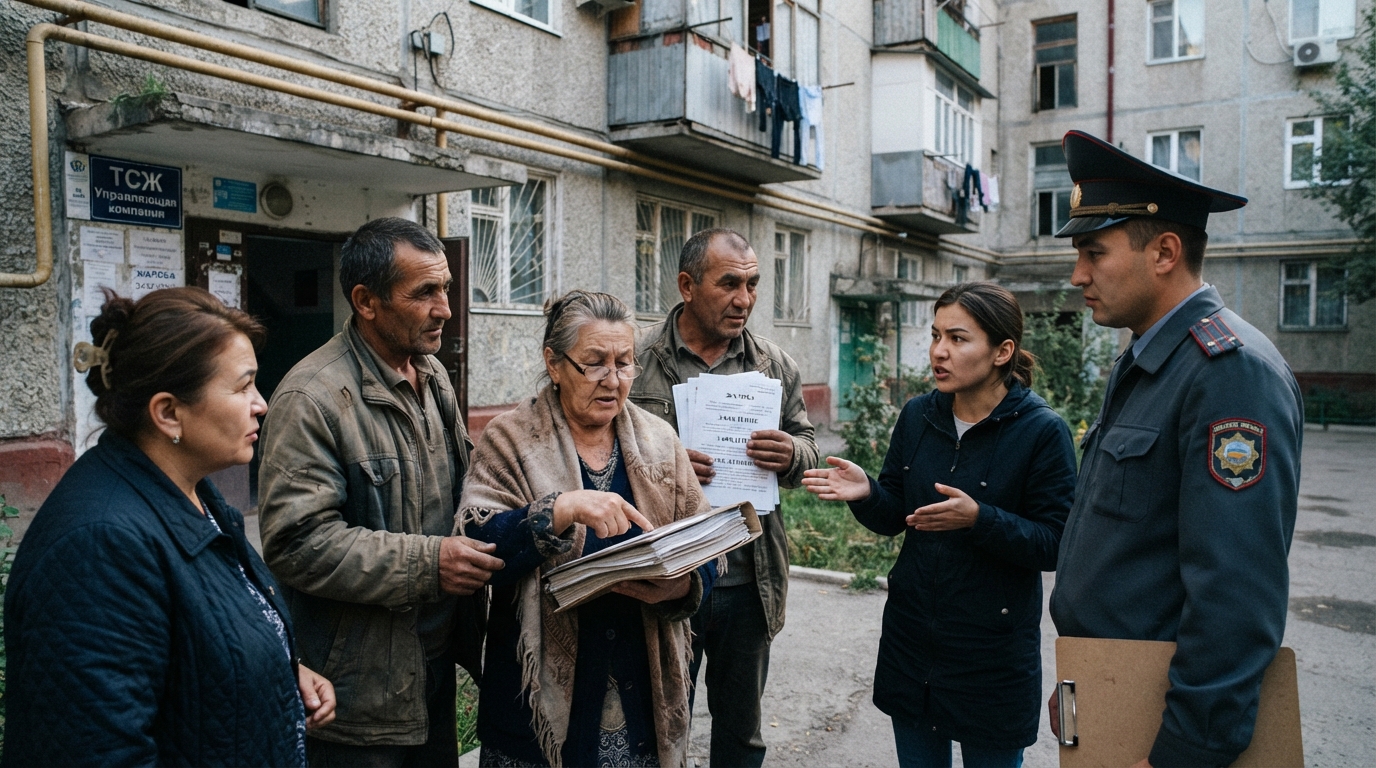
Utility funds without supervision: why do violations in homeowners associations and management companies remain without a clear response for years?
Homeowners' money is collected monthly, yet achieving transparent reporting and holding parties accountable for potential abuses is far from always successful. How many cases of alleged embezzlement in the housing and communal services sector have reached court over the past five years?
A trick question: how many high-profile cases of alleged embezzlement in homeowners associations (HOAs) and management companies in Uzbekistan over the past five years have received widespread publicity and ended with the punishment of the guilty? Such stories are not easy to recall. But does this mean that everything is going well in the field of apartment building management?
The problems of housing and communal services have long ceased to be limited to leaking roofs, broken elevators, and dirty entrances. It is also about the money of owners that monthly goes to service organizations. Who controls its expenditure and how? How justified are the charges? Do residents receive financial reports, and can they verify whether the expenses correspond to the work actually performed?
For an unscrupulous manager, an opaque management system can become a convenient environment for abuse. Money arrives regularly, while owners sometimes have to struggle to obtain primary accounting documents, expense breakdowns, and explanations of charges. If reporting is not disclosed, financial issues are not brought up for discussion among residents, and decisions are made without proper involvement of owners, the risk of violations increases.
But what happens when residents try to push for an audit? Do their appeals always become grounds for a full-fledged investigation?
Is the distance from a complaint to a failed criminal trial two years?
An illustrative example is the story of the Yunusabad HOA "Lailo Kommunal", which, according to available information, subsequently switched to management through a management company.
A criminal case related to violations in the activities of this organization has been passing through the district department of internal affairs for almost two years. According to representatives of the audit committee, materials regarding the lack of proper accounting, the failure of money collected from residents to enter the bank register, as well as the forgery of a stamp and seal, among other violations, were handed over to the investigation.
However, as follows from the timeline presented by the applicants, the case was twice terminated (in March 2025 and May 2026) on the grounds of the absence of a crime, twice suspended, and then resumed again by the district prosecutor's office.
Why have materials in which applicants point to possible financial violations not led to a final procedural decision over such a long period? What arguments of the investigation and results of audits served as the basis for previous decisions to terminate the case? What changed after its re-opening?
The very fact of repeated terminations, suspensions, and resumptions of the case naturally raises the question: did all submitted materials receive a full and objective assessment? And why do owners have to seek clarity for so long?
Who controls the controllers?
The story of "Lailo Kommunal" is a reason to raise a broader question about how the law enforcement system responds to reports of possible abuse in the sphere of housing stock management.
In practice, is there tolerance for violations on the part of individual HOAs and management companies? Why, in some cases, do residents have to fight for years for a financial audit, the provision of primary documents, and a legal assessment of the managers' actions?
Are reports of possible embezzlement and document forgery thoroughly investigated? Is a substantive investigation being replaced by formal replies, after which the conflict effectively remains unresolved?
To answer, statistics, audit results, and clear criteria for assessing the work of law enforcement agencies are needed.
To assess the real state of affairs, law enforcement agencies should answer several specific questions:
— How many criminal cases related to alleged embezzlement, misappropriation of funds, and document forgery in HOAs and management companies have been initiated in Uzbekistan over the past five years?
— How many of them reached court, how many ended in convictions, and how many were terminated or suspended?
— How many appeals from property owners served as the basis for audits of the financial activities of service organizations, and what are the results of these audits?
— In what manner is the completeness of accounting documentation, the validity of charges, and the compliance of expenses with actually performed work verified?
As long as there is no open and comparable data on how many such cases are opened, how many are transferred to court, and how they end, it is impossible to evaluate the effectiveness of the law enforcement response. Answers to these questions would make it possible to separate isolated conflicts from a systemic problem — and to understand how securely the owners' money is protected.
After all, utility payments are not uncontrolled funds at the disposal of managers of service organizations. If owners have to fight for years for documents and a legal assessment of possible violations, the problem goes beyond a single conflict between residents and the management of an HOA. It becomes a matter of control efficiency and trust in the apartment building management system.