

Ineffective Construction Control: A Look at a Systemic Problem in the Case of Newport
Problems in the construction sector have become one of the most frequently complained about topics among citizens in recent years. In Tashkent alone, the latest inspection found violations related to 173 multi-storey buildings in more than 70 facilities.
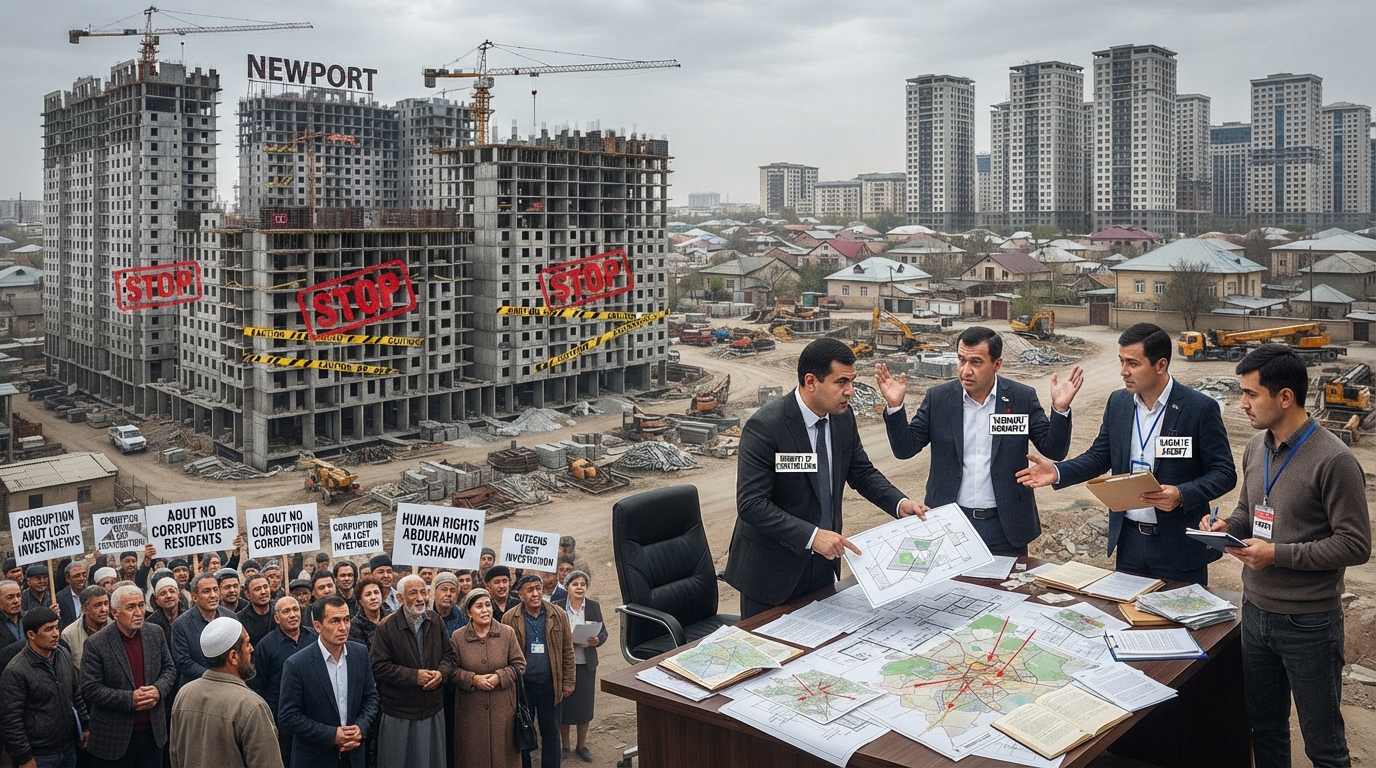
Ineffectiveness of construction supervision: Analysis of systemic problems in the case of Newport
In recent years, construction problems have become one of the most frequently complained about issues by citizens of Uzbekistan. In the last inspection of more than 70 facilities in Tashkent alone, violations of the law were identified in 173 multi-storey buildings.
How have construction violations been ignored for several years? When a violation is detected, is only the builder liable, or are officials who failed to carry out supervision in a timely manner also held accountable? These questions have become relevant again against the backdrop of the conflict surrounding the Newport complex in the center of Tashkent.
Kun.uz interviewed human rights activist Abdurakhmon Tashanov, head of the Ministry of Construction Javohir Ergashbayev, head of the Tashkent city administration Jasur Karimov, and representative of the Cadastre Agency Sarvar Kadirov about the construction supervision system, illegally constructed facilities, and the rights of citizens who bought apartments in them.
**Who controls construction?**
The head of the Ministry of Construction and Housing and Communal Services, Javohir Ergashboyev, noted that control during the construction process is carried out in several stages.
“There is a single scheme for controlling construction. The only policy-making body in the construction sector, the Ministry of Construction and Housing and Communal Services of the Republic of Uzbekistan, first of all determines the procedure for the correct execution of documents in this regard. After the construction work that has begun or is planned for construction is duly registered, it is under the constant control of the construction control inspectorate,” said the ministry representative.
According to him, the construction object is under control until it is put into operation. The responsible body also differs depending on the stage of construction at which the violation was committed. For example, if a land plot is arbitrarily seized, the Cadastre Agency will take action in this matter. If there is a right to the land, but construction has begun without the necessary design and estimate documents, this situation falls under the jurisdiction of the construction supervision authorities.
It should be noted that Kun.uz also invited a representative of the Construction Inspection, the main executor in the field, to this interview, but the inspection reported at the last minute that there was no such specialist and that he had been transferred to the recently established department.
**Why did the supervision not work in the Newport case?**
One of the most recent high-profile examples is the Newport complex in the Yakkasaray district. Construction work was carried out in 6 of the 9 blocks of this complex without the appropriate documents.
Human rights activist Abdurakhmon Tashanov assesses this situation as a serious problem in the control system:
“We see in the pictures, it looks like Bombay. If there are apartments for ministers and governors in Newport, I believe it. Because it is impossible not to see this for seven years. If a poor person installs a single booth in front of his house, then if necessary, the minister will also find out about it and it will be removed on the same day... The head of the presidential administration correctly noted - there are “blatnoys” behind this.
I think there are not a few such cases in the construction of the city. We, as ordinary people, are happy to see new buildings, but the crimes behind this, the criminal behind this, the corruption behind this are extremely large. We have many appeals to human rights organizations: “I paid for the house, but they did not give me my house.” If you dig into it, you will find out officials can also come out”.
**How many illegal buildings are there in Tashkent?**
According to the head of the Tashkent city administration, Jasur Karimov, as a result of the latest inventory, cases related to 173 multi-storey buildings in more than 70 facilities in the capital were identified.
“According to the results of the last inventory conducted in Tashkent, the Cabinet of Ministers was informed. It was revealed that 173 multi-storey buildings were built illegally in more than 70 objects. But this does not mean that all of them were built 100 percent illegally. For example, there are those who received permits for 9 floors, have all the project documents, but in practice they built 10 floors. Or there are those who received permits for two 9-storey buildings and built additional five-storey buildings in the same area. There are various situations.
In such cases, the authorities, together with the relevant departments, conducted an inventory and submitted a proposal to the Cabinet of Ministers. The submitted proposal includes measures to be taken against the owners of the objects, as well as measures to be taken against the permitting organization or supervisory bodies that should have controlled these objects until they reached this state, and it was submitted with proposals for solutions. Here, the current Newport you mentioned is also included in it. Of the 9 blocks built here, only 3 "One has a permit, 6 blocks were built illegally. This was identified during the inspection process and added to the list," said a representative of the khokimiyat.
**Will illegal buildings be demolished?**
According to the ministry representative, if an appropriate decision is made on the object and there is a possibility of legalizing it, the building will undergo an instrumental and technical inspection.
"As for the fate of these buildings, they will not be directly destroyed by the government. That is, the building may have been sold, it may have been acquired with the funds of some citizen. Now, if the building is included in the list under the amnesty act, it will be tested in the appropriate manner, that is, it is called an instrumental technical inspection, it will be studied whether it meets all the requirements or not, and whether it is possible to strengthen the building. If it meets the relevant requirements, a state act will be drawn up on acceptance for use after the requirements are met.
If the building does not meet any requirements, or if it is an object whose construction has been suspended for other reasons, appropriate measures will be taken only through the court," said Javohir Ergashbayev.
During the conversation, the issue of the responsibility of those who allowed illegal construction and officials who turned a blind eye to these situations was also touched upon. You can read the full official comments and criticism from a public activist in the video.