

US wants to return Russian gas to Europe via Ukraine - WSJ
The US is putting forward a proposal to resume the transit of Russian gas to Europe through the territory of Ukraine. According to sources of The Wall Street Journal, the plan to sell gas through an American intermediary is considered part of the negotiations to reach an energy ceasefire between Moscow and Kyiv. In Europe, however, there are concerns that this initiative could undermine the policy of phasing out Russian energy resources.
US wants to reintroduce Russian gas into Europe through Ukraine - WSJ
Citing American, European, and Ukrainian officials, the newspaper reported on November 1 that US negotiators Jared Kushner and Steve Witkoff discussed the idea during their visits to Moscow and Kyiv in September.
The proposal involves selling Russian gas through an American intermediary. According to the publication, such a mechanism is expected to bypass European sanctions and create lucrative opportunities for American investors.
Washington aims to reach a comprehensive agreement to stop strikes on energy facilities ahead of trilateral talks between the US, Russia, and Ukraine scheduled to be held in Abu Dhabi in November.
According to WSJ sources, the US administration views Russia's return to the European gas market as an additional incentive for Vladimir Putin to support an energy truce. Ukraine, meanwhile, could receive additional transit revenue in exchange for transporting the gas through its territory.
One American official stated that the White House also proposed transferring funds from the sale of Russian gas to Europe into a special account in a third jurisdiction. This mechanism is intended to restrict the use of revenues for military purposes.
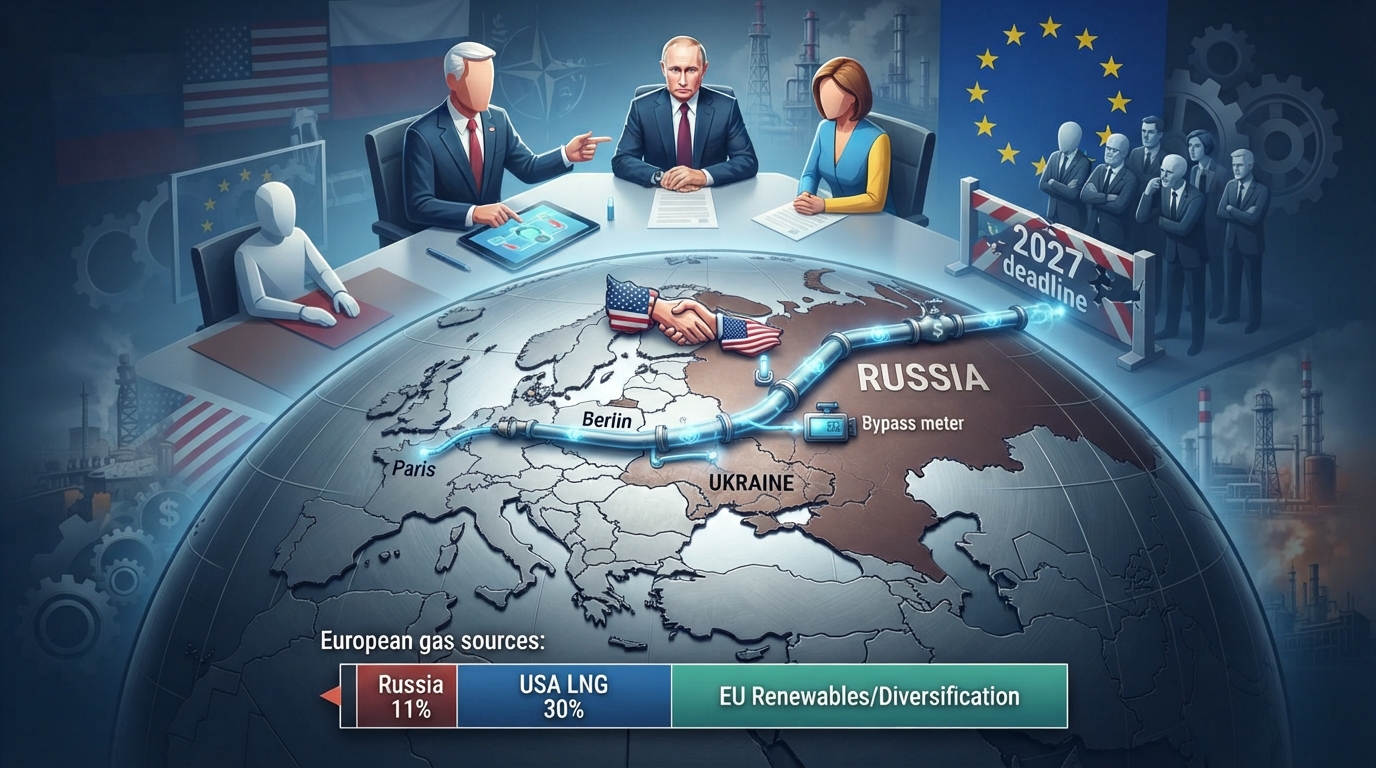
However, the initiative faces strong resistance in Europe. As the WSJ writes, current European Union legislation foresees a phase-out of Russian gas imports by the end of 2027. Leaders of major European nations have also repeatedly stated that they do not want to become dependent on Russian energy resources again.
According to data cited by the publication, the share of Russian gas in European consumption has fallen from 45 percent on the eve of the full-scale invasion of Ukraine to currently around 11 percent. At the same time, nearly 30 percent of gas consumption in Europe is met by liquefied natural gas supplied from the US.
Some European officials have sharply criticized the proposal under discussion in private conversations. Nevertheless, the Trump administration hopes that Europe's actual resistance will be softer than in public statements. According to Washington's calculations, high energy prices and supply security concerns could make European nations more receptive to such proposals.