

US plans to cut off military aid to key Middle East ally, BBC told
Iraqi Kurdistan fears the Trump administration's plan will make the region more vulnerable to further attacks from Iran.
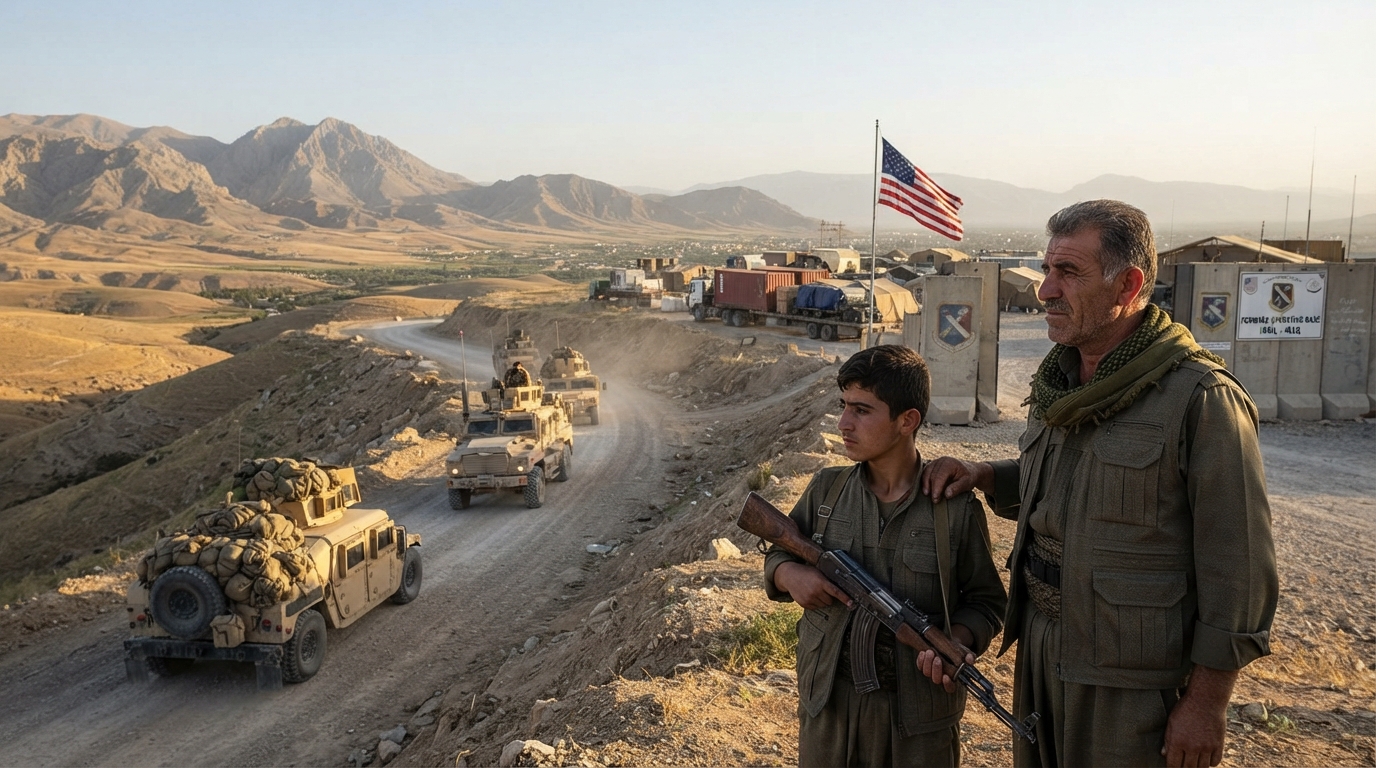
The United States intends to discontinue military aid to a crucial Middle Eastern ally that assisted in the defeat of the Islamic State group (IS) and is currently enduring severe assaults from Iran, according to four informed sources.
The US Department of Defense has informed leaders of Iraq's semi-autonomous Kurdistan region in recent discussions that the administration does not plan to renew an expiring agreement that provides security assistance to the Peshmerga, the Kurdish security forces.
The BBC spoke with two officials who participated in the talks and two other sources with direct knowledge of the issue. These sources requested anonymity to describe the discussions, the details of which have not been previously reported.
Kurdish officials are concerned that the funding cut would create a power vacuum and embolden Iran, which has launched hundreds of missiles and drones into Iraqi Kurdistan since President Donald Trump initiated the conflict with Tehran.
Analysts suggest that ending security assistance to the Peshmerga would undermine a long-standing partner in Iraq and convey a message that the US cannot be relied upon to support its allies in the region.
"The US would be cutting off the Kurds, who shed so much blood to help the Americans achieve their goals in Iraq and the wider Middle East," stated Yerevan Saeed, director of the Global Kurdish Initiative for Peace at American University. "This is going to be a big win for Iran, China, and Russia if the Kurds are left so exposed."
In his second term, Trump has pledged to reduce America's foreign entanglements in regions such as the Middle East. He also launched the war with Iran, which reached its six-month mark on Friday with no end in sight.
The memorandum of understanding between the Pentagon and the Kurdish Regional Government (KRG) is scheduled to expire on September 30, the same day the US and other nations are withdrawing their remaining troops from Iraq.
The troop withdrawal will formally conclude the international military campaign against IS, in which the Peshmerga fought alongside coalition troops to end the jihadist group's control of parts of Iraq and Syria. The sole remaining US military base in the country, located in the Iraqi Kurdish capital of Irbil, is set to close next month once coalition troops depart.
The Peshmerga, which comprises approximately 180,000 troops in Iraqi Kurdistan, received $61 million in fiscal year 2026 for weapons, military training, and stipends through the Pentagon's counter-IS program. The Pentagon proposed eliminating all the group's security aid in its fiscal year 2027 budget request, arguing that since IS was defeated, the money should now be reallocated. However, the spending plan is currently on hold amidst a broader budget dispute in Congress.
This request raised concerns in Iraqi Kurdistan, but officials had maintained hope that the US would renew the funding through an extension of the deal set to expire in September.
These fears have intensified as Iran has escalated attacks against the KRG. Iran and Iranian-backed militias had conducted 158 missile or drone attacks inside Iraqi Kurdistan by late May, according to research on the latest available data compiled by the Foundation for Defense of Democracies, a Washington D.C. think tank.
Despite the surge in attacks, during recent discussions with Iraqi and Kurdish leaders, defense department officials stated that the US was not planning to extend the memorandum of understanding, according to multiple sources familiar with the discussions. The Pentagon initially signed the memorandum of understanding providing military assistance to the Peshmerga in 2016 and renewed it in 2022.
A final decision regarding security engagement between the US and Kurdistan is still under review, according to one source familiar with the Pentagon's thinking. The US is considering ways to maintain some security support in both Iraq and Iraqi Kurdistan after the troop withdrawal, the sources indicated.
Six months into the Iran war, what has Trump accomplished?
Both the KRG and the US State Department declined to comment.
In response to inquiries about security assistance for the Peshmerga, a Pentagon spokesperson referred to a department statement summarizing Defense Secretary Pete Hegseth's meeting with Iraqi Prime Minister Ali al-Zaidi in July.
"The United States, Iraq, and Coalition partners have achieved tremendous success in defeating ISIS and now the Iraqi Security Forces, including the Peshmerga and other Iraqi Kurdistan Region security forces, will lead the fight against terrorists in Iraq," the statement read.
The expiration of security aid for the Peshmerga would occur less than one year after the US opened its largest consulate in the world, in Irbil.
At the ribbon-cutting ceremony for the $800 million complex last December, Michael Rigas, a senior State Department official, stated that the consulate was "a testament to the value of the relationship between the United States and the Iraqi Kurdistan Region."
The recent discussions concerning Kurdish security were part of broader conversations between the US, the Iraqi government, and the KRG regarding the upcoming troop withdrawal. That date was established under a 2024 agreement between Washington and Baghdad to withdraw the US troops remaining in Iraq from the campaign against IS. American combat troops departed Iraq in 2011 but returned after the power vacuum led to the rise of IS in 2014.
The US could avoid repeating the same mistake by continuing to support the Peshmerga, according to James Jeffrey, who spearheaded the global coalition against IS in Trump's first term.
"It's money well spent, as we found out when the Islamic State rolled into northern Iraq," said Jeffrey, a former US ambassador to Iraq and Turkey in the Obama administration.
Al-Zaidi met Trump at the White House in July.
The Trump administration has not disclosed how many US troops brought in to fight IS over a decade ago remain in Iraq. Experts believe the number is under 1,000, down from 170,000 at the height of the Iraq War.
The recent meetings on Iraqi security included the White House, Defense, and State Departments, with Tom Barrack acting as a principal US voice on Iraq, four sources said. A close Trump ally, Barrack is the US ambassador to Turkey and special envoy to Iraq and Syria.
The administration has publicly stated its openness to a bilateral security agreement with Iraq. The countries discussed a possible defense pact in the recent meetings, but it remains unclear how the agreement might be structured or what Iraqi Kurdistan's role might be.
Al-Zaidi promoted the troop withdrawal during his visit to Washington last month. Al-Zaidi, who was elected in May, met with Trump at the White House, as well as with Hegseth and members of Congress.
"October 1 will mark a new day in the trajectory of the Iraqi state, as Iraq will be free of any foreign military presence," al-Zaidi's office said in a statement at the time.
The withdrawal will reduce the exposure of US troops in the Middle East who have been targeted by Iran during the war, analysts said. Tehran has attacked US bases across the region, including the base in Irbil.
However, it will leave the Peshmerga security force and the rest of the region it helps protect even more vulnerable than before, according to Jason Campbell, a former US defense official.
"The Peshmerga have been the frontline in the US and international war with ISIS," said Campbell, an expert at the Middle East Institute. "If the US moves forward with this, it'll make the Kurds perhaps the most vulnerable potential targets of Iran."
Iran targets headquarters of Iranian Kurdish forces in Iraq.
Under drone fire, exiled Kurds wait to confront Iranian regime.