

US borrowing costs hit highest level since 2007
The 10-year Treasury yield briefly topped 5% Monday and rose to 5.04% on Tuesday before easing back.
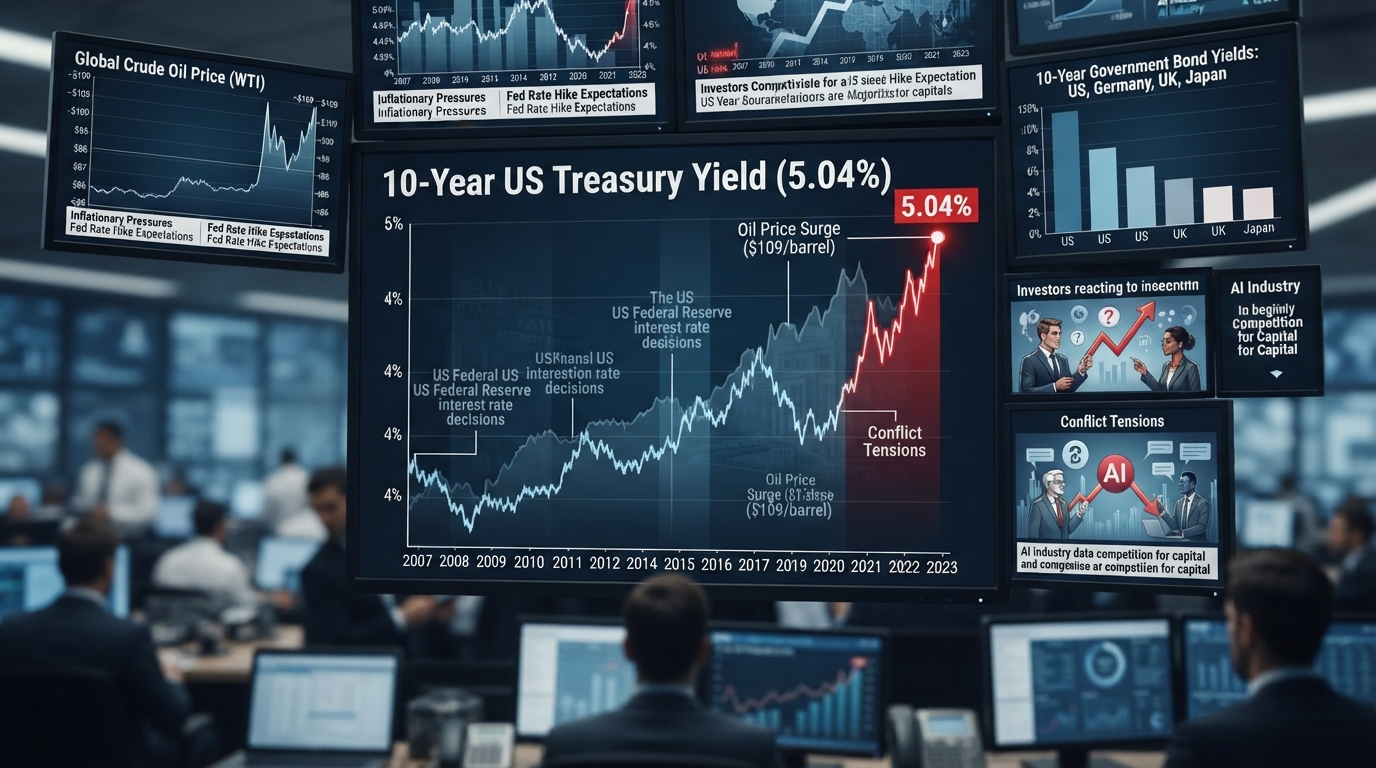
US borrowing costs reach highest level since 2007
US government borrowing costs climbed to their highest level since 2007 after a surge in oil prices added to inflation worries.
The effective interest rate on US government bonds over 10 years, known as the 10-year Treasury yield, climbed as high as 5.04% before easing back.
Government bond yields have been rising around the world for months, driven by fears that inflation caused by the oil price jump since the start of the US-Israel war with Iran will force interest rates higher.
The US has been buying back bonds in an effort to push the Treasury yield lower, with Treasury Secretary Scott Bessent describing the intervention as "successful".
The global benchmark wholesale oil price rose to more than $109 a barrel on Tuesday, up from about $86 at the end of August, after fresh concerns about Saudi Arabia's ability to export oil amid rising tensions in the region.
Investors expect the US Federal Reserve to raise interest rates to fight the inflation driven by higher oil prices.
Higher interest rates and inflation usually push up the yields bond investors require on government borrowing.
Bond yields can also indicate how much confidence investors have in a government, with a higher yield suggesting less confidence.
Competition for debt from artificial intelligence (AI) firms is also putting upward pressure on yields.
Carol Schleif, chief market strategist at BMO Wealth Management, said bond markets had been signalling for weeks that higher interest rates may be necessary.
Although the rise in borrowing costs has been "orderly" this year rather than abrupt, she said rates could stay elevated if geopolitical tensions and high energy prices remain "front and center".