

US long-term borrowing costs ease after government steps in
It comes after the interest rate on 30-year bonds reached the highest level in almost 20 years.
**US Long-Term Borrowing Costs Decline Following Government Intervention**
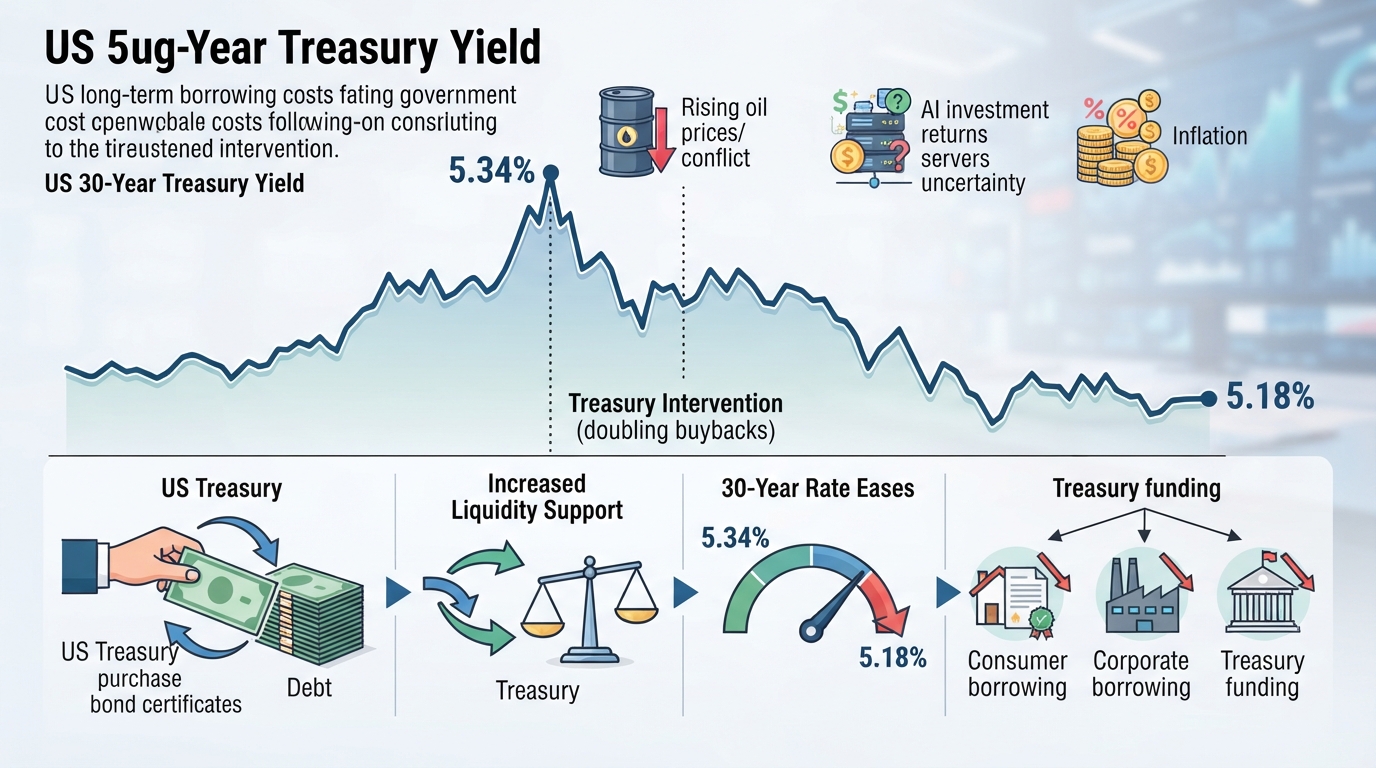
On Wednesday, long-term borrowing expenses in the United States decreased after the Treasury department declared its intention to repurchase more debt. This action followed Tuesday's interest rate on 30-year bonds, a form of debt utilized to secure funds from investors, reaching 5.34%, marking its highest point in nearly two decades.
These elevated rates, known as yields, influence the borrowing costs for both the US government and major corporations, and also impact consumer borrowing expenses for items such as mortgages, car loans, and credit cards. The recent surge in bond yields has been attributed to rising oil prices stemming from the US-Iran conflict, leading to investor concerns about inflation.
Additionally, there are apprehensions regarding government debt and the substantial capital being borrowed by technology companies for Artificial Intelligence (AI) development, with the timeline and magnitude of investment returns remaining uncertain.
The Treasury Department stated that its intervention reflects its "desire to provide greater liquidity support" for longer-term bonds. It announced an increase in its buyback operations by "at least double," from $2 billion to $4 billion, effective from September 9 to November 4. Following this move, the 30-year borrowing cost rate eased to 5.18%.
John Canavan, lead analyst at Oxford Economics, commented that the Treasury's decision to increase purchases appeared to be an "attempt to provide relief" for long-term borrowing costs, which had been under "significant pressure from rising oil prices, inflation risks, and heavy supply due to global sovereign and corporate borrowing needs." However, he noted that given the volume of outstanding Treasury debt, the government's increase in buybacks was "unlikely to provide meaningful long-term relief."
Rene Albrecht, senior analyst at DZ Bank in Germany, suggested that the US government feared the "pain of 5% or higher yields" over the long term, not only because it raised borrowing costs for the government but also for the private sector. He added, "It's only three months until the midterm elections."
The US offers longer-term fixed mortgage deals compared to other nations like the UK. Currently, the average interest rate on 30-year fixed mortgages is 6.67%, according to finance firm Freddie Mac. While borrowing costs for homeowners have been rising, they remain lower than in 2023, when such deals averaged 7.7%.
Minutes released on Wednesday by the Federal Reserve, which sets US interest rates, indicated that concerns over inflation deepened among policymakers at its last meeting. It revealed that "several participants" favored increased rates last month. The central bank ultimately maintained its benchmark interest rate within the current 3.50%-3.75% range for the fifth consecutive time. The Fed is anticipated to keep its policy rate steady again at its September meeting after recent data showed a slight easing of inflation and an unexpected decrease in jobs in July.
**Global borrowing costs reached new highs due to concerns over oil, AI, and inflation.**