

Oil, gas and borrowing costs surge as fears over Middle East escalate
The price of oil jumps to $105 a barrel amid signs the Iran war will not be resolved quickly.
Oil, gas and borrowing costs surge as fears over Middle East escalate
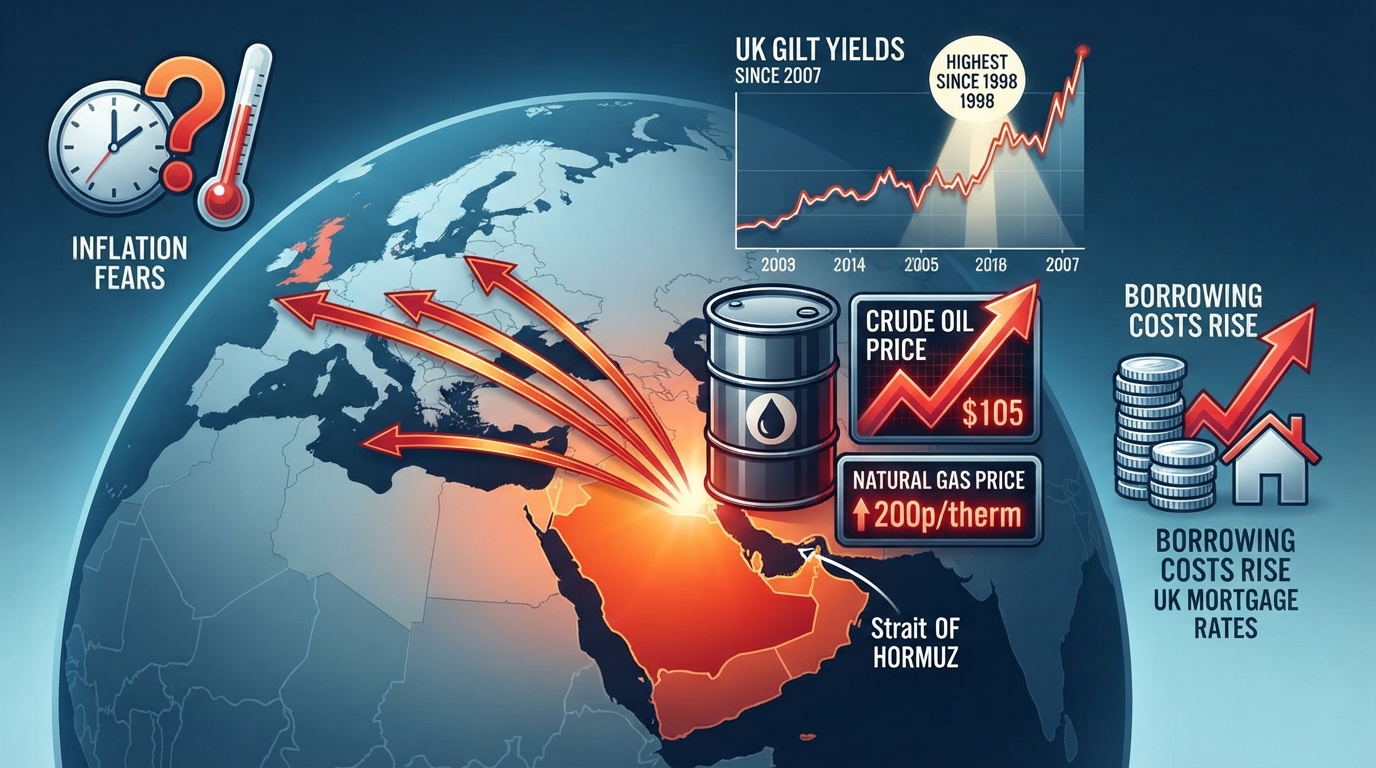
The price of oil has climbed to $105 a barrel as signs grow that the conflict in the Middle East will not be settled soon, stoking concerns that inflation could speed up.
As the conflict between the US and Iran in the Gulf has intensified in recent days, the cost of both crude oil and gas has risen sharply. Brent crude moved back above $100 a barrel on Wednesday and has kept rising.
The war has effectively shut the Strait of Hormuz, stopping oil and gas supplies from the Gulf from reaching global markets.
Fears of higher inflation have also helped drive UK bond yields to their highest level in decades.
Speaking at a Republican Party convention in Texas on Wednesday, President Trump said he did not believe the fighting would end until after the US mid-term elections in November.
Natural gas prices have also been surging on wholesale markets. In the UK, they rose above 200p a therm for the first time since the end of 2022.
Storage levels in Europe are far below normal for this time of year, and the need to replenish reserves before winter has helped push prices higher.
UK consumers are shielded from short-term jumps in wholesale gas markets by Ofgem's price cap. But if prices stay elevated for a prolonged period, households will still face higher bills.
The cap is already set to rise by 3.6% at the start of October, with the next adjustment after that due in January.
Rising energy costs have also increased fears of an inflation spike, and this has pushed government bond yields higher around the world.
In the UK, yields on 10-year bonds were at their highest since 2007 today, while yields on 20- and 30-year bonds were at levels not seen since 1998.
That points to a higher borrowing cost for the government at a time when public finances are under strain.
It could also have a direct effect on households, since it influences the rates consumers pay on some financial products, including fixed-rate mortgages.