

Travel eSIMs threaten mobile operators with roaming revenue loss, study finds
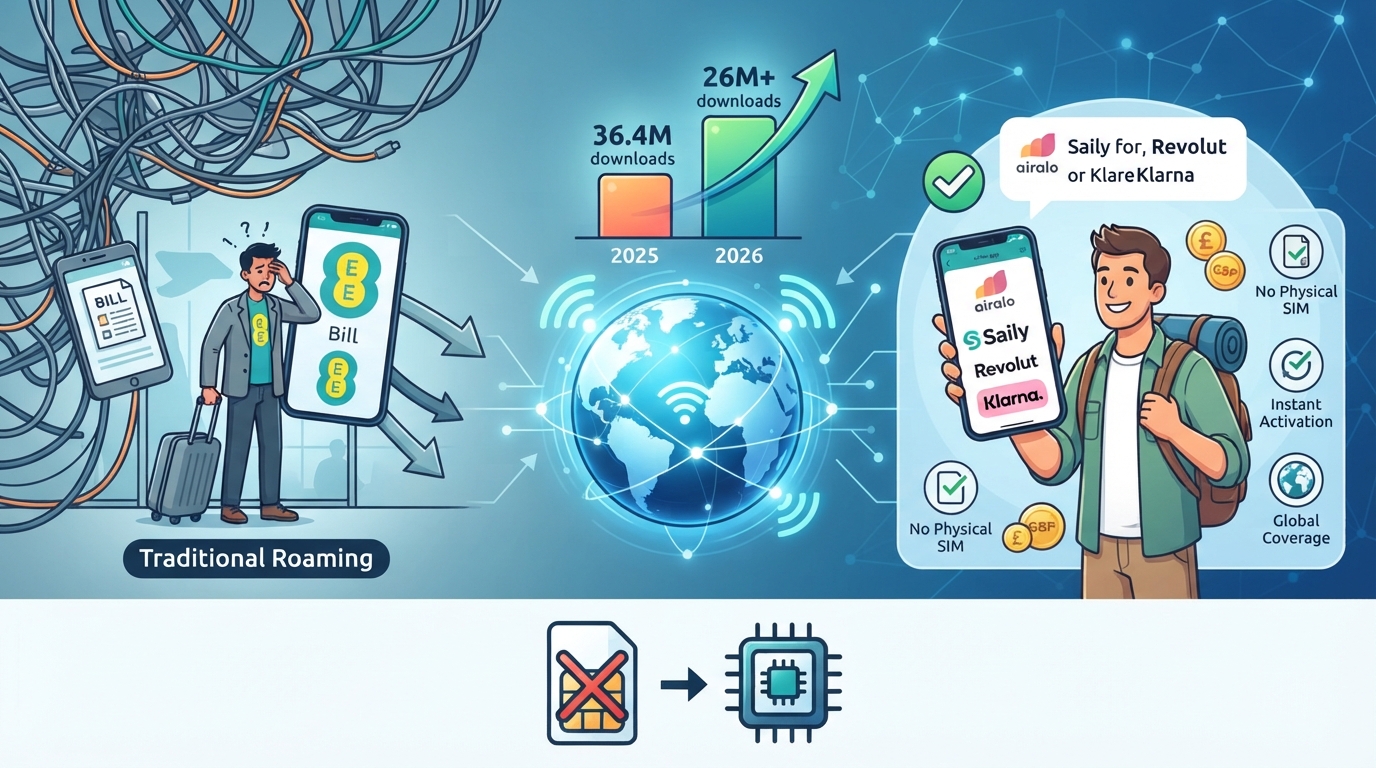
Travel eSIMs pose a threat to mobile operators' roaming revenue, according to a new study.
By 2026, the number of travel eSIM subscriptions worldwide is expected to reach 134 million, a third more than the 101.8 million registered the previous year. Travelers are increasingly choosing virtual SIM cards due to the lower cost of mobile data abroad, putting additional pressure on traditional telecom operators.
According to research firm FDM CCS Insight, roaming accounts for approximately 3-5% of operators' revenue. However, these services typically have high margins, so the rise in popularity of travel eSIMs could lead to a significant reduction in industry revenue.
Users can purchase a virtual SIM card in advance for their trip through specialized services such as Airalo and Saily. Financial platforms Revolut and Klarna have also begun offering similar services. The subscription is made directly through the app, without the need to purchase or replace a physical SIM card.
The popularity of such services is growing rapidly. Since the beginning of 2026, the five largest travel eSIM apps have been downloaded more than 26 million times. For all of 2025, the number of downloads totaled 36.4 million.
The difference in mobile data costs is particularly noticeable in the UK market. For example, a Revolut package with one gigabyte of data for seven days costs £3.49, while EE can charge £8 for 500 megabytes valid for 24 hours.
The spread of eSIM-enabled smartphones is also driving market expansion. According to the GSMA, more than 326 phone models supported this technology in 2025, an increase of almost 50% compared to the previous year.
STL Partners estimates that the global travel eSIM market was worth £649 million in 2025. By 2030, it could grow to £3.2 billion.
Traditional operators are already facing competition from virtual mobile operators (MVNOs), which use other companies' network infrastructure but sell their own services. The proliferation of tourist eSIMs is increasing pressure on the operators' traditional operating model.
To avoid losing customers and roaming revenue, operators will have to find new solutions: lower prices, improve service, and develop their own digital offerings. All this is gradually changing the market: travelers are gaining more choice when purchasing mobile data abroad.
Earlier, in Uzbekistan, entrepreneur Farkhod Mamatjanov received approval to acquire 50% of the operator Perfectum. The company was planned to become the basis for a new mobile communications project with the participation of foreign partners, including the UK's Vodafone and Finland's Nokia, with the investment estimated at €250 million.