

Traces of scented cosmetics discovered in 1,700-year-old tombs in Kazakhstan
Chalk objects found in the graves of two women dating back to the 2nd–4th centuries AD in Kazakhstan may have been ancient cosmetics. Analyses revealed the presence of organic compounds characteristic of aromatic plants in them. Scientists link these traces to cinnamon, wormwood, and mint or related plants.
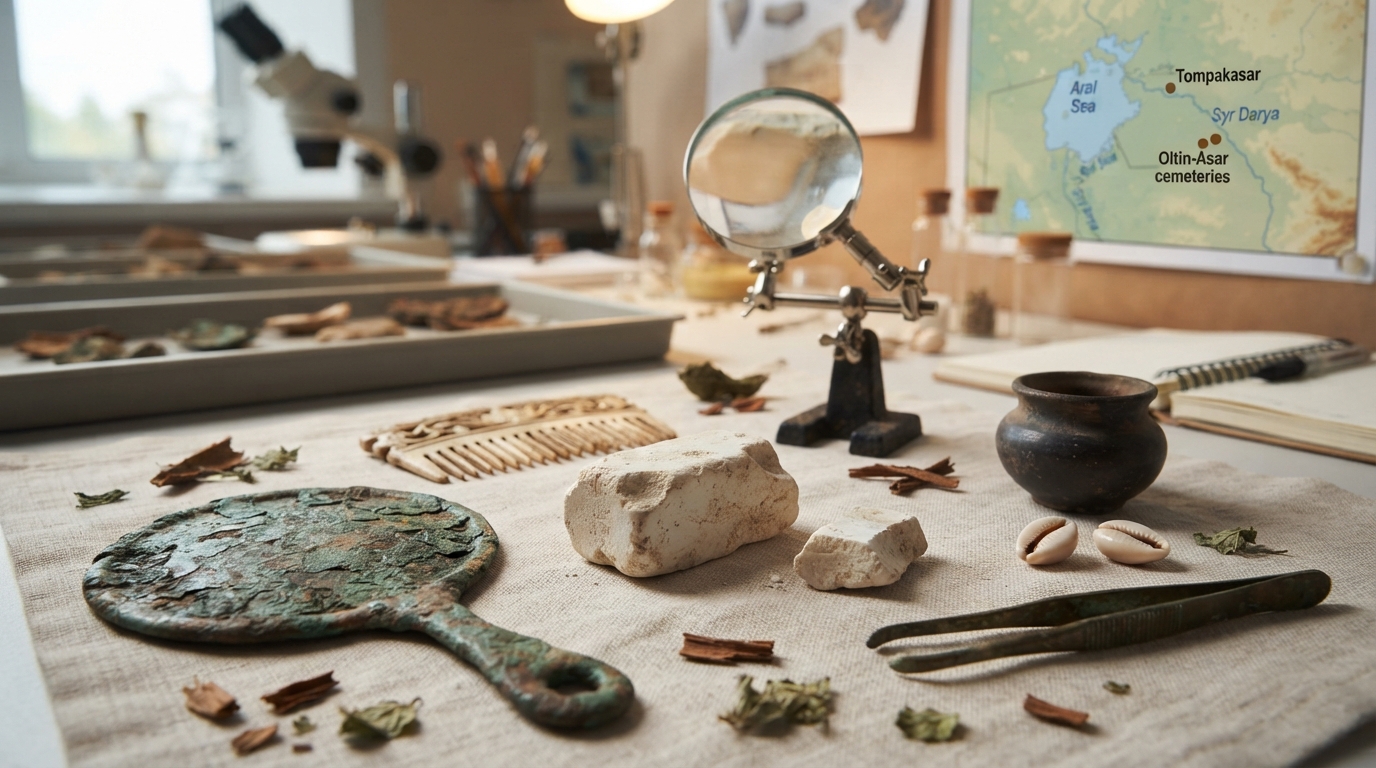
Traces of perfumed cosmetics discovered in 1,700-year-old graves in Kazakhstan
Moscow State University and Chinese specialists studied two chalk objects found in the Tompakasar and Altyn-Asar burial grounds.
These monuments belong to the Dzhetyasar culture, located east of the Aral Sea in the lower reaches of the Syr Darya River. Settlements and burial grounds in the region were studied by the Khorezm expedition during the Soviet era. The fabrics, jewelry, and metal items found there showed that the local population had connections with various regions of Asia.
The studied objects were found in the graves of two women who were approximately 30–39 years old at the time of their death. After excavation, they were kept in the Museum of the Orient.
Similar pieces of chalk have been encountered previously alongside mirrors, combs, shells, knives, and sometimes tweezers and small containers. Such items might have been part of women's makeup and grooming sets. However, the fact that the graves were looted in ancient times made it difficult to determine the function of the finds.
Scientists examined the elemental composition of the samples, viewed their structure under an electron microscope, and used X-ray and spectroscopic methods. As a result, the main substance was identified as calcium carbonate.
Microscopic calcified plate remnants belonging to marine organisms showed that the items were made of natural chalk. This feature distinguishes them from pulverized pearls or mineral raw materials extracted from caves, which are found in ancient Chinese cosmetic recipes.
During the analysis, more than 300 organic substances were identified. Among them, along with potential components of the ancient mixture, were contaminants introduced later.
Researchers were particularly interested in terpenes and related compounds produced by plants in essential oils. The identified combination of substances corresponds to cinnamon and wormwood, while some may indicate that mint or other plants belonging to that family were used.
According to the scientists' interpretation, chalk served as the base of the cosmetic product, while plant additives gave it aroma and additional properties. So far, it has not been proven how the product was applied to the skin, and it was also impossible to restore the original scent of the ancient product.