

Tokyo called on Moscow to remove the monument to the victory over Japan in Khabarovsk
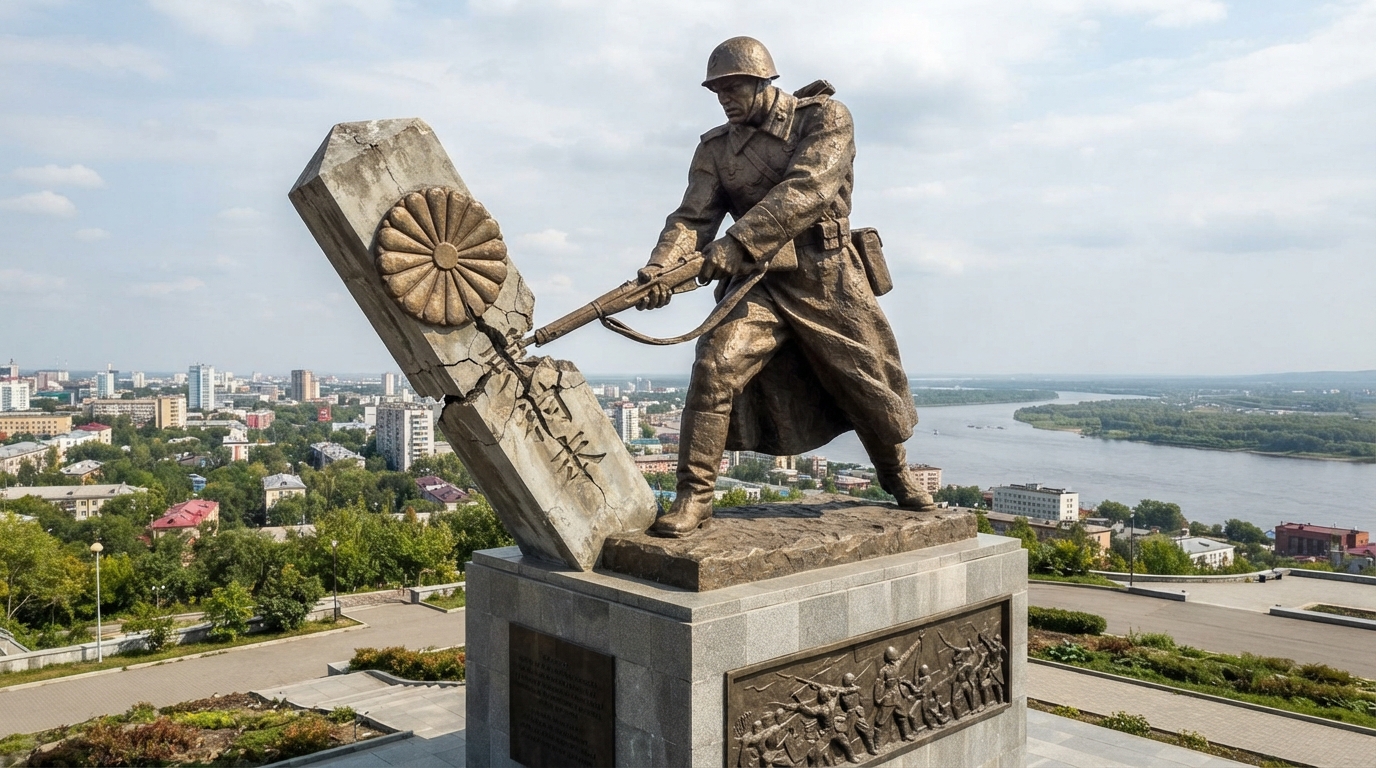
Tokyo demanded Moscow to remove the monument of victory over Japan in Khabarovsk
Japanese Prime Minister Sanae Takaichi asked Russia to dismantle the monument dedicated to the Soviet Union's victory over Japan in the city of Khabarovsk.
The Japanese Prime Minister called the use of the image of the chrysanthemum, which is one of the country's symbols, on the monument absolutely unacceptable.
"The Japanese government strongly urges the Russian side to stop the installation of the monument and to dismantle it," Takaichi wrote on the social network X.
On September 4, one of the largest monuments in Russia dedicated to the end of World War II and the Soviet Union's victory over Japan was opened at the highest point of Khabarovsk.
The bronze statue is 15 meters high. It depicts a Soviet soldier striking a border post bearing the image of a chrysanthemum, considered a symbol of Japan, with the butt of his rifle.
The Russian side explains the border post on the monument as a replica of one of the historical markers installed by Japan on Sakhalin.
Nikolay Ovseyenko, deputy head of the department for humanitarian policy issues in the Russian presidential administration, said that the chrysanthemum on the statue is not only a symbol of the Japanese imperial dynasty, but also a symbol of "militarized Japan" during World War II.
According to him, the border marker on the monument is an exact replica of the border stone installed during the period when Japan occupied part of Sakhalin after the Russo-Japanese War.
The chrysanthemum is one of the official symbols of Japan, closely associated with the imperial dynasty. The image of a 16-petaled golden chrysanthemum is used as the imperial crest on state documents and items related to the imperial family.
In August 1945, the Soviet Union entered the war against Japan as part of its allied obligations. On August 9, Soviet troops launched an offensive in Manchuria.
During the Manchurian operation, the Soviet army defeated Japan's Kwantung Army. Soviet troops also occupied Southern Sakhalin and the Kuril Islands.
The defeat of the Kwantung Army led to Japan losing its largest land military group on the Asian continent and accelerated the country's surrender process.
On September 2, 1945, Japan signed the instrument of unconditional surrender. This marked the end of World War II.
On August 13, 2026, Vladimir Putin visited Iturup, one of the Kuril Islands controlled by Russia but claimed by Japan, for the first time. This was the first presidential visit by a Russian president to the Kuril Islands since Dmitry Medvedev's visit in 2010.
Tokyo reacted very sharply to this. Japanese Prime Minister Sanae Takaichi called the visit "absolutely unacceptable," and the Japanese Ministry of Foreign Affairs summoned the Russian ambassador to lodge a protest.
After that, the situation escalated further. On August 18, Russia summoned the Japanese ambassador to protest Takaichi's assessment of Putin's visit.