

Thousands turn out in Serbia for funeral of 'Butcher of Bosnia' Ratko Mladić
Mladić was jailed for genocide during the 1990s Bosnian war and the EU warned Serbia not to glorify the convicted war criminal.
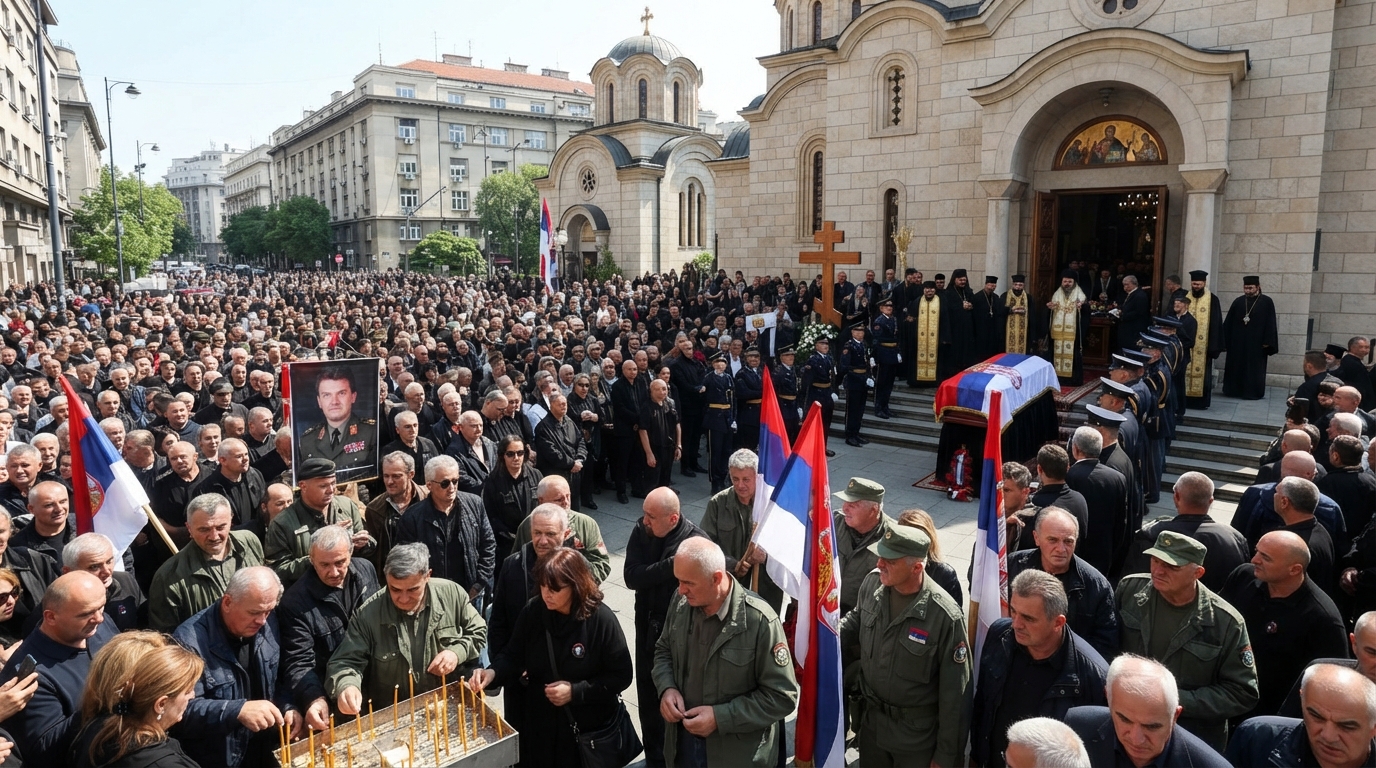
Thousands gather in Serbia for funeral of 'Butcher of Bosnia' Ratko Mladić
Thousands of people gathered in Serbia’s capital, Belgrade, for the funeral of convicted war criminal Ratko Mladić.
Known widely as the Butcher of Bosnia, Mladić died at 84 while serving a life sentence in a prison in the Netherlands.
He was convicted of genocide by a UN war crimes tribunal over his role in the 1995 Srebrenica massacre, in which about 8,000 Bosniak Muslim men and boys were killed. The atrocity was described as Europe’s worst since World War Two.
A Serbian government minister had first said Mladić would receive a state funeral, but those plans were later altered after objections from some European leaders. On Monday, the EU condemned Mladić’s "glorification".
"Ratko Mladić was a convicted war criminal who had committed war crimes, genocide, and crimes against humanity," the EU said in a statement.
"Any glorification of war criminals, genocide denial and revisionism contradict the most fundamental European values and have no place in the EU or in EU candidate countries," the statement said.
Serbia has been an EU candidate since 2012, although membership talks have recently stalled.
Ratko Mladić led Bosnian Serb forces in the 1990s against the Bosnian Croat and Bosniak (Bosnian Muslim) armies.
During the 1992-1995 Bosnian war, his troops carried out what became known as "ethnic cleansing" in Bosnia-Herzegovina in an effort to drive out the non-Serbian population by force. They also besieged Sarajevo, causing more than 10,000 deaths.
Mladić was arrested in 2011, 16 years after he was first indicted, and in 2021 he was sentenced to life in prison after a nine-year trial.
Even after his genocide conviction, Mladić remains a national figure viewed by many Serbs as a heroic defender of the nation.
Many Serb nationalists regard him as a hero and protector, especially in the Bosnian Serb entity of Republika Srpska, where his death prompted vigils.
Several Serbian government ministers joined the crowds paying tribute outside the church where Mladić lay in state before burial, including Defence Minister Bratislav Gašić and Justice Minister Nenad Vujić, local media reported.
The funeral service was led by the head of the Serbian Orthodox Church, Patriarch Porfirije, who said Mladić’s name would remain "deeply etched in the memory and prayers of the majority of our Serbian Orthodox people, who feel and nurture a deep sense of gratitude towards him".
Earlier in the day, long lines formed outside the small St Luka church as people waited to enter and pay their respects to the coffin. Many in the crowd were army veterans, and some men wore flags printed with his picture.
Crowds arrived hours before the funeral began to light candles outside the church, while a choir played over loudspeakers in the sunshine.
Inside the church, Mladić’s coffin was guarded by several men, mostly war veterans, while his wife, son, and grandchildren stood inside receiving condolences.
In a sign of the reverence shown to the former general, his coffin was flown back to Serbia last week on a government plane and carried from the aircraft by six soldiers, draped in flags.
Free bus services were arranged from Bosnia and from most towns in Serbia for anyone wishing to pay their respects.
On Sunday night, supporters of the Serbian football club Red Star Belgrade unveiled a display of Mladić before their derby victory over Partizan Belgrade.
For others, the funeral revived painful memories of the war.
A woman in Sarajevo named Zdravka Gvozdjar, whose nine-year-old son was killed by Mladić-led forces during the siege of the city, told Reuters news agency it was "really horrible" that the funeral was taking place in Belgrade.
Mladić "deserved to be erased from memory for good, not to be... promoted as a hero," she said.
"He should be remembered only as a butcher."
Thousands attended the funeral because he "remains a figure of national pride and defiance," said Daniella Peled, Editor at the Institute of War and Peace Reporting NGO, who covered Mladić’s war crimes trial in detail.
The war crimes tribunal "provided an incredibly detailed historical record of Mladić's crimes," she told the BBC, but the Serbian media and education system "has not reflected the true scale of his crimes or the perspectives of victims and survivors."
Pro-government Serbian media "depict him as a loyal soldier who simply carried out his duties," Peled said.
"It's extremely challenging for post-conflict societies to undertake a national reckoning or acknowledge responsibility for the crimes of the past."
The night before the funeral, Red Star Belgrade supporters formed a tifo depicting Mladić during the Serbian SuperLiga football match.