

The general who massacred Muslims. Who was Ratko Mladic, who died in The Hague?
A few days ago, Ratko Mladic, who ordered the massacre of about 8,000 mostly Muslim civilians in the Bosnian town of Srebrenica in 1995, died in The Hague. After the largest massacre in Europe since World War II, Ratko Mladic earned the nickname "the Butcher of Bosnia." The perpetrator, who was later captured and brought to justice in The Hague, was sentenced to life in prison.
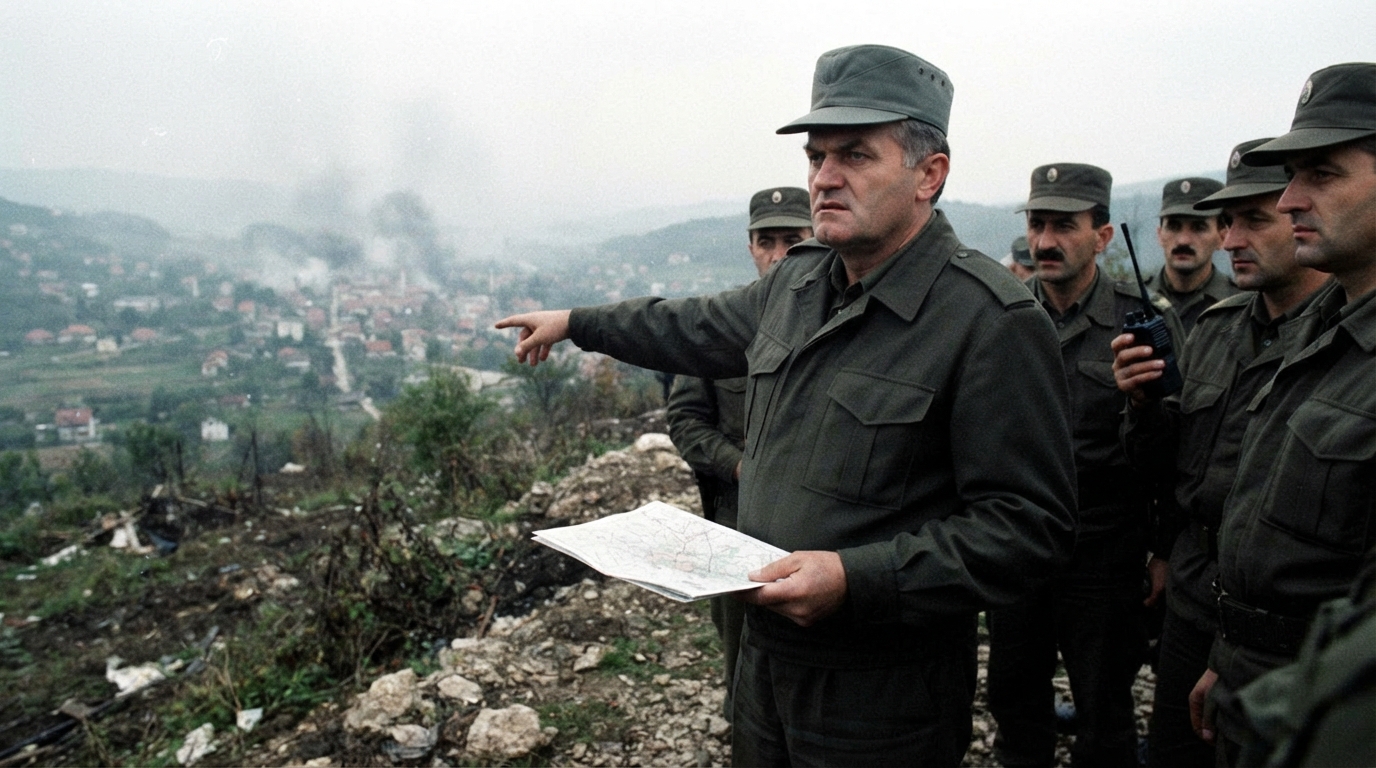
The general who massacred Muslims: Who was Ratko Mladic, who died in the Hague prison?
The last decade of the 20th century was full of various events. The USSR, which had existed on the stage of history for 68 years and emerged as the "second pole of the world" after World War II, collapsed. Also, Czechoslovakia, consisting of Czechs and Slovaks, peacefully disintegrated. The fate of Yugoslavia, which consisted of six allied republics, was somewhat more complicated. The ruling Serbs did not like the declaration of independence of the allied republics, and war began.
During this war, the Serbs brutally treated Bosnian and Kosovo Muslims, as well as Croats, and massacred them. A number of military personnel were at the forefront of these massacres, in particular, General Ratko Mladic, the commander of the Bosnian Serb army.
"Bosnian Butcher"
Born in Bosnia in 1943, Mladic studied military science from a young age and followed this path. After the collapse of the USSR, the allied republics of Yugoslavia began to declare their independence one after another. This did not please the Republic of Serbia, the main ruler in Yugoslavia, and the Serbian leaders who ruled the country. Belgrade, not wanting to lose the territories under its control, began military operations to suppress the republics that declared independence. Thus began a large-scale armed conflict.
Although the state had disintegrated, the Serbian military, which still called itself Yugoslavia, simultaneously invaded Bosnia, Croatia, and Slovenia. Local Serbs also joined their ranks. The situation in Bosnia was particularly difficult, with the local Serbs wanting to remain part of Yugoslavia, while the Muslim Serbs (Bosniaks), who made up the majority of Bosnia's population, were in favor of independence. As a result, atrocities began against Muslims who were advocating independence.
The Bosnian Serb army was commanded by General Ratko Mladić, and several massacres were carried out under his orders, including the horrific massacre in Srebrenica...
The Srebrenica massacre
In early 1992, the town of Srebrenica and the surrounding area were occupied by the Serb army led by Ratko Mladić. In May 1992, the Bosnian Muslim army led by Nasir Orić retook the area. In March 1993, the area was again occupied by the Serbs, and Srebrenica was surrounded.
The Bosnian army, which could have helped the Muslims, was far away. Due to the inability to deliver supplies, the Muslim population of Srebrenica was left without food, medicine, and fuel. The city remained under siege until 1995.