

The Russian Ministry of Emergency Situations app distributed a fake message about a "nuclear attack"
Mobile applications that warn the population about dangers have been subjected to a cyberattack in Russia and Ukraine. Fake messages were sent to users claiming that nuclear warheads had been launched toward Russia, and that a radiation and chemical hazard had arisen in Ukraine. App developers and relevant agencies of both countries issued statements regarding the incident.
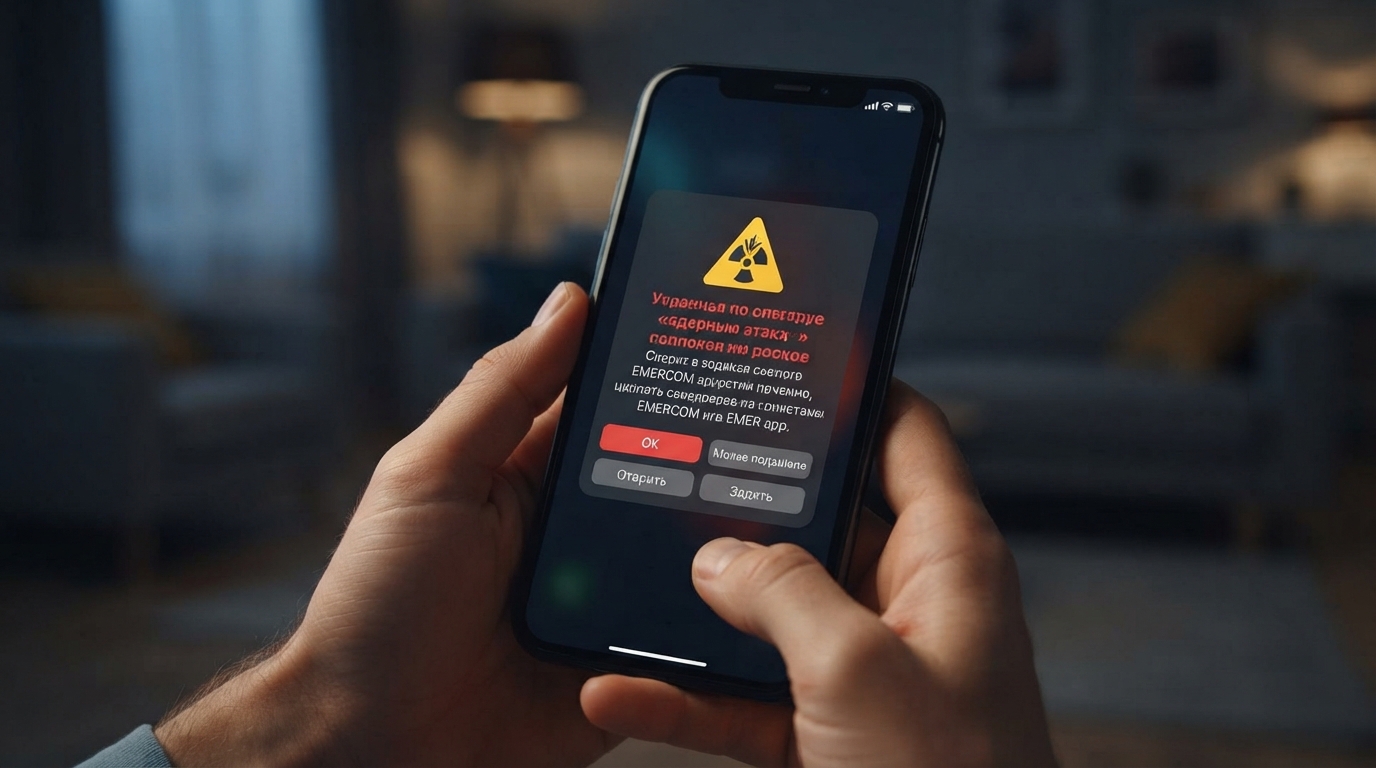
Russian EMERCOM application distributed false news about a "nuclear attack"
According to DW, on the evening of Sunday, November 1, the official "Air Raid" application used to alert the population about threats in Ukraine was subjected to a cyberattack. Following this, users began receiving false notifications about radiation and chemical danger. Messages regarding the threat of street fighting in Kyiv were also distributed.
The Ukrainian Air Force was among the first to react to the incident. The military stated that the application had likely been subjected to "enemy influence" and emphasized that there was no radiation danger whatsoever.
Meanwhile, the State Emergency Service of Ukraine announced that the nationwide warning system was functioning normally. According to the agency, all threat signals are being transmitted to regional administrations and street warning systems.
Later, the app developers also confirmed unauthorized access to the system.
"Today, unauthorized third parties interfered with the application's operation. We disabled push notifications and temporarily suspended the app's operation," their statement published on Telegram reads.
The developers urged users not to follow links in suspicious notifications.
On the night of November 2, the team reported that the service's operation was being gradually restored after the cyberattack. Users began receiving air raid warnings again, although some features were temporarily unavailable.
The team also emphasized that the app does not store users' personal data. They reported that additional measures were being implemented to strengthen cyber protection.
At almost the same time, the Ministry of Emergency Situations of Russia also announced that its mobile application was subjected to a "large-scale cyberattack."
According to the ministry's statement, attackers sent false messages to users via the application alleging that nuclear warheads had supposedly been launched toward Russia.
The Russian EMERCOM stated that specialists were working to eliminate the vulnerability in the system and restore the service's normal operation.