

The President sent congratulations to the participants of two international conferences
"We [will increase] food production by 2 times, and export and value added by 3 times by 2030
The President sent congratulations to the participants of two international conferences
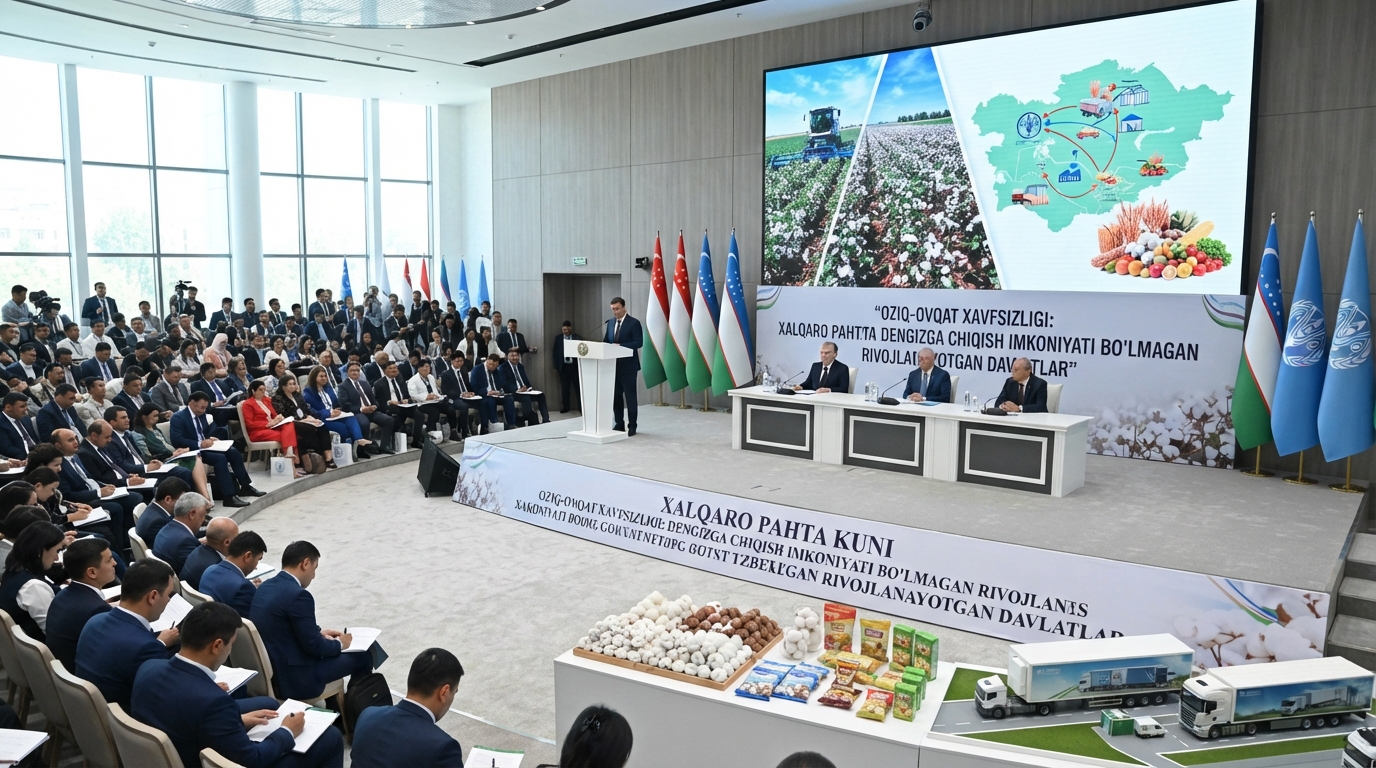
President Shavkat Mirziyoyev sent congratulations to the participants of the international conferences dedicated to World Cotton Day and the food security of landlocked developing countries.
Renowned scientists and experts, entrepreneurs from more than 30 countries of the world, as well as representatives of many international organizations are participating in these forums.
Uzbek farmers have vast experience in cotton growing. Thanks to the radical reforms implemented in recent years, this sector has risen to a new level. About 300 early-maturing varieties of cotton have been created by inquisitive scientists. The process of planting, cultivating, and harvesting cotton has been fully mechanized. Today, due to the introduction of modern agrotechnologies, farmers are obtaining up to 100 centners of cotton harvest per hectare.
Currently, along with problems such as climate change, water scarcity, and drought, disruptions in the logistics chain are also causing food prices to rise. According to the Food and Agriculture Organization of the United Nations, more than 645 million people worldwide suffer from hunger. International experts note that if appropriate measures are not taken, this figure could reach 1 billion by 2028.
"Overcoming such threats to the future of humanity depends on multifaceted partnership and joint efforts. For landlocked countries, high transport costs and problems in transit countries remain a serious obstacle. Such difficulties, of course, also affect food security. Therefore, we advocate for the complete freedom of food logistics and trade, as well as the simplification of rules regulating food delivery.
We have set a major goal to double food production and triple exports and value added by 2030. To achieve these goals, we intend to strengthen cooperation with international organizations and foreign countries."
The need to develop a food cooperation program connecting landlocked countries and transit partners, starting from Central Asia, was noted. Also, international financial institutions and private investors were called upon to implement joint projects on food processing, cold storage, and transportation.