

The number of robots at Amazon has exceeded one million. What does this mean for employees?
The number of robots used by Amazon has exceeded one million. They are helping to deliver orders faster and reduce costs. However, machines working side-by-side with employees are also raising growing questions about the pace of work, safety, and the future of jobs.
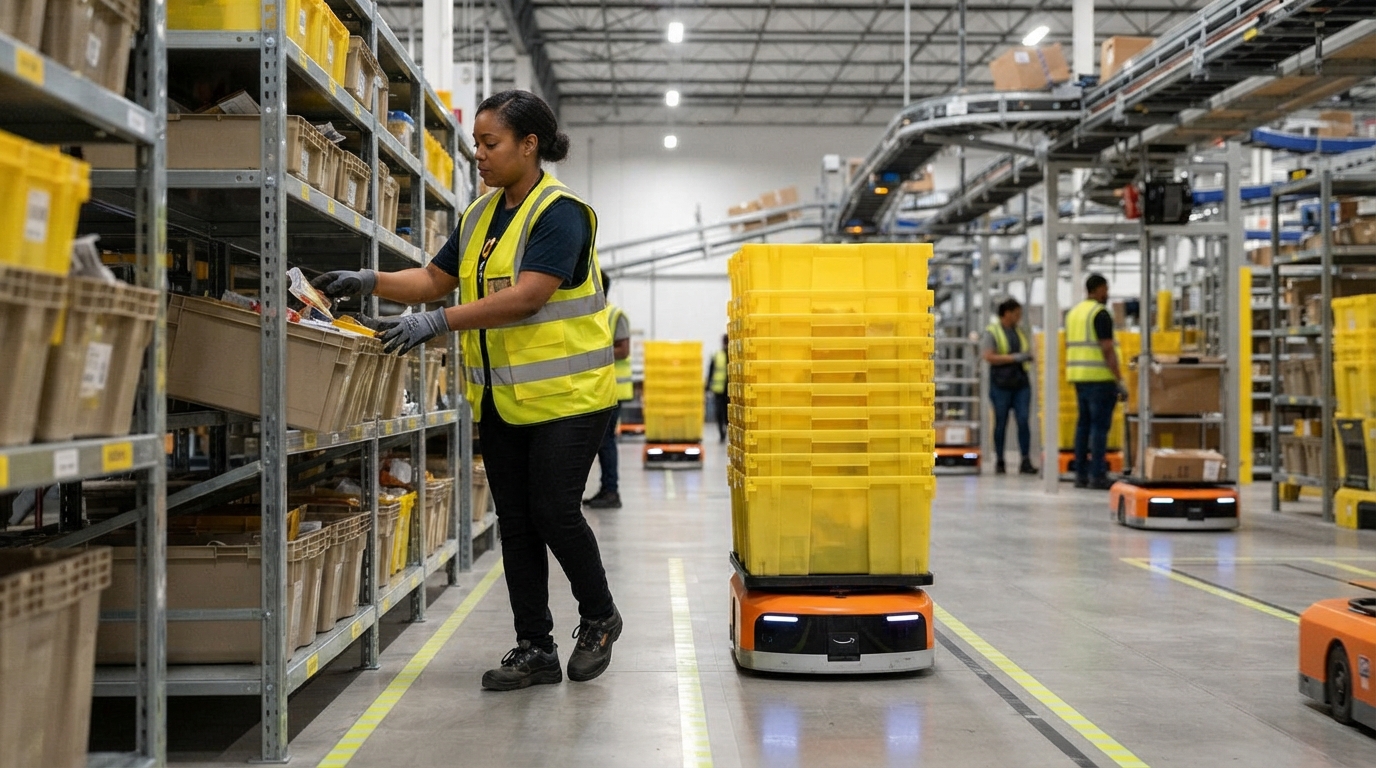
The number of robots at Amazon has exceeded one million. What does this mean for employees?
The company's robot fleet includes mechanical manipulators, mobile cargo platforms, and large machines that sort cargo pallets. They accelerate the processes of moving and sorting products in Amazon's extensive logistics system.
Currently, more than 1.5 million people work at the company on a full-time or part-time basis. The expansion of automation is also affecting their daily work routines.
Brad Greenwood, a business professor at George Mason University, highlighted two aspects of this change in an interview with Ars Technica: robots are working in increasingly close proximity to humans and are gaining the ability to dictate the pace of work.
According to his comment, automated systems previously often operated in areas separated from employees. When a dangerous task was assigned to a machine, efforts were made to ensure it was not directly next to a human. Now, however, human and robot workspaces in warehouses are becoming increasingly close.
In Greenwood's view, machines setting the pace of work could become a new source of pressure for employees. As robots speed up operations, humans are also required to adapt to that pace.
For the company, automation allows reducing logistics delays, lowering costs, and increasing efficiency. According to expert evaluation, the reduced need for human labor may also weaken employees' positions in individual or collective negotiations with the employer.
The material also pays attention to the issue of labor safety. It is noted that while technological news about robots is widely covered, the problem of workplace injuries may be less visible. However, the provided text does not contain specific statistics showing a link between the increase in robots and injuries.
Another issue worrying employees is the use of artificial intelligence in personnel management. In particular, evaluating worker performance and automating HR decisions raise questions about the role of human oversight in labor relations.