

An "ambulance" for robots has been created in Japan
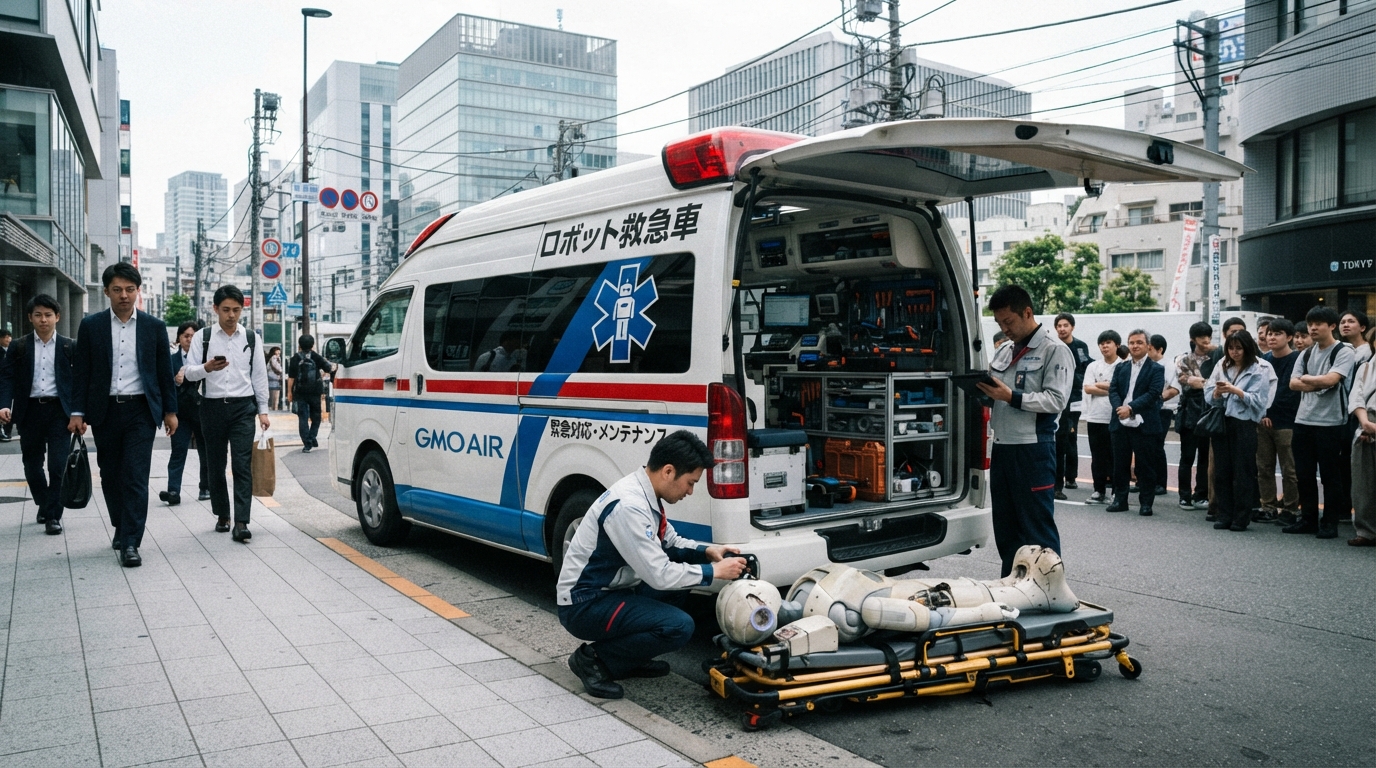
An "ambulance" for robots has been developed in Japan
Japan's GMO Air company has demonstrated the country's first "robotic ambulance." This van is specially equipped for the emergency repair and maintenance of humanoid robots.
The vehicle will serve on the streets of Tokyo. Its main tasks consist of delivering engineers, repair equipment, spare parts, and, if necessary, alternative robots to the customer. If on-site repair is not possible, the broken robot is taken to the base, and a temporary robot is put in its place so that the customer's business does not grind to a halt.
Experts clarified that the van does not have the capability to operate autonomously and repair another robot. The van combines old and modern methods, where technology and humans work together. Specifically, engineers arrive at the scene in the vehicle, conduct diagnostics, and, if possible, eliminate the problem right on the spot. Otherwise, a temporary device is left behind, and the old robot is sent to the service center for repair.
This idea stems from the company's previous experience and is aimed at solving a serious problem: if a robot costing between $70,000 and $140,000 breaks down during working hours, the company loses several days and thousands of dollars to send it to a service center and restart its operations. For hotels and warehouses that use humanoid robots for cleaning or other tasks, this is a real problem.
The presentation of the van was held at a time when competition between the US and China in creating humanoid robots is intensifying. In Japan, the government has set an ambitious goal — to deploy 10 million robots in various sectors, from healthcare to manufacturing, by 2040.
As the number of robots increases, ensuring their continuous operation, rapid technical maintenance, and establishing spare parts logistics are becoming key factors determining who will prevail in this race.
For now, only one "ambulance" van is operating in Tokyo on a trial basis. However, if demand increases, the number of such vans will be expanded.