

The number of poor people in the world has increased and reached 1.2 billion people - UN
More than half of the poor (617 million) are children, 83 percent of whom live in rural areas.
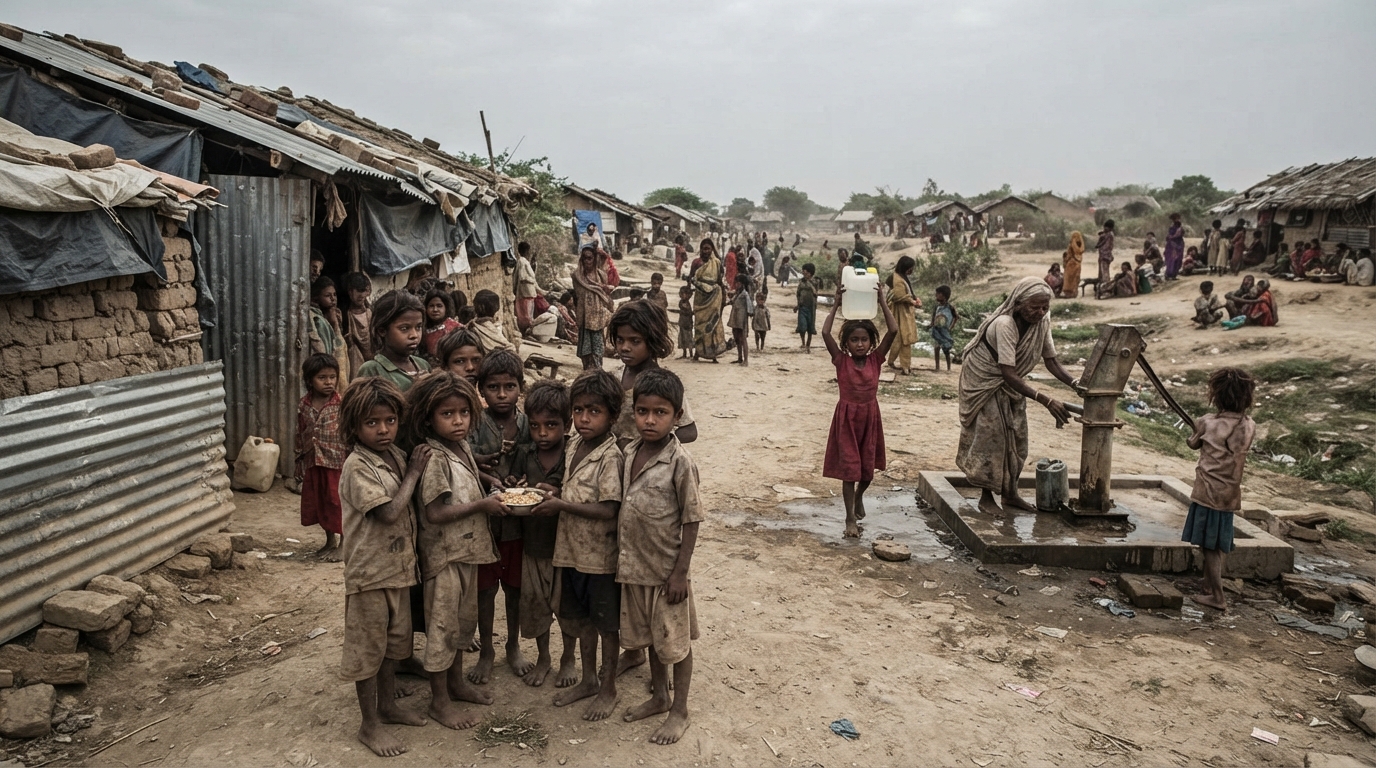
Number of poor people in the world increases to reach 1.2 billion - UN
The number of people living in extreme poverty in the world has increased for the first time since the UN began keeping records in 2010, reaching 1.2 billion people. This is 51.5 million more than the previous estimate. Data on this is presented in the 2026 Global Poverty Index prepared by the UN Development Programme (UNDP) and Oxford University.
More than half of the poor are children — 617 million, 83 percent of whom live in rural areas.
In the index, poverty is assessed not by income, but by what is lacking in a person's life — access to proper nutrition, education, medical services, clean water, electricity, and decent housing. Those who are deprived of a significant portion of these goods are considered poor.
The study covered 108 developing countries where 78 percent of the planet's population lives. This increase is also partly due to population growth: in 95 countries where new data was not available, population growth increased the number of poor people by another 15.8 million.
UNDP Administrator Alexander De Croo said:
"The rise in poverty should be an alarming signal for the whole world. Behind these figures stand 1.2 billion people facing mutually reinforcing factors — hunger, lack of education, clean drinking water, or electricity."
The situation in 13 countries with updated assessment indicators varies. In Egypt, Nepal, and Tajikistan, both the share and number of poor people decreased, while in Angola and Zambia, the share declined, but their absolute number still increased due to population growth. In Nigeria, the decline in poverty in the 2010s was replaced by growth again in the 2020s. China developed at the fastest pace: from 2010 to 2014, the share of the poor among the country's population dropped from 9.5 percent to 4.2 percent.
According to the organization, in 2025 it received its lowest funding in the last decade — a mere $12 billion. This reduction occurred, among other reasons, due to the decrease in US international aid initiated by Donald Trump.