

The Ministry of Water Resources has responded to reports regarding the drying up of the Amu Darya River
Against the backdrop of reports about the Amu Darya drying up, the Ministry of Water Resources announced that the water flow in it is being maintained. The ministry explained the decrease in autumn water levels and discharge by seasonal processes. It was noted that after the end of the vegetation season, reserves are accumulated in reservoirs for the next season.
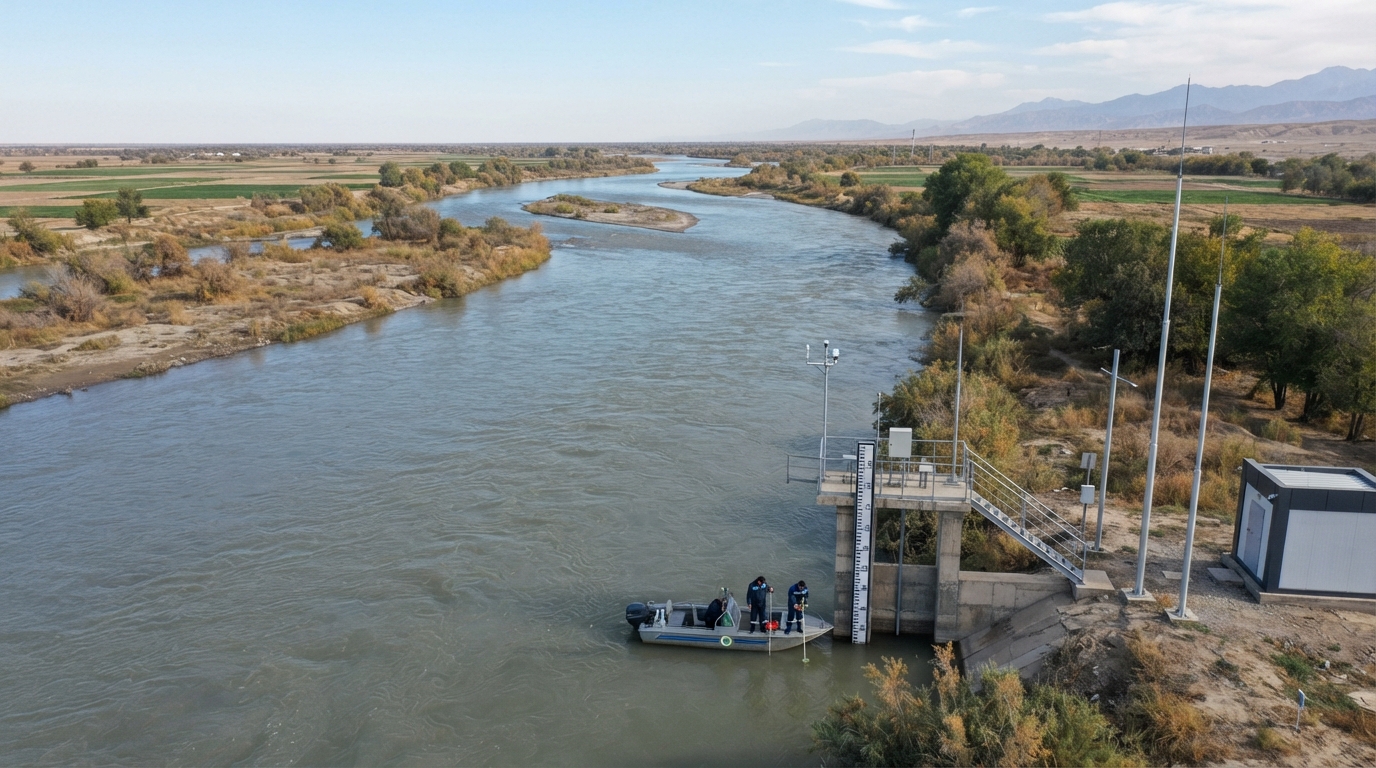
Ministry of Water Resources commented on reports about Amu Darya drying up
The Ministry of Water Resources of Uzbekistan issued a statement on October 10 regarding reports circulating on social networks about the drying up of the Amu Darya.
The Amu Darya is formed by the confluence of the Panj and Vakhsh rivers, which originate in the mountains of Tajikistan and Afghanistan. The Kofarnihon River is considered one of its major tributaries.
According to the ministry, on October 9, the water level at the Termez hydropost, located at the entry point of the Amu Darya into Uzbekistan, was 239 cm. This is 27 cm higher than the figure for the same period in 2025.
Also, at the Kerki hydropost, the water discharge was 499 cubic meters per second, which is 63 cubic meters per second less compared to the corresponding period last year.
"These hydrological indicators show that the water flow in the Amu Darya is being maintained," the report says.
The ministry also provided information on the Nurek reservoir located on the Vakhsh River in Tajikistan, in the upper part of the Amu Darya basin. As of October 9, water inflow into the reservoir was 408 cubic meters per second, and release was 320 cubic meters per second. The water volume in it reached 10.54 billion cubic meters.
"The decrease in water discharge and level in rivers during September–October is a seasonal hydrological process. Due to the completion of the vegetation season, water reserves are accumulated in reservoirs for the needs of the next season," the Ministry of Water Resources noted.
At the 95th meeting of the Interstate Commission for Water Coordination of Central Asia, held in early October in the Avaza national tourist zone of Turkmenistan, the results of the 2026 vegetation period in the Amu Darya and Syr Darya basins were summarized. The participants approved water withdrawal limits and forecasted operation regimes of reservoirs for the inter-vegetation period of 2026–2027. The next meeting is planned to be held in Uzbekistan in the first quarter of 2027.
In June, the concept of the Integrated Water Resources Management (IWRM) plan for the Lower Amu Darya basin was signed in Samarkand. This concept envisages planning the use of water resources across the entire river basin, taking into account the interests of all water consumers, the state of ecosystems, and long-term climate risks.