

The long regrets of a long-haired girl
My childhood was spent in the heart of Syrdarya - the city of Gulistan, in the dear classrooms of School No. 10 there. At that time, a little
**Long Regrets of a Girl with Long Hair**
My childhood was spent in the heart of Sirdaryo — the city of Guliston, in the cherished classrooms of School No. 10 there. In those days, our small city was surrounded on all four sides by lush, endless cotton fields. It felt as if the entire world consisted of these fields, and our lives were tied to them too.
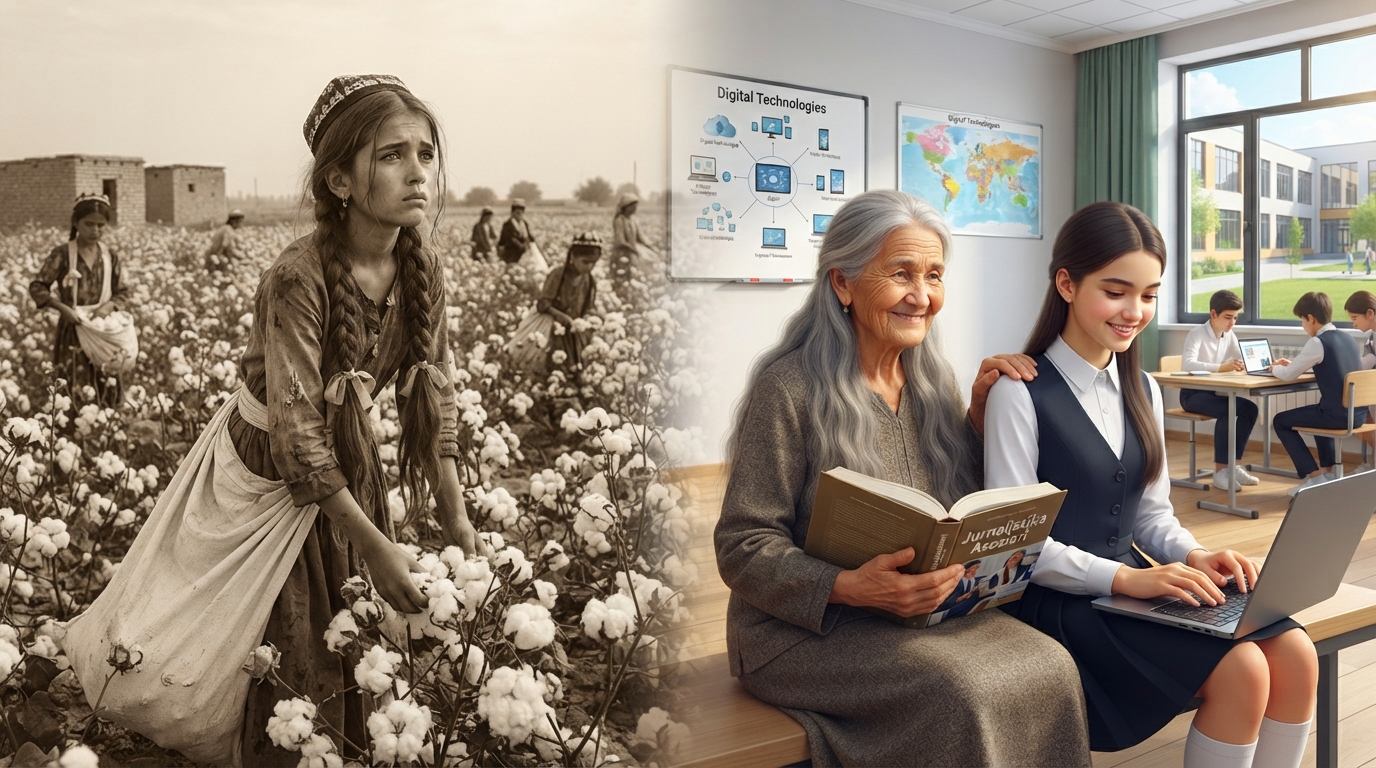
We were fifth-grade pupils whose bones had not yet hardened. As soon as spring arrived, we would forget about school and go out to heavy field work such as cotton hoeing and thinning. In autumn, academic life would come to a complete halt. In the face of quotas and obligations, our childhood rights, books, and notebooks lost their value. We were no longer schoolchildren, but real field workers toiling through mud and soil.
Years passed, and my dreams brought me to the Faculty of Journalism at Tashkent State University. In 1976, I had the good fortune of becoming a student. But the path to higher education still ran through those same familiar fields. Every autumn, studies would stop, and we would be sent to the waterless, wind-howling remote deserts of Sirdaryo. We would stay there not for a month or two, but for a full three or four months.
We lived in cold, damp barracks. Desert winds often rose, blowing through the cracks in the barrack walls and cutting right to our bones. At the break of dawn, before the sun had even risen, we would head to the field, shivering from the cold. All day long, with heavy aprons tied to our waists, we picked cotton while bent over.
Our kind professors, such as Muhammadjon Bobojonov, Muxtor Xudoyqulov, Anvar Karimov, Saydi Umirov, Abdulla Sayfuddinov, and Boybo‘ta Do‘stqorayev, cared for us like their own children. Feeling pity seeing our condition, they comforted us saying: "We will return to Tashkent soon, the quota is almost fulfilled." Looking back now, they too were helpless before the strict system of that era.
In those days, girls had long hair, but there were no conditions at all to care for it. So that the girls would not suffer, our caring professors would give us one day off each week to wash our hair and take care of ourselves. This day was the biggest holiday in the world for us. We would light a fire behind the barrack and heat water in buckets. Our hair was very long back then, but the longing, pain in our hearts, and dreams for tomorrow were even longer.
The cotton field was not just a workplace for us, but a place where the pains and sorrows of an entire generation were buried.
One day, while I was picking cotton in the field, the words said by my grandmother, who had come to visit because she missed me, still linger in my ears and crush my heart. Sitting gently on an apron at the edge of the field, my dear grandmother said with tears in her eyes:
— My child, our entire life was spent slogging through mud in these fields, picking cotton. Now, your finest youth is passing in these torments, in these cotton fields. Is such hard labor really written in the destiny of future generations too?
This thought devoured me from within as well. Years passed, and I became a mother myself. When my children started school, that same fear and sorrow began to haunt me again. Looking after my children heading to the cotton fields from school, a tear would well up from deep inside me.
"Will times really never change? Will my grandchildren also suffer the torment of these 'headquarters', 'quotas', aprons, and damp barracks?" I would pray to God at night.
We lived within the chains imposed by the times and the system. But a human being never lives without hope. Those eagerly awaited bright days came after all. Through the firm will of the head of our state, Shavkat Mirziyoyev, forced labor and child labor, which had drained the people's strength, were completely brought to an end. A very right path was chosen — the state chose the child, not the field!
This was not just news; it was the salvation of our nation's future, of our children. Childhood was saved from being lost in cotton fields, and youth from being withered in heavy labor. It was proven that human dignity is superior to cotton.
Today, I have happy grandchildren who are the apple of my eye. They are growing up in a completely different, free, and prosperous world. Looking at them, a sense of gratitude passes through my heart: in my grandchildren's vocabulary, there are no words at all that recall heavy memories, such as "cotton turmoil", "barrack", "headquarters", "apron", or "quota". They do not even know the meaning of these words, because they did not see such bitter days.
The vocabulary of today's youth is completely different: "digital technology", "innovation", "English language", "international olympiad"...
Today, doors to comfortable and warm schools, computer rooms, clubs, and endless opportunities are open for my grandchildren. Our state is creating conditions for them solely to study, research, and demonstrate their talents. My grandchildren are picking not cotton in the field, but the fruits of knowledge and thought for their future in classrooms.
This year, two of my grandchildren became students at prestigious universities in the capital. The hardships we saw are left behind, and our youth have stepped into the beautiful future we dreamed of. I express my gratitude for the reforms in our country, where human dignity is honored. I sincerely thank our President, who is making the people pleased.