

The itinerary will determine the prospects
CIS Paves New Ways: What the Leaders' Summit in Turkmenistan Will Change
The Roadmap Will Determine the Prospects
On October 9, Turkmenistan will host a summit of the leaders of the CIS member states. Ahead of this meeting, VES 24 spoke with Taisiya Marmontova, head of the Institute for Regional Integration Studies (Kazakhstan). She shared her perspective on the significance of the upcoming summit, its likely agenda, and the key areas of cooperation among the Commonwealth countries.
Speaking generally about the significance of the CIS summit in Turkmenistan, it is, above all, a chance for the member states to discuss a wide range of issues directly related to the sustainable development of the region. This concerns not only economy and trade, but also transport, industrial cooperation, education, and humanitarian ties — that is, the areas that shape the practical agenda of interaction.
At the same time, it is important to consider the level of the leaders' meeting itself. The participation of nine heads of state has already been announced, and the invitation of Iran's representative should be noted separately. If this participation takes place, it could provide an additional impetus to the discussion of a whole range of regional issues.
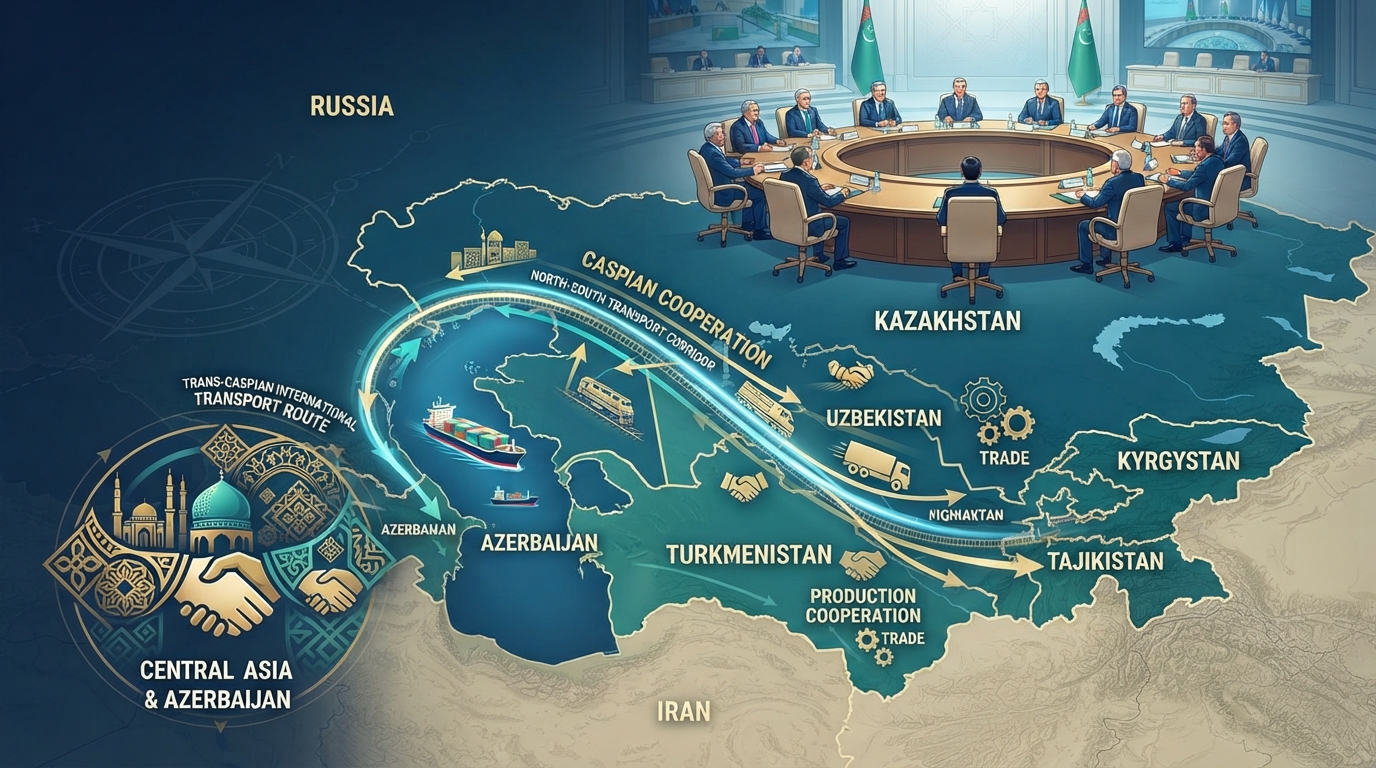
First and foremost, this concerns Caspian cooperation. The Caspian theme is, in essence, of an umbrella nature and requires both multilateral interaction and bilateral coordination among the states of the Caspian Five. In this context, Iran's presence opens up additional opportunities for discussing transport and economic ties, including along the North-South route. However, the presence of an invited leader in no way implies a change in the composition or obligations of the Commonwealth members.
Separately, I would highlight the meeting of the heads of state of Central Asia and Azerbaijan. This is indeed a promising and important format. It is where the issues of historical and cultural ties, the interaction of Turkic states, as well as specific economic interests — primarily the development of the Trans-Caspian International Transport Route — intersect.
It is precisely here that the general CIS agenda can merge with specific regional interests. Moreover, we are talking about areas that have long-term strategic importance for the economy: promoting agreements that simplify mutual trade, increasing the predictability of transportation, and aligning transport infrastructure.
The latter issue is particularly important. Transport routes should not compete with each other in isolation from real capabilities, but rather complement one another. You can have a large-scale and promising infrastructure project, but if cargo idles at the border for four to five days, any transport agreement loses a significant part of its practical effectiveness. Therefore, it is not just about developing individual routes, but about creating a coordinated transport system in which infrastructure, customs procedures, and logistics work as a single mechanism.
In my opinion, the effectiveness of the summit should be evaluated primarily not by the number of declarations, but by the extent to which the agreements reached find concrete continuation in the practical agenda of the participating countries: in trade, transport, cooperation, humanitarian interaction, and the implementation of regional projects.