

The International Educational Forum of Central Asia has started in Tashkent
In Tashkent, the International Education Forum of Central Asia has begun its work, bringing together representatives from more than 40 countries. Among the participants are ministers of education and science, about 500 heads of domestic and foreign universities, as well as over a thousand experts. At the opening ceremony, a message from the President of the Republic of Uzbekistan, Shavkat Mirziyoyev, to the forum participants was read out. The address noted that the countries of Central Asia are consistently strengthening […]
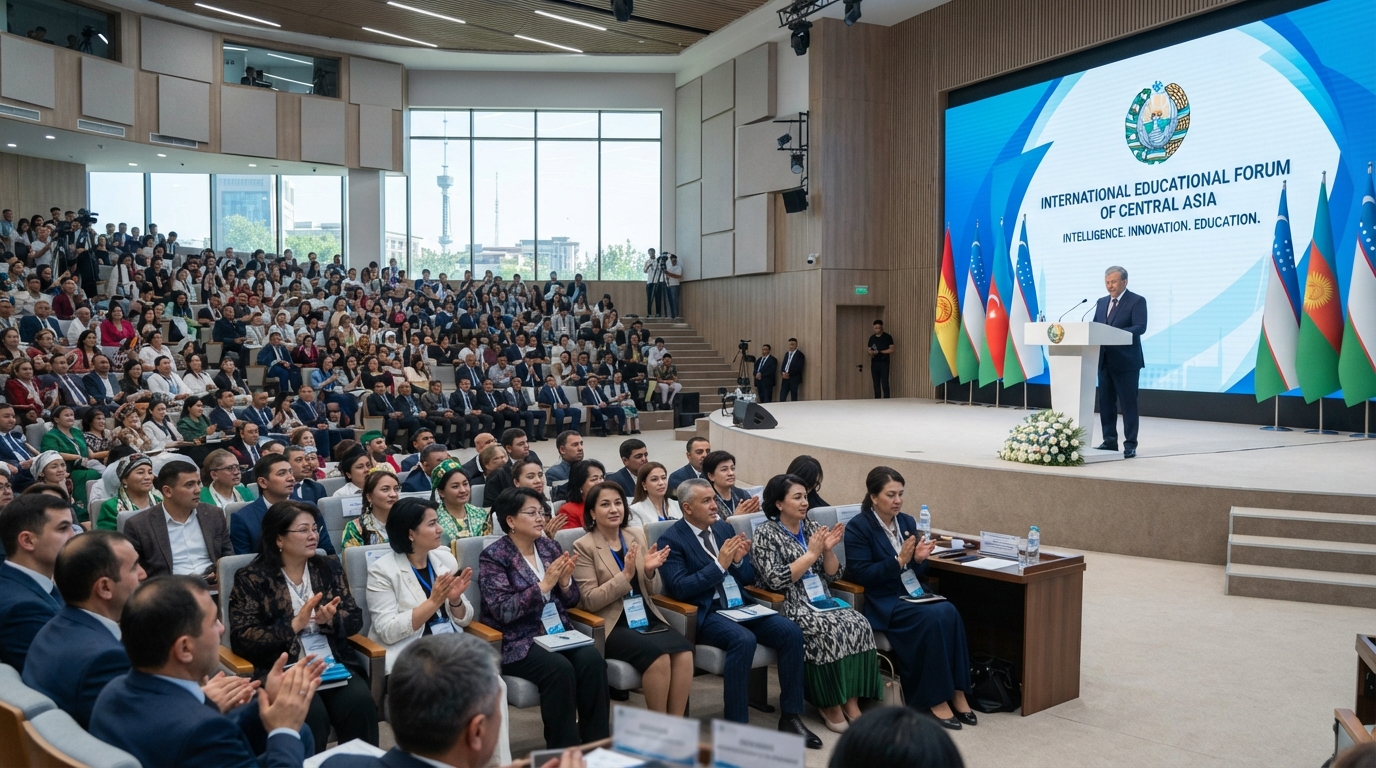
The Central Asian International Educational Forum has begun its work in Tashkent, bringing together representatives from over 40 countries. Among the participants are ministers of education and science, about 500 heads of domestic and foreign universities, as well as more than a thousand experts.
At the opening ceremony, a message from the President of the Republic of Uzbekistan, Shavkat Mirziyoyev, to the forum participants was read out.
The address states that the countries of Central Asia are consistently strengthening mutual trust, good-neighborliness, and partnership. At the same time, the main wealth of the region, which is home to about 85 million people, is the young generation striving for knowledge and new opportunities.
"The most effective way to turn this huge demographic potential into a powerful intellectual force is quality modern education and upbringing," the head of state noted in the message.
The President emphasized that reforming the educational system is one of the priority areas of Uzbekistan's state policy. Combining the management of preschool, school, vocational, and higher education, as well as science, is aimed at ensuring the continuity of all stages of learning — from a child's first knowledge to the training of highly qualified specialists and scientists.
Special attention was paid to the development of independent and creative thinking among young people, the formation of lifelong learning skills, and enhancing the role of teachers and mentors. Key tasks also included strengthening ties between educational institutions and industry, expanding access to quality education for girls, children from remote areas, and young people with special educational needs.
In conclusion of his message, Shavkat Mirziyoyev expressed confidence that the forum would become a platform for developing specific initiatives aimed at achieving the common strategic goal — transforming Central Asia into a unified intellectual space uniting enlightenment, high technologies, and innovation.