

The "ice tongue" of a giant glacier in Greenland has broken off
A massive chunk of ice measuring about 76 square kilometers has broken off the Petermann Glacier in northwest Greenland. It is the largest breakaway observed on the floating part of the Petermann Glacier since 2012, according to images taken by the European Copernicus Sentinel-1 satellite.
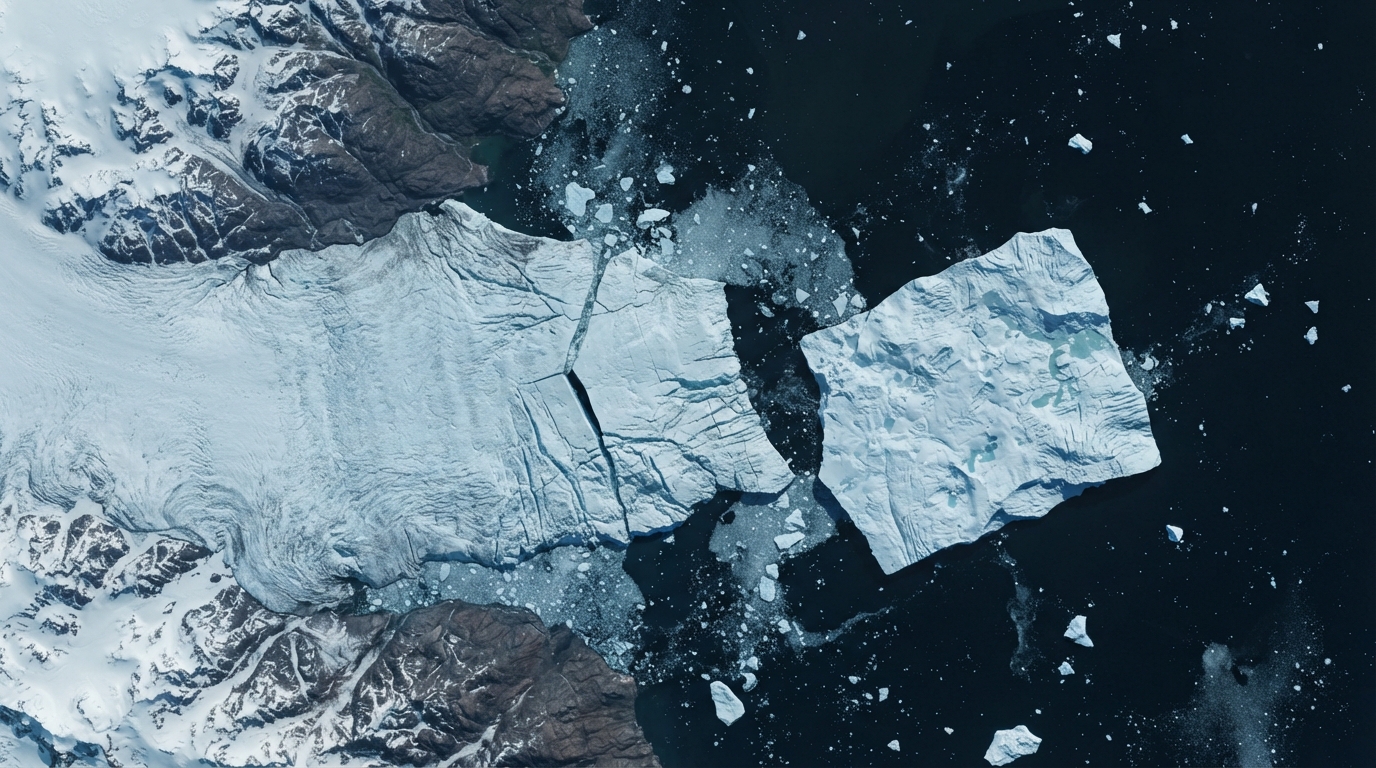
The "ice tongue" of a giant glacier in Greenland has broken off.
New satellite images have clearly shown that the large glaciers in Greenland are shrinking significantly. In particular, a huge part of the Petermann Glacier, located in the northwest of the island, floating above the ocean, has broken off.
The Petermann Glacier connects the Greenland Ice Sheet to the Arctic Ocean. Its part that floats above the sea, called the "ice tongue", was previously about 70 kilometers long and 15 kilometers wide.
However, new images taken in August 2026 by the European Copernicus program's Sentinel-1 satellite showed that this part of the glacier has undergone significant fragmentation.
According to observations, a block of ice with an area of about 76 square kilometers has broken off from the "ice tongue" of the Petermann Glacier.
This is the largest loss of floating ice recorded on the Petermann Glacier since 2012. The source also noted that this is the largest ice breakup observed in the Arctic since 2020.
**Changes are being observed from space**
Scientists regularly monitor changes in glaciers in Greenland and the Arctic using satellites.
Martin Wareing, a scientist at the European Space Agency (ESA), said that satellite missions such as Sentinel-1 allow for systematic monitoring of changes in glaciers over a long period of time.
According to him, such data will help scientists better understand the processes that lead to ice breakup. At the same time, it will allow them to study the impact of these processes on the polar regions and the Earth's climate system as a whole.
Sentinel-1's radar capabilities allow it to observe polar regions even in cloudy and dark conditions, which is important for regular monitoring of glaciers in regions where conditions change rapidly, such as the Arctic.