

"The Houthis' goal is to send a signal to the US" - political scientist
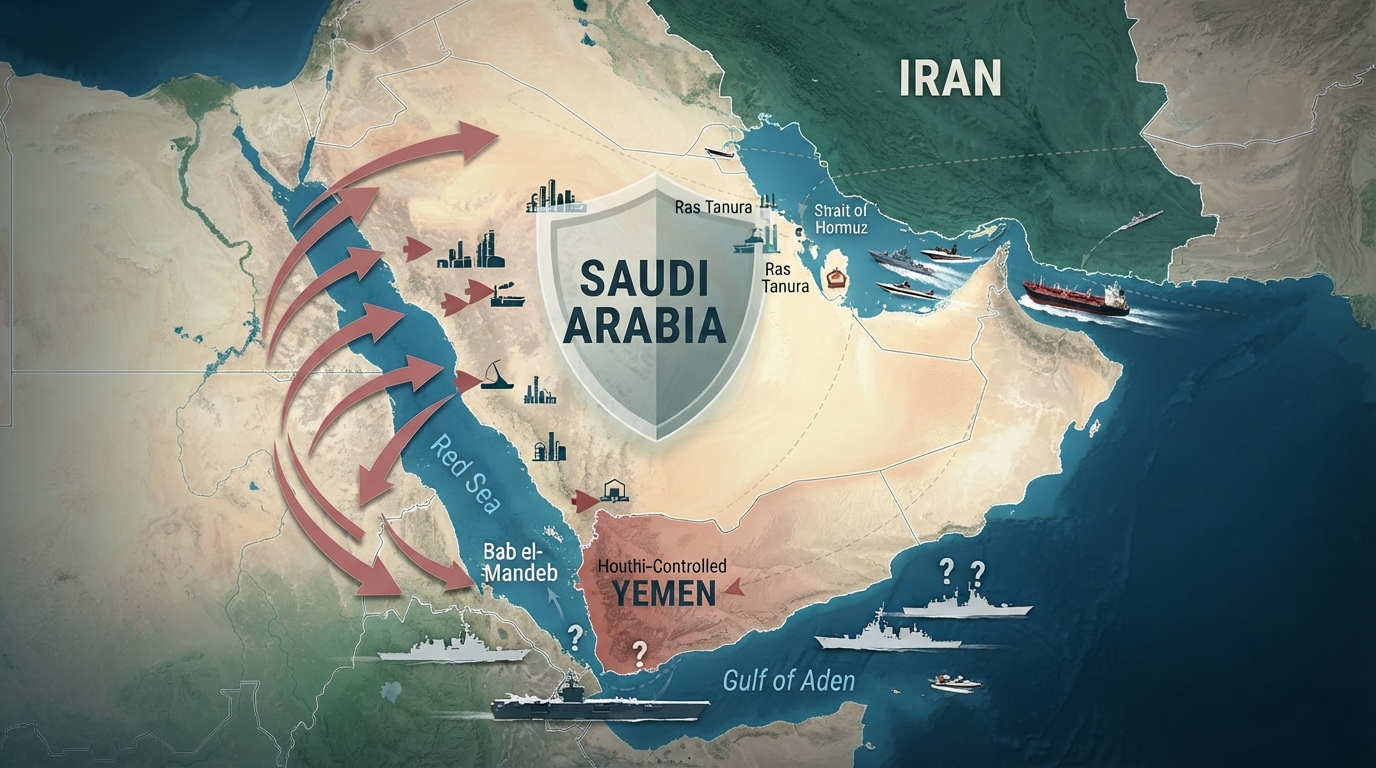
Under the conditions of limited Houthi attacks on Saudi Arabia, Riyadh sees no need to appeal to the Mecca Alliance. According to analysts, none of the alliance members are interested in opening a new hotbed of war in the region. Attacks on Saudi Arabia only serve the interests of Iran, which is in a state of war with the US. Tehran seems to be sending a signal to Washington through its proxy forces.
“The Houthis' goal is to send a signal to the US” - political scientist
Why is the Mecca Alliance not protecting Saudi Arabia from Houthi attacks?
Shavkat Ikromov:
Currently, there is no direct threat to Saudi Arabia from any state. Saudi Arabia itself has sufficient capacity to counter the Houthis and protect its territory. Saudi Arabia is currently mostly refraining from entering into an active war again. Because entering into a large-scale war with the Houthis is not beneficial for Saudi Arabia. Saudi Arabia does not want to lose the opportunities in the Red Sea, Bab al-Mandab, and Yanbu routes that it currently utilizes.
Furthermore, under the current circumstances of Houthi attacks on Saudi Arabia, Riyadh itself absolutely does not want Turkish or Pakistani troops to come here and is denying this. However, according to information obtained from high-ranking military officials in Pakistan, Pakistan has urged Iran not to cooperate with the Houthis and to restrain them.
Additionally, they were warned that negotiations should be held with the Houthis to persuade them not to launch missile strikes on Saudi Arabian territories, otherwise there is a risk of coming face-to-face with Saudi Arabia.
In general, the alliance cannot be called completely inactive right now. They are taking certain measures. A clear reaction was expressed, and there is an attempt to place the responsibility for the processes on Iran.
If a large-scale war begins in this region and a new front is opened, this could fully align with Iran's interests. Currently, there is already a front in Hormuz, and the war is ongoing. If a separate front also emerges in the Red Sea, the Gulf Arab states relying on the United States' security umbrella will face even more serious pressure and the threat of a blockade.
Such a situation could also affect the global energy market and a large part of global trade. Also, it is not unlikely that a change in the situation in Yemen's territory would affect the processes in Hormuz as well.
From this point of view, strategically, it can be said that the interests of the Houthis, Yemen, and Iran are aligning here. There is insufficient information to draw a definitive conclusion about their mutual relations. But looking from the outside, there is a harmony of interests.