

Saudi Arabia may open a new war front in the Middle East — NYT
**Saudi Arabia may open a new war front in the Middle East – NYT**
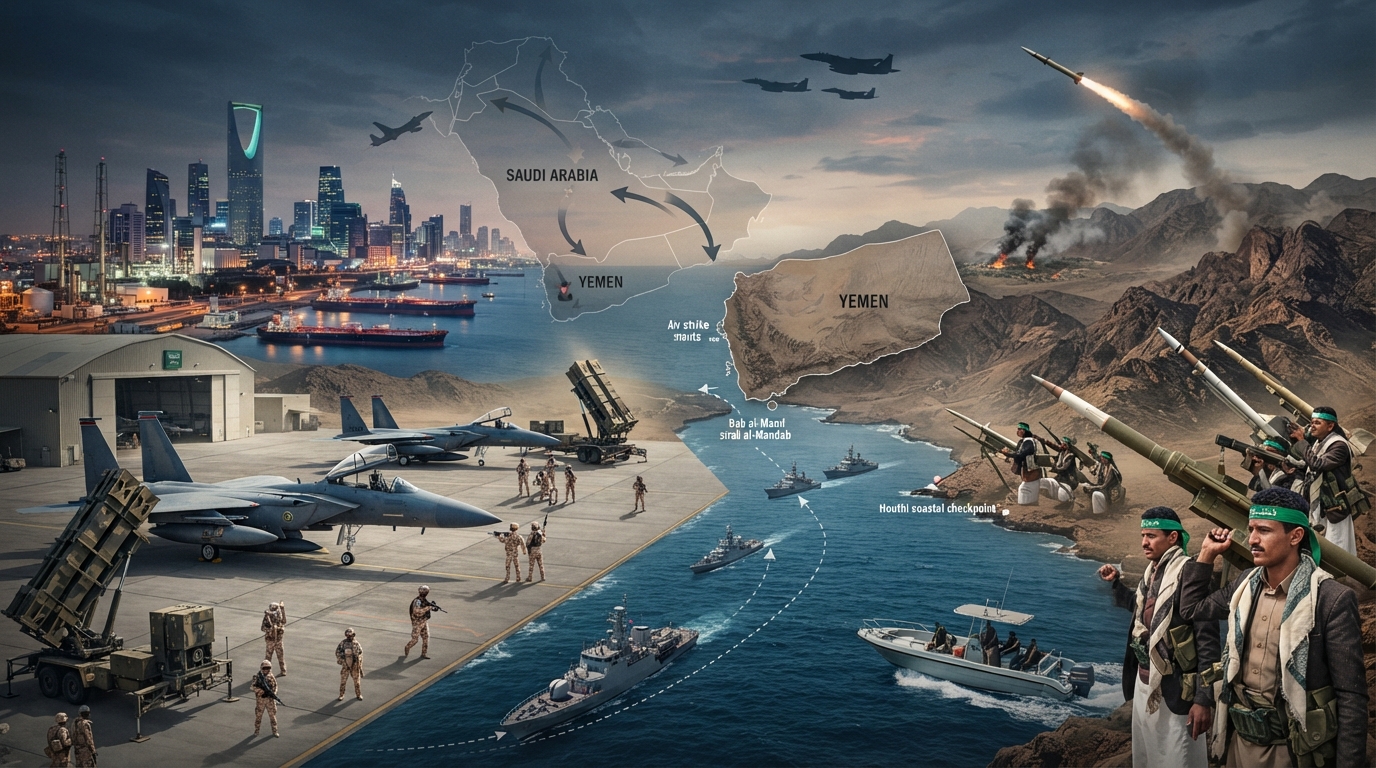
Saudi Arabia is preparing to resume military operations against Yemen’s Houthis. The kingdom made this decision after weeks of attacks on hospitals, ships, airports and oil facilities. This situation could open a new front in the US war against Iran and its ally the Houthis. This was reported by The New York Times (NYT), citing sources and analysts.
A Saudi official, who did not want to be named, said that Riyadh prefers peace, but is also ready for war and will defend itself by any means. If the Houthis continue the attacks, the kingdom is ready to launch air strikes in support of the Yemeni government and the coalition against the Houthis.
According to the NYT, analysts say that Saudi Arabia may try to weaken the group and force it to negotiate on terms that are favorable to it. However, channels of communication that have existed for years between the parties have been severed.
“At this stage, I do not see a political solution. War is imminent,” said Mohammed al-Basha, a Washington-based Yemen analyst.
The Houthis, however, have described their attacks as a preemptive measure. They have accused the Saudi and Yemeni governments of preparing for a ground offensive. Houthi spokesman Mohammed al-Bukhaiti said the group was in a de facto state of war with Saudi Arabia. He vowed to destroy all of the kingdom’s oil and critical infrastructure if a full-scale conflict broke out.
Inside Yemen, fighting between the Houthis and the Saudi-backed government has escalated in recent weeks. The UN special envoy for Yemen, Hans Grundberg, told a UN Security Council briefing that Yemen now faces the risk of returning to full-scale war since a ceasefire in 2022.
The conflict in Yemen began in September 2014, when the Houthis captured the capital Sanaa. A UN-brokered ceasefire in April 2022 was later extended several times.
According to the NYT, there is a noticeable buildup of military forces on both sides. Ahmed Nagui, a senior analyst at the International Crisis Group, said that Saudi Arabia has improved military coordination between anti-Houthi groups and is providing them with modern weapons. Abdullah al-Alimi, a member of the Yemeni presidential council, noted that the return of Sanaa to government control is inevitable.
At the same time, the publication notes that there are enough reasons in Saudi Arabia to avoid war. A new conflict could deplete the country's finances and defense reserves. It would also threaten the crown prince's plans to turn the kingdom into a business and tourism hub. However, according to Nagui, the Houthis are not ready for negotiations and are acting in the interests of Iran. Experts and diplomats are concerned that any escalation could worsen the lives of tens of millions of Yemenis.
“The only thing that is certain is that the Yemenis will pay the price,” Grundberg said.
The conflict between the Saudis and the Houthis escalated in July, when the Yemeni group claimed responsibility for an attack on Abha International Airport in southwestern Saudi Arabia. The Houthis also claimed responsibility for a missile strike on Jizan province.
Riyadh, in turn, has been striking Houthi targets in Yemen. One of the most recent attacks came on August 24, when the group attacked a Saudi oil tanker near the Red Sea port of Yanbu.
In addition, on July 20, the Yemeni Houthis declared a naval blockade of Saudi Arabia. According to The Wall Street Journal, after the Strait of Hormuz was blocked, Saudi Arabia redirected its oil exports to Asian buyers through terminals on the Red Sea coast and then through the Bab al-Mandab Strait. The Bab al-Mandab Strait, which runs through Yemen, could also be blocked by the Houthis.
In response, Riyadh announced the formation of a multinational maritime coalition to protect shipping in the Red Sea. Representatives of 43 of the 51 countries invited to the meeting, as well as a delegation from the European Union, attended the meeting.
Earlier, it was reported that two allies of Iran were expected to attack Saudi Arabia. It is noted that the attacks could be carried out from the north by Iraqi militants and from the south by the Houthis in Yemen.