

The future of drones and new technologies were discussed in Tashkent
On October 10, 2026, the scientific and practical forum SCIENTIFIC PRACTICAL FORUM 2026 took place at Inha University in Tashkent. Organized by Electronic Autonomous Solutions (EAS Company), the event featured discussions on modern technologies in unmanned aerial vehicles, radio electronics, and autonomous navigation, as well as engineering developments by young specialists.
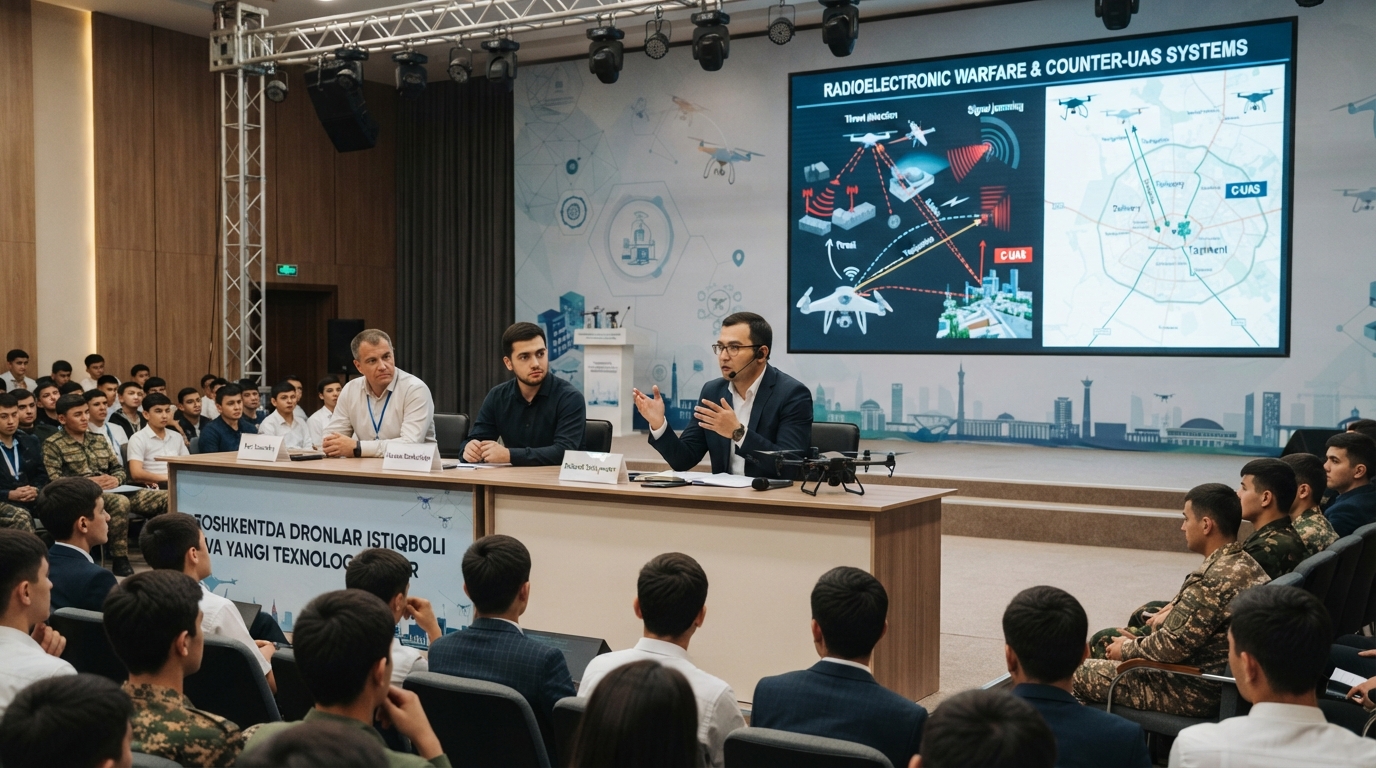
Prospects of drones and new technologies discussed in Tashkent
The forum was attended by representatives of the technology sector, members of the scientific community, specialists from relevant agencies, and students. One of the main goals of the event was to exchange practical experience in the field, discuss pressing technical issues, and support youth innovative projects.
**Drone security and electronic warfare issues**
During two plenary sessions on the forum's program, local and foreign experts presented reports on technological solutions related to unmanned systems.
Behzod Sulaymonov, Deputy Chairman of the Board and Chief Engineer of EAS Company, presented the modern capabilities of electronic warfare and counter-unmanned aerial systems (C-UAS). The report placed special emphasis on technologies used to detect and counter potential threats originating from drones.
Hasan Khankeldiev examined the issue of effectively organizing cargo transportation routes using drones. In particular, using the example of optimizing delivery routes between branches of the Korzinka network in Tashkent, the possibilities of using the "traveling salesman problem" (TSP) and the MATLAB software were highlighted.
Minhaj Uddin Ahmad provided information on radio-jamming-resistant communication channels and remote control systems for unmanned aerial vehicles. Such technologies are considered crucial for maintaining communication stability and ensuring operational efficiency in complex electronic environments.
Meanwhile, Petr Khmarskiy presented methods for tracking and predicting the movement of maneuvering unmanned vehicles through multi-hypothesis processing of coordinate data. These approaches aim to improve air object tracking systems.