

The child is the greatest trust left at the kindergarten door
The case of sexual violence against a 5-year-old girl in Namangan has brought many questions to the discussion
**The greatest trust left at the kindergarten door**
The case of sexual violence committed against a 5-year-old girl in Namangan has brought many questions to the agenda: when parents hand over their child to a kindergarten, who do they trust them with?
– From now on, you will stay at home, we will not send our daughter to kindergarten. I will manage the household somehow myself, mother...
– I got scared too, father. But, won't it be difficult for you?
– Oh, it's nothing. First violence in that kindergarten, then beatings in this kindergarten, and now this is just too much... I am worried!
This sounds like a simple family conversation. In reality, however, it is an echo of the fear that is currently running through many parents.
The above news regarding sexual violence against a minor girl has alarmed the public. Especially for parents who take their children to kindergarten every day, this event has made the question "Is my child safe there?" even more acute.
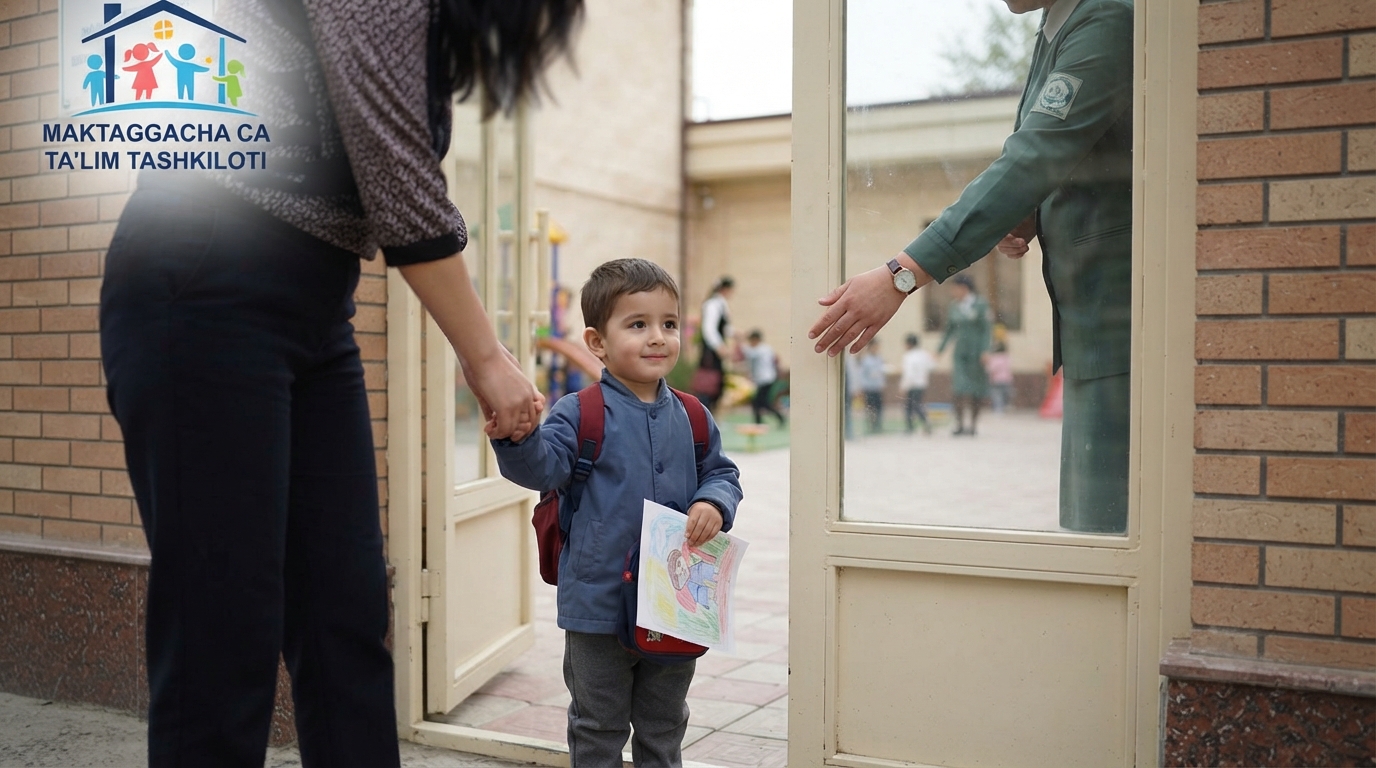
Parents take their child to kindergarten. At the door, they hold their hand, adjust their clothes, and kiss their forehead.
– Be good, my child, I will pick you up in the evening.
The child believes this. The parents, in turn, trust the educator, the director, the institution, and the entire system that is supposed to protect the child. But a child cannot perceive danger like adults do. They are far from being able to demand their rights. If they are afraid, they often remain silent. If they are ashamed, they do not speak. If they cannot find the words to explain what happened, they keep the event inside. Therefore, along with the child entering the kindergarten door, a huge responsibility also enters the institution.
In one of the legends, a child once asked his father:
– Father, why do people know everything when they grow up?
– Because they have seen many things,
— the father replied.
The child thought for a moment and said:
– Then why don't adults listen to children? We might have seen things they haven't seen, right?
The father remained silent.
There is a great truth in this small legend: a child also sees, feels, fears, and hurts. Only they cannot express it like adults. Therefore, a child's silence should not be understood as "everything is fine."
**The child trusts. What about the adults?**
A story recently told by a young mother also invites deep reflection. According to her, her child returned from kindergarten in a panic for several days. The educator shouted at him and even threatened: "If you tell your mother, I will kill you." The employee denied this, justifying herself by saying: "He is just a child, do you believe him?!" In reality, the child was telling the truth, and it soon became clear that his fear was not groundless.
– Fortunately, I got involved with all my strength and clarified the situation. It turned out that the educator had been constantly shouting at, intimidating, and humiliating not only my child but also other children...
— says the mother with distress.
Today, if any parent speaks up demanding their rights, people immediately try to distance themselves from them, labeling them as a "blackmailer," "troublemaker," or "exaggerator." In reality, this should be viewed as a natural reaction of a parent who is worried about the fate of their flesh and blood. Even in the most difficult situations, children find it hard to tell what happened. When a child speaks, their voice should not be drowned out by the shouts of adults. Only when they can speak not out of fear, but out of trust in adults, will a real solution be found to the painful problems inside kindergartens that are worrying the public.
When we think of a kindergarten, we picture colorful walls, toys, cozy rooms, a bedroom, and a kitchen. However, for a child, this place is not just made of buildings and walls. The child's entire life passes there — eating, sleeping, playing, joys, tears, and fears. For this reason, every adult employee in the kindergarten is responsible for a certain part of the child's destiny. An educator is not just an ordinary worker, and a director is not just a leader. Every person in the system is an integral part of children's safety. If one of these parts does not perform its duty properly, the problem does not remain within the confines of one room, but undermines the entire system.
The situation in Namangan raises questions that are even bigger and more serious than the emotional reactions of the public. When and where did this terrible event actually take place?
Is it possible that the kindergarten administration allegedly found out about the event only afterwards? Why, instead of openly investigating the situation regarding the child, did the director try to cover up the situation and hide it from the public? If she is innocent, why be afraid of an investigation?
If a minor girl goes outside alone and the educator remains unaware: she allegedly knows nothing about when she left, and when and in what condition she is returning. The head of the household department, who used drugs, had been repeatedly committing sexual violence, and the kindergarten director allegedly did not know. When hiring, what aspects of the head of the household department were supported to appoint him to a suitable position? Does the kindergarten director, who is trying to smoothly get out of the situation, ever imagine her own child or grandchild in such a state?
**"Covering up" does not protect the child**
The most dangerous form of violence against children is the attempt to cover it up and hide it. Approaches like "family secret," "the child misunderstood," "do not exaggerate the situation," or "the reputation of the institution will be damaged" do not solve the problem at all. On the contrary, such an indifferent attitude only transfers the existing danger to the next child.
As is known, the law "On Protection of Children from Violence" was adopted in Uzbekistan in 2024. It defines mechanisms for protecting children from various forms of violence, identifying children at risk, and notifying competent authorities. This decision shows that raising a hand against a child, insulting them, or putting psychological pressure on them is not a "method of upbringing."
Therefore, violence against a child is not measured only by causing physical harm or bodily injury. Intimidating, mentally abusing, and humiliating a child is also a serious legal issue. The current legislation strictly defines the principles of protecting children from all forms of violence. In conclusion, the law is also increasingly strengthening accountability and responsibility in this regard.
The problem is not limited to violence alone. Because a child should not be valued based on their parents' social status, connections, or the thickness of their wallet. All children must be equal at the kindergarten door: here, it is not who the child's father is, how much money he makes, or who he knows that matters, but the child's personality and the child themselves.
Unfortunately, there are still institutions that have not yet realized this simple truth. Systems that keep doors wide open for the child of a wealthy person while closing them to the child of a low-income family, and that place connections above the child's rights, still "survive."
A kindergarten is not someone's privilege, but a place where the equality and safety of every child must be guaranteed. The father of one of the children might be an official, another's might be unemployed, the mother of one might arrive in an expensive car, while someone else might lead their child on foot. However, regardless of social origin, the rights and safety guarantees of every child must be the same. The fact that such criteria are being ignored is, undoubtedly, the most painful point inside the institution. As if the existing internal barriers were not enough, violence against a defenseless and physically weak child naturally exhausts the society's patience.
**It's not my child, after all...**
This is why it is emphasized, and not without reason, that protecting children's rights is not only the duty of parents, but the common responsibility of the entire society.
Parents do not have the opportunity to monitor every minute of their child's time in kindergarten. They work, run the household, and are busy making a living. Therefore, they entrust their flesh and blood to a preschool education organization. This means that responsibility does not disappear from the moment the parent leaves the kindergarten door; on the contrary, this huge task is fully transferred to the institution.
Every morning, parents bring their child to the kindergarten door. The child has a small bag in hand. Inside are clothes, toys, a notebook. But parents hand over something bigger than a bag to the teacher. Trust. The trust that "you will protect my child." And the child enters through the door. They trust the adults, the educator, the kindergarten. Feeling the child's trust with responsibility is the duty of the entire system.
After the terrible situation in Namangan, the biggest question should not be: "How many years will the perpetrators get?" but rather the rightful question: "What will we change in the system today so that another child does not fall into this situation tomorrow?" Because the damage caused to the fate of an innocent soul can no longer be undone. However, its pain must serve as a bitter lesson to protect other children. For this, listening to the child when they speak, protecting them when they are afraid, and not "covering up" the mistakes of adults is the most correct path.
The crime related to the fate of the 5-year-old girl has already been legally assessed by the competent law enforcement agencies. Of course, if an official or responsible person did not fully perform their duties, they will also be assessed within the framework of the law. Most importantly, the court and competent authorities will identify the guilty parties. The public, on the other hand, has the right to demand truth, a transparent investigation, and the protection of the child's interests.
Both the actions of a responsible person who received information about violence against children and the liability of an employee who tried to hide the event must be open and transparent. Because the problem does not end with punishing one guilty person. If the system does not learn a lesson, this situation may happen again.
Since a child is the greatest trust left at the kindergarten door, protecting them like the apple of one's eye and feeling this responsibility from the heart is the legal and conscientious duty of every employee. No one has any right to betray this trust.