

The Central Bank sees opportunities to ease interest rate policy by approximately 2 percentage points
The Central Bank of Uzbekistan estimates the room for easing monetary conditions at approximately 2 percentage points. According to Nodirbek Achilov, Deputy Chairman of the Central Bank, the real interest rate is around 7%, while its neutral level is 5%. However, the regulator is currently awaiting a further slowdown in inflation.
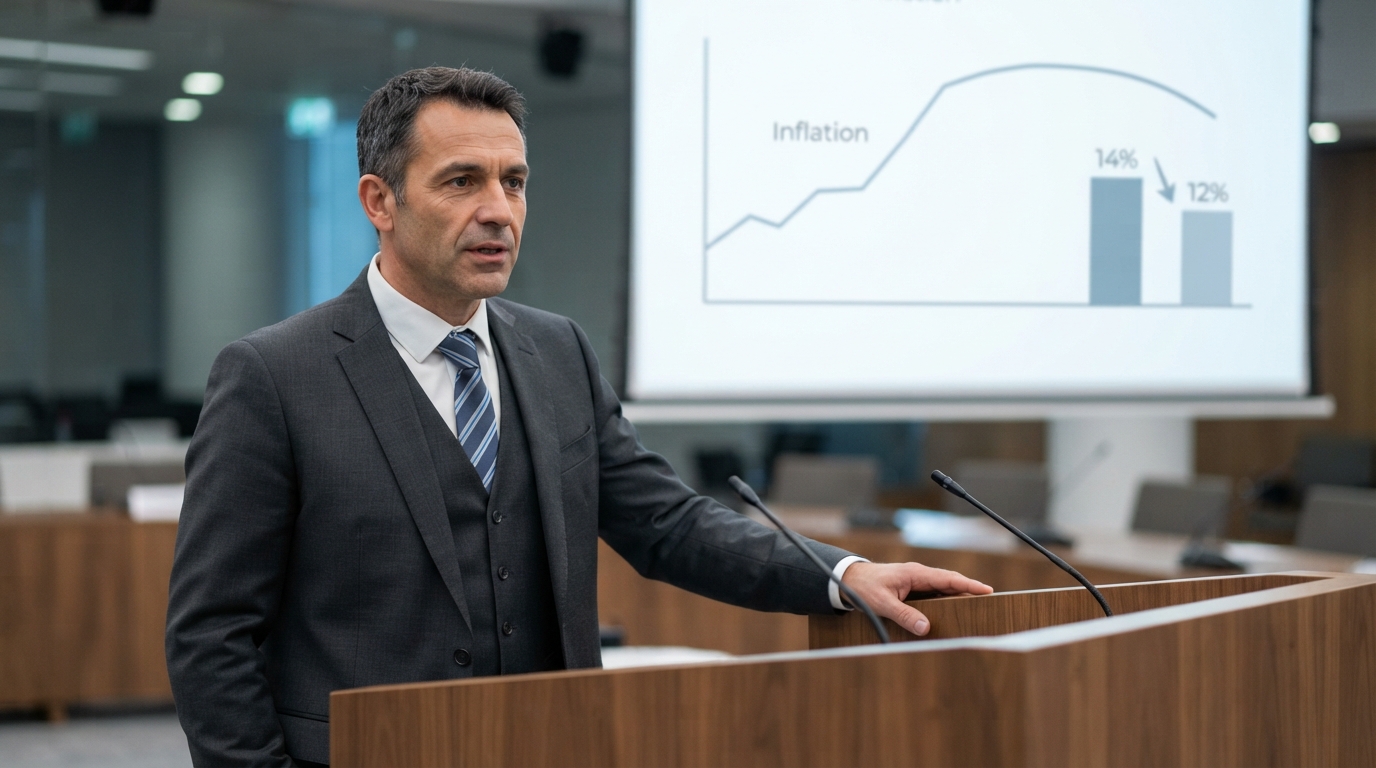
Central Bank Sees Room for Monetary Policy Easing by Around 2 Percentage Points
The Central Bank of Uzbekistan estimates the potential margin for gradual easing of monetary conditions at around 2 percentage points. Nodirbek Achilov, Deputy Chairman of the CB, announced this on November 4 at a press conference dedicated to the decision on the key rate and the main directions of monetary policy for 2027–2029.
Answering a question from a journalist from "Ozbekiston Ovozi" on whether a reduction in the key rate is possible against the backdrop of ongoing price growth for fuel, food, and other goods, Achilov explained that the regulator is guided not only by current price dynamics, but also by the inflation forecast.
According to him, with the key rate at 14%, the gap between it and projected inflation is about 7 percentage points. At the same time, the estimated neutral real interest rate is valued at approximately 5%.
"If we take the difference between our forecast inflation and the key rate, the real interest rate is around 7%. Meanwhile, our calculated neutral real rate stands at approximately 5%. That is, all our models and indicators point to the possibility of a reduction by about 2 percentage points," stated the CB Deputy Head.
Achilov stressed that the regulator expects a sustained easing of inflationary pressure not only across individual goods and services, but also across other components of the consumer basket.
"We have already explained why we have not yet started reducing the rate. We need to see a decline across other components of [inflation] as well," he noted.
In September 2026, annual inflation in Uzbekistan stood at 6.4%, accelerating slightly compared to August. According to CB Deputy Chairman Nodirbek Achilov, the main reasons were the seasonal rise in fruit and vegetable prices, as well as price increases for fuel and certain services.
Inflation in the services sector reached 7%. Meanwhile, core inflation, adjusted for the impact of seasonal and regulated prices, remained at 5.5%. Within its structure, the slowing price growth for non-food items was offset by some acceleration in service price increases.
"In recent months, the influence of supply-side factors has become increasingly visible in inflation dynamics. Whether these factors will be temporary or prolonged in nature depends on the extent to which their impact spreads to the prices of other goods and services, as well as to inflation expectations," Achilov stated.
According to the CB Deputy Head, when assessing the consequences of higher fuel and energy resource prices, it is important to distinguish between primary and secondary impacts on inflation.
The primary impact manifests directly in higher prices for gasoline, gas, and other energy resources. The secondary impact arises when increased fuel costs lead to higher costs for transportation, logistics, and other goods and services.
Achilov noted that the scale of such pass-through largely depends on competition and domestic demand.
As an example, he cited the taxi market, where the entry of new aggregators in certain cases forced major players to lower prices.
"We cannot directly influence primary effects. Yes, oil may become more expensive, and gasoline prices may rise as a result. But to what extent this will be reflected in logistics and other sectors depends largely on demand," he explained.
According to Achilov, if demand from the population and businesses remains high, fuel price increases are more likely to be reflected in the cost of transport services, freight shipping, and other inflation components.
The CB Deputy Head emphasized that the task of monetary policy is primarily to limit secondary price increase effects and maintain balanced demand in the economy.
On November 4, the Board of the Central Bank kept the key rate at 14% per annum. At the same time, as Nodirbek Achilov reported, the option of reducing it to 13.5% was also considered at the meeting, but the majority of Board members supported keeping the rate unchanged.
According to the Central Bank's baseline scenario, overall inflation should approach the target level of 5% in the second half of 2027, and hover around this mark in 2028–2029. Core inflation is expected to decline to 4–5% in 2027, and stabilize at approximately 4% in subsequent years.