

The Central Bank may introduce the digital som into circulation by the end of 2029
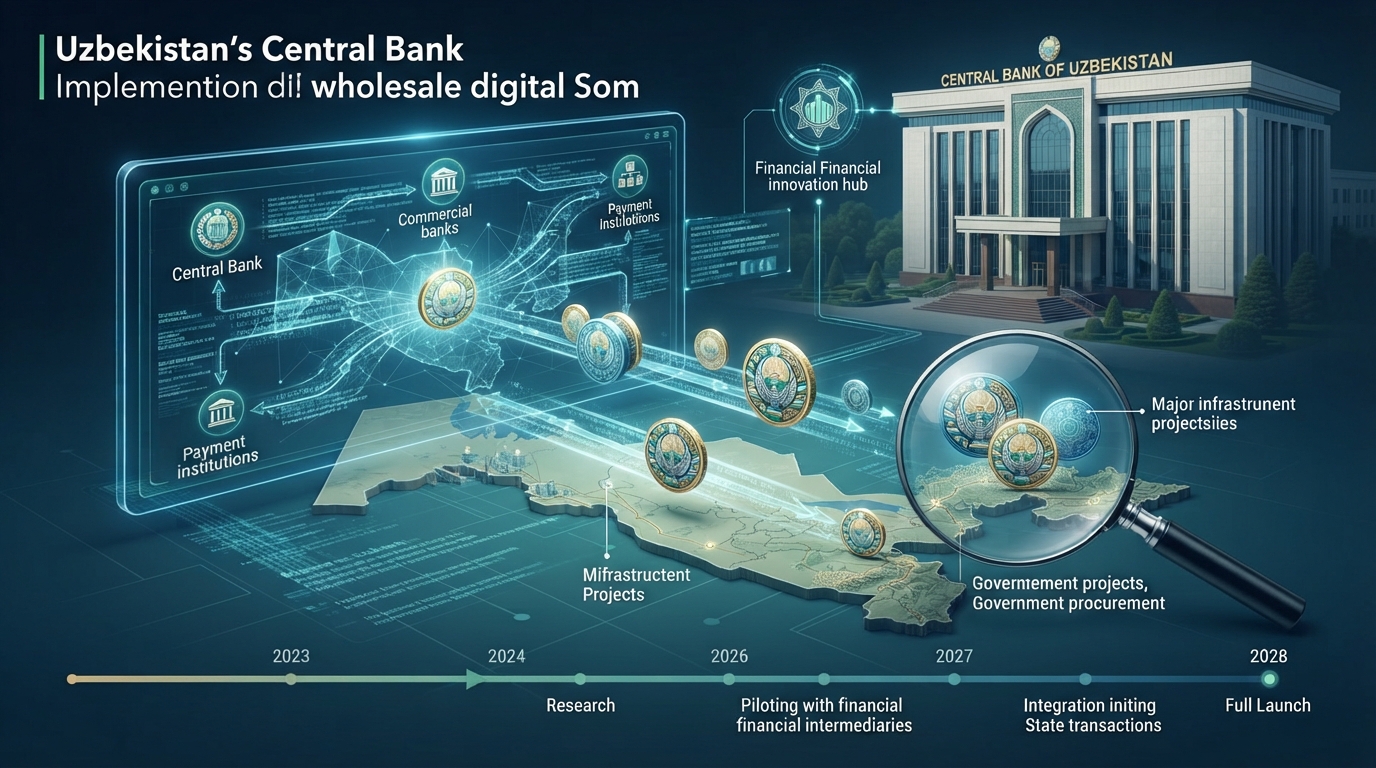
The Central Bank may issue the digital som by the end of 2029
The Central Bank of Uzbekistan is working on the creation of a digital som. This was announced at a press conference held by representatives of the regulator on September 24, "Daryo" correspondent reports.
During the presentation, it was stated that the digital som is a form of money issued directly by the Central Bank. It was noted that such currencies are actually divided into retail and wholesale types. The retail type is used by individuals and legal entities for daily payments alongside banknotes and bank cards. However, Uzbekistan plans to create only the wholesale type.
"The Central Bank digital currency we are choosing is a wholesale CBDC. This is a digital currency created on the basis of distributed ledger technology and used only for settlements between banks and payment organizations," said the regulator's representatives.
It was reported that by the end of 2027, the benefits of issuing the digital som in Uzbekistan will be studied. The testing phase is planned until the end of 2028, and the integration of market participants into the system and the full launch of the system are planned by the end of 2029.
"Wholesale digital currencies will be developed together with international consultants. Then, pilot tests will be conducted, and a decision will be made based on the results. For now, it is not 100 percent certain whether the wholesale digital currency will be introduced or not," said the Central Bank officials.
It was noted that the wholesale digital currency has a number of advantages for the domestic market. For example, it eliminates risks in the settlement process. It ensures the stability of operational activities and allows for the automatic provision of emergency liquidity in 24/7 mode at the necessary time and place.
The digital som is primarily intended to be used in public procurement. As a result, it will be possible to ensure that funds allocated by the Ministry of Economy and Finance are not diverted elsewhere, and to constantly monitor the funds. In the next stage, the financing of infrastructure projects may also be carried out in the new type of currency. Payments to contractors will be made when the specified stages of the projects are completed and after the work is confirmed to have been delivered. This will allow for real-time tracking of how state investment funds are being spent. At the same time, the use of the digital som is also envisaged in financing state payments and targeted subsidies.
"These are our expected results currently in the research phase. This does not mean it will definitely be like this. Because studying a single digital currency requires at least 4-5 years," say the Central Bank officials.
Over the next three years, it is planned to study the system, create the digital currency, and test it in practice.
According to data, currently, central banks of 143 countries in the world are studying digital currency. Of these, 77 are in the process of developing a digital currency. Another 41 are implementing a pilot project of a digital currency. Only three countries in the world have launched a digital currency: the Bahamas, Nigeria, and Jamaica.