

The bill on increasing fines for migration violations has been returned for revision.
Deputies rejected the bill increasing fines related to migration. The main points of contention centered on fixed fines of up to 40 BRV for violations of registration for citizens and foreigners, as well as the delineation of liability for violations of the passport system and the rules of stay for foreigners.
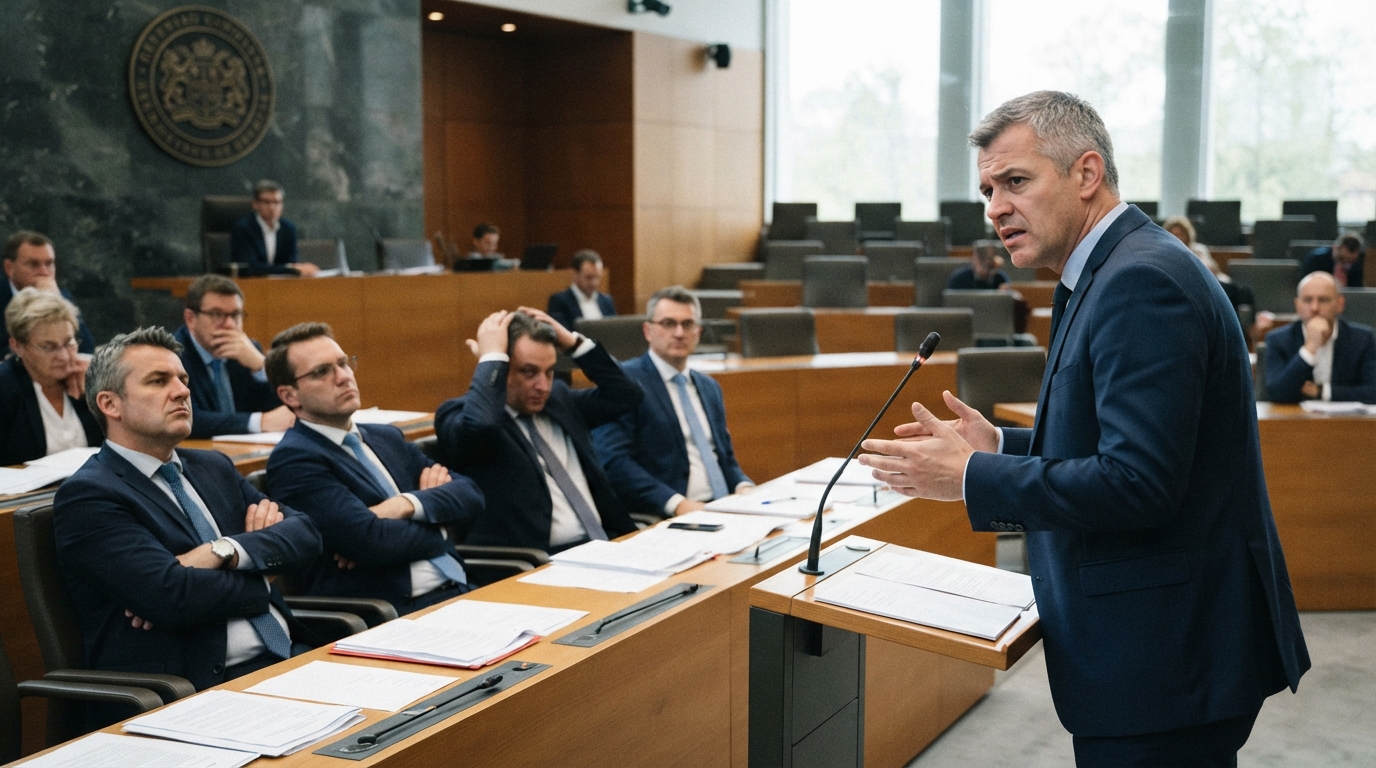
## Bill to increase fines for migration violations sent back for revision
On August 11, the Legislative Chamber of the Oliy Majlis (parliament) rejected a bill aimed at improving migration legislation in its second reading. During the discussion, deputies expressed criticism of the proposed fines.
After lengthy discussion, it was decided to return the bill to the relevant committee for further review. The chair emphasized that the provisions increasing penalties should be drafted in a manner that will preclude questions during further consideration in the Senate.
The bill was conceptually approved in its first reading on July 22. In preparation for the second reading, the working group held five meetings with representatives of the Ministry of Internal Affairs. The bill, in particular, proposes amendments to Articles 223 (violation of passport system rules) and 225 (violation of the rules of stay in Uzbekistan) of the Administrative Code.
Introducing the bill, members of the relevant committee noted that its main goals are to align current regulations with the new procedure for registering citizens, foreigners, and stateless persons, as well as to strengthen penalties in the area of migration.
In particular, they proposed clarifying the offenses in Articles 223 and 225, separately defining the liability of officials, and providing for stricter penalties for repeat violations within a year.
The size of the fines became the main point of contention.
Deputy Zukhriddin Mavlonov noted the trend in recent years of adopting laws introducing new fines or increasing existing penalties. According to him, the draft proposes significantly increasing fines for violations of registration rules at hotels and medical institutions.
Specifically, for certain violations, the proposal included increasing fines from 5-10 basic calculation units to 30 basic calculation units (13.2 million soums) for a first violation and 40 basic calculation units (17.6 million soums) for a repeat violation.
The deputy noted that the salaries of medical workers can be 6-7 million soums, while the proposed fine could be several times higher than their monthly income.
"We know that doctors' salaries can be 6-7 million soums. Yet, they are being fined three to four times their salaries... Why are such huge fines being imposed? Why is there no way to reduce them?" the deputy asked.
Committee representatives explained that one of the project's goals is to increase the accountability of hotels, medical institutions, holiday homes, and other organizations required to enter guest information into the automated E-mehmon system.
According to them, in a number of cases, entrepreneurs fail to enter information into the system, leading to discrepancies in statistical and other data. Such cases, as stated at the meeting, are particularly common in hotels, medical institutions, and private clinics.
Additional questions arose during the discussion of Article 223 of the Administrative Code.
According to the version discussed, the fine for the same violation for individuals was proposed to remain at 5 BRV, while for officials it would be 20 BRV.
Speaker of the Legislative Chamber Nuriddin Ismoilov questioned the justification for the fourfold difference.
"Why are individuals fined 5 BRV, while officials are fined 20 BRV? We have a specific structure for administrative penalties. There shouldn't be such a big difference, since the offense is the same," he stated.
He also noted that the penalty is fixed: the same 20 BRV could be applied regardless of whether the organization committed the violation against one person or, for example, ten.
Deputy Saidullo Azimov explained the distinction by the principle of individualization of punishment and the differences in the financial capabilities of an ordinary citizen and an organization's director.
According to them, it was proposed to maintain the fine at 5 BRV for individuals, while increasing it to 20 BRV for officials, so that the penalty would have a sufficient deterrent effect.
The committee representative also noted that anyone who disagrees with the fine can appeal it in court. The court, taking into account the financial situation, has the right to mitigate the penalty based on Article 33 of the Administrative Code.
The presiding judge was not convinced by these explanations.
"Where is the analysis? How many such violations were committed by individuals in 2025, and how many by legal entities? If there had been an analysis, we could have based it on that." […] I still haven't received an answer," he stated.
Even more questions arose around Article 225, which concerns the rules for the stay of foreigners and stateless persons.
During the meeting, it was stated that a fine of 40 BRVs amounts to 17.6 million soums.
The presiding judge noted that a fixed penalty could be applied equally to a hotel that failed to register one or two guests, as well as to an organization that committed a violation against dozens of people.
"40 BRVs is 17.6 million soums. […] One accommodated two citizens, the other 50. The punishment is the same. Where did such a fine come from? That's the question I want an answer to," he said.
During the discussions, disagreements arose regarding the interpretation of Articles 223 and 225 themselves. Representatives of the drafters attempted to explain that the first article applies specifically to Uzbek citizens and permanently residing foreigners, while Article 225 applies to foreigners temporarily residing in the country.
The presiding judge interrupted the explanations several times, pointing out that the proposed wording did not allow for this distinction to be made clearly enough.
"I can't get an answer to my question; you're beating around the bush," he stated.
Separate questions also arose regarding the term "reception procedure" for foreigners used in Article 225. The presiding judge stated that in the bylaw presented to him, he found provisions on registration, but did not see a separate "reception procedure."
He then proposed reexamining both the wording of the provision and the fines.
Deputy Tuychi Yokubov proposed eliminating fixed penalties and establishing a cap on fines.
"I would suggest not writing 20 BRV or 40 BRV, but 'up to 20 BRV' or 'up to 40 BRV.' Situations vary. For technical reasons, guests may not be able to log into the E-mehmon system. I think it's wrong if this automatically becomes grounds for fining an official 20 or 40 BRV," he said.
Deputies also pointed out that actual registration at a hotel or clinic can be carried out by an ordinary employee, whereas the bill places liability on an official.
Representatives of the relevant committee, after discussion, acknowledged that the penalties could be reconsidered.
### Bill returned to committee
Ultimately, the deputies did not continue the bill's adoption in a second reading.
The speaker proposed returning the document to the committee, noting that questions about it had previously been raised repeatedly at faction meetings.
"There were a lot of questions in the factions. "We must develop such norms, that is, norms containing punitive measures, so thoroughly that no questions arise in the Senate tomorrow," he said.
Deputies supported the proposal to return the draft for revision.
The chair, however, asked the committee to "expedite and not delay" its work on the document.
In October 2025, the Law "On the Registration of Citizens of the Republic of Uzbekistan, Foreign Citizens, and Stateless Persons at Their Place of Residence and Place of Stay" entered into force. The law introduced the "E-xabar berish" system, which provides for the registration and record-keeping of permanently residing foreign citizens and stateless persons who have applied for registration at their place of residence.