

The Armed Forces of Uzbekistan: about history, potential and prospects
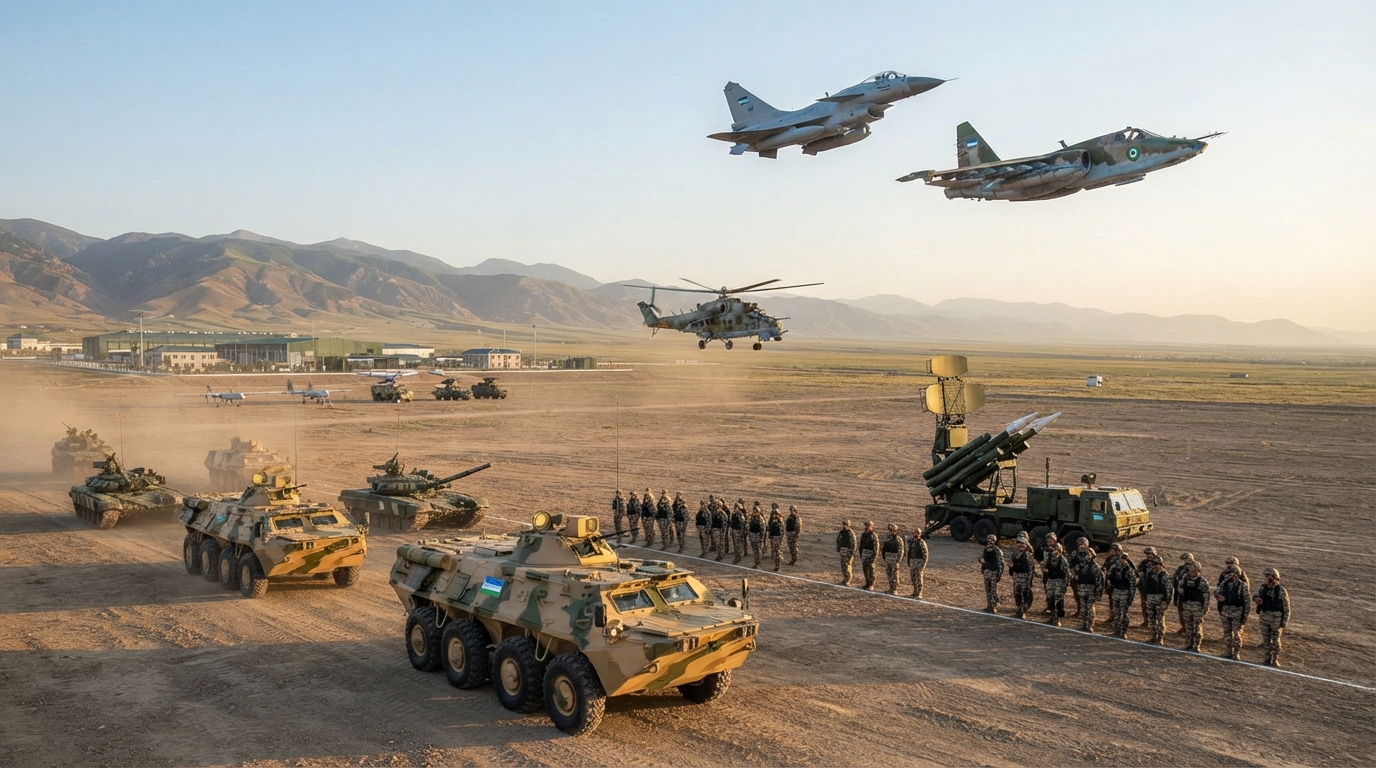
**Uzbekistan Armed Forces: History, Powers and Future Prospects**
35 years is a sufficient period of time in a person’s life to reach maturity, to reflect on the past. However, in terms of history, this is a very short period. Nevertheless, in 35 years, major states can emerge or existing ones can collapse, and major events can occur that affect the lives of tens, even hundreds of millions. During this period, oppressed peoples can achieve freedom, or vice versa.
It has been 35 years since Uzbekistan began to determine its own destiny and took its place as an independent entity in the international arena. During this period, the service of our Armed Forces in preserving the existence of the young republic, ensuring the inviolability of its borders, and most importantly, in ensuring the peaceful life of our people is incomparable.
This article provides detailed information about the history, structure, military equipment of our Armed Forces, the defense industry complex of Uzbekistan and new purchases.
**Starting Point**
In political science, the three main signs of a state are territory, population and sovereign power. However, without the Armed Forces, it is impossible to ensure the inviolability of borders, nor to conduct an independent policy within certain limits. It is for this reason that Uzbekistan, from the first days of independence, paid serious attention to the creation of a national and professional army.
On September 6, 1991, by decree of President Islam Karimov, the Ministry of Defense was established. After that, its legal basis was gradually strengthened and its organizational structure was established. January 14, 1992 became a historic day for the young republic. It was from this date that all military units, ammunition depots, training grounds and educational institutions of the USSR Armed Forces on the territory of Uzbekistan were transferred to the state. Later this date was widely celebrated as the Day of Defenders of the Fatherland.
The Armed Forces of the young republic were formed on the basis of the material and technical base of the Turkestan Military District. In this process, the 40th Army, which fought in Afghanistan, played a particularly important role. The fact is that the Soviets formed this structure by taking troops and military equipment from the Turkestan and Central Asian military districts to invade Afghanistan. After the Red Army was withdrawn from Afghanistan, a large number of military vehicles, tanks, artillery systems, combat aircraft, etc. remained on the territory of Uzbekistan. Later, our national army was built on the basis of the material and technical base of this 40th Army.
However, Moscow did not want to give up such valuable assets so easily. The first Minister of Defense of Uzbekistan, Rustam Akhmedov, recalls an incident with the Commander-in-Chief of the USSR Ground Forces, Vladimir Semyonov:
"A man named Semyonov came here. He was the commander-in-chief of the ground forces. Semyonov told me that he had come to decide the fate of the 105th Airborne Division in Fergana. I said to him, "What are you going to do? Do you intend to withdraw? What are they, strategic forces?"
He looked at me and asked, "What, can Uzbeks parachute?" "They are already jumping. Do you want to withdraw them? I will not allow it. There are special internal troops in the region, three and a half thousand people. They will block your path. Moreover, the officers themselves do not want to serve. Russia is not the USSR, not the Soviet Union. This is a completely different country now." He asked, "What, are we going to fight?" And I said, "Try it."
The collapse of the Red Empire was much more peaceful than in Yugoslavia. Therefore, Uzbekistan was not drawn into a major armed conflict. However, the country had its own problems. This was connected with the civil war in a neighboring country and the attempts of terrorist groups to destabilize the situation.
One of the first major tests that the Armed Forces of independent Uzbekistan faced was the civil war that broke out in Tajikistan in 1992. Uzbekistan could not stand idly by while the events unfolding in a neighboring country were unfolding, because if the situation deteriorated, it would threaten the national security of this young country. Therefore, Tashkent began to actively intervene in the conflict. By order of President Karimov, the forces under the control of Emomali Rahmon were actively supported. According to some sources, Uzbekistan was not limited to supplying weapons and logistical support, but also played a decisive role in participated in the operations with its special forces. The country's military aviation also struck opposition camps.
The second serious test came in 1999. Then militants entered the Batken region of Kyrgyzstan through Tajikistan. They captured some settlements and took people hostage. Kyrgyzstan asked for help from its neighbor with combat experience to free civilians and push terrorists out of its territory. The Uzbek Air Force and special forces conducted operations in Kyrgyzstan and Tajikistan, as well as in the border areas with them. This prevented the militants from entering the Fergana Valley. But the most serious test was yet to come.
**“Operation Crushing”**
The militants, who could not enter Uzbekistan through Kyrgyzstan, tried this time through Tajikistan. In July 2000, they entered the territories of Uzbekistan. After that, a large-scale operation against terrorists was launched in cooperation with the security forces. It was a large-scale operation, carried out both from the air and on land, highly coordinated.
*Photo: From the events in Saryosiyo*
However, the mission was not easy. The militants managed to take advantage of the mountainous terrain to hide and set up ambushes. It took more than a month to completely clear the territory of terrorist elements. Unfortunately, there were also many soldiers who died in the line of duty.
The civil war in Tajikistan, the Batken events, the operation against militants who invaded Surkhandarya, and other large and small attacks - all this gave the Armed Forces of Uzbekistan valuable experience and self-confidence. It was thanks to this strength and political will that Uzbekistan was the main guarantor of peace in Central Asia until the events of September 11. In other words, the regional security architecture was Tashkent was built around. The country reliably protected not only its borders, but also neighboring countries. It suppressed terrorist attacks and prevented the spread of chaos. Even after the United States sent troops to Afghanistan, it did not stand aside, but indirectly supported the international coalition.
**What do we have?**
The Armed Forces of Uzbekistan are a complex institution consisting of military and paramilitary structures. The Ministry of Defense and the General Staff control the Ground Forces, the Air Force (AHK) and the Air Defense (AHM) troops. They are managed separately in four military districts. The headquarters of the districts are located in the cities of Tashkent, Samarkand, Fergana, Karshi and Nukus. In addition, the Border Troops of the State Security Service, the National Guard, the Guards of the Ministry of Internal Affairs and the Ministry of Emergency Situations are also part of the Armed Forces. All of them are commanded by only one person - the Armed Forces The Supreme Commander-in-Chief of the Armed Forces, that is, the president, can give orders.
*Shavkat Mirziyoyev is getting acquainted with the achievements of the local military industry. Photo: president.uz*
However, as previously noted, the core of the Armed Forces of Uzbekistan is the material and technical base left over from the Red Army. The list of weapons and military equipment is quite extensive, and you can find thousands of names among them. Let's start with the Air Force. From the first days of independence, Uzbekistan has been protecting its air borders with Su-27 and MiG-29 fighters. In addition, the structure has also received Su-24 bombers and Su-25 attack aircraft into its inventory. However, the Su-24 and Su-27 aircraft have not been seen on the screens of the Ministry of Defense and state television for a long time. Based on this, it can be assumed that they have been sent for long-term storage.
As for the MiG-29 fighters, they are still active and the country protecting its borders. However, these "steel falcons", which entered service in the last century, have already used up a significant part of their flight resource. Therefore, Uzbekistan has decided to update its fighter fleet with modern aircraft. For this, Chinese J-10CE aircraft were chosen.
*Photo: J-10CE fighter of Uzbekistan*
They have now literally become the calling card of the Chinese military-industrial complex. The relatively low price, low operating costs, the ability to use a wide range of weapons, modern electronic warfare systems, advanced radars and high aerodynamic capabilities have brought great fame to the manufacturer. According to experts, the fighter belongs to the 4+ generation. That is, it is a universal platform that can perform various tasks in a single mission. In addition, it has modern avionics, in particular AESA radars. If we do not take into account the stealth characteristics, it is not much different from fifth-generation aircraft.
Most importantly, the J-10CE is simultaneously can replace both the MiG-29 and the Su-25. However, Uzbekistan does not intend to retire the latter in the near future. This is confirmed by the large-scale modernization program underway in the city of Chirchik. We are talking about extending both the capabilities and the life of the attack aircraft.
*Photo: Uzbekistan's Su-25 attack aircraft*
The Su-25 aircraft were designed to provide close support to ground forces. The fighter is famous for its armored cabin, 30 mm automatic cannon and the ability to carry a payload of almost 5 tons. That is why aviation enthusiasts call it a “winged tank”. However, due to portable air defense systems such as the Stinger, the Su-25 has lost its importance in military operations. As one of the largest operators of this model of aircraft, Uzbekistan could not quietly watch the process. After that, the decision was made.
Uzbekistan's surface-to-air missile system did not want to limit itself to modernization. Therefore, a full-fledged modernization program was launched, not just painting the hull or lubricating the mechanisms. Simply put, only the platform remained from the old aircraft. In the process, modern navigation systems, an on-board computer, optical devices for performing missions even in night conditions, targeting and electronic protection systems were installed. Thus, the Su-25 became a modern aircraft that could not come to the front line, but launch high-precision munitions remotely. During one of the tests, it hit a target 4 km away with such an aerial bomb, and most importantly, with high accuracy.
The helicopter fleet of the Uzbek Air Force is also quite extensive. The list includes Mi-24, Mi-35 attack helicopters, as well as Mi-8 and Mi-171 transport helicopters. In addition, the country has purchased H125M and H225M multi-purpose helicopters from Airbus.
**Air defense systems**
Although military aviation is an important asset in ensuring border defense, the role of air defense systems is incomparable. According to open sources, Uzbekistan received such systems as Osa, Shilka and S-125 from the Red Army. During the years of independence, they were modernized. New purchases were also made. The FD-2000 anti-aircraft missile system purchased from China is a vivid example of this. It is an alternative to the S-300 system developed in the Soviet Union and is designed to neutralize almost all types of air threats.
However, it is worth noting that in recent years, serious attention has been paid to strengthening air defense capabilities. Anti-aircraft missile systems designed to operate in different radii have been purchased. As a result, an echeloned air defense system has been created in Uzbekistan. Simply put, this means that a drone or aircraft that has violated the country's air borders will encounter several layers of defense systems.
Usually, four such rings will be. The first line of air defense in Uzbekistan is formed by QW-18 mobile missile systems, ZSU-23-2 and ZSU-23-4 anti-aircraft guns. The next ring is protected by FM-90 purchased from China and Pechora-2M anti-aircraft missile systems developed in cooperation with Russia and Belarus. As for the third ring, its basis is the Kaishan systems purchased from China. The most powerful air defense system at the disposal of Uzbekistan is the FD-2000, which was recently decommissioned.
You can read about Uzbekistan's echeloned air defense systems here.
**Ground Forces**
Uzbekistan has successfully integrated thousands of tanks, infantry fighting vehicles, armored vehicles, artillery systems and other equipment left over from the 40th Army into its arsenal. The country did not limit itself to simply acquiring them, but implemented a number of modernization programs. In addition, tactical methods for their use are also regularly is being improved. The popularity of unmanned aerial systems in the ranks of the ground forces is one of the many examples of this.
Enriching the arsenal of the ground forces with modern systems remains one of the priority issues. According to the Global Fire Power index, the country has 470 tanks, more than 8 thousand armored vehicles, 177 self-propelled artillery systems at its disposal. However, serious publications and professional circles do not rely on this index. The Baisi portal is maintained by an amateur blogger living in the United States. Naturally, there are significant differences between the information published by the blogger on his site and the real situation. Baisi countries refrain from providing excessive information about their military situation, in particular, their arsenal.
**National defense industry**
According to historians, famous commanders such as Madaminbek, Shermuhammadbek and Ibrahim Lakai, who fought against colonial oppression in the first half of the last century established arms factories. They did this independently, despite constant persecution and isolation and deprivation. They produced rifles and even small-caliber cannons for their own needs. Unfortunately, the warlords could not finish what they had started. But independence, peace and growing economic power make it possible to realize what was once a sweet dream for the heroes of the nation.
In Uzbekistan, the Defense Industry Agency is engaged in the production, repair and modernization of weapons, military and special equipment, as well as dual-purpose products. It is a system that unites state and private enterprises operating in the same direction. The number of manufacturers in the network is increasing, and the catalog is expanding. Uzbekistan first showed off its military-industrial complex to the international community in February 2025. Then several manufacturers on behalf of the country in Abu Dhabi participated in the IDEX-2025 exhibition.
The appearance of the Uzbekistan pavilion at the world's largest defense technology exhibition did not go unnoticed by the international community. One of the authoritative publications specializing in the military sphere, Defense Blog, prepared a material about the Arslon 8x8, Arslon 6x6 armored vehicles and the Tofon self-propelled howitzers at that time and wrote:
"Uzbekistan has achieved great success in developing its domestic defense industry and is now entering the global arms market with its latest offerings."
The Army Recognition media portal, known for its analytical materials, noted that by developing its domestic defense industry, Uzbekistan is simultaneously gradually abandoning its Soviet legacy and reducing dependence on foreign suppliers.
"The IDEX-2025 exhibition held in Abu Dhabi is a great opportunity for Uzbekistan to served as an important platform for showcasing the growing defense industry. In particular, the Arslon 6×6 armored vehicle stands out as one of the country's achievements in military technology.
The Arslon family combines robust protection, advanced weapons systems, and high mobility. This is an important step towards the modernization of the Armed Forces of Uzbekistan and its adaptation to NATO standards,” the publication wrote.
As a regular participant in such major international events, Uzbekistan also participated in the World Defense Show in Riyadh in February 2026. At that time, three manufacturers on behalf of Uzbekistan exhibited their products. The Innovation Technologies Center, which produces about a hundred types of military and dual-purpose products, and the EAS company, which operates in the field of electronic warfare systems, found new partners. It is noteworthy that this was the debut appearance of the Sahra company, which produces unmanned aerial systems.
A few months later, another major international exhibition debuted. The Defense Industry Agency system participated for the first time in the Eurosatory 2026 international exhibition in the French capital. This exhibition, which brought together the world's largest arms manufacturers, was designed to demonstrate the achievements of the Uzbek military-industrial complex, as well as to promote international cooperation. allowed to open new directions.
Today, Uzbekistan independently produces everything from huge armored vehicles weighing 32 tons to small-caliber ammunition. It supplies its Armed Forces with almost all types of drones and electronic warfare systems against them. Most importantly, production capacity is increasing, and the catalog of products is expanding. A full chain is being established from raw material processing to finished products. This allows us to reduce dependence on foreign countries, keep funds spent on external suppliers within the country, create new jobs, and most importantly, strengthen national security.
The Armed Forces of Uzbekistan have passed a short but arduous path to history. Having survived various crises, attacks and conflicts, they have preserved the territorial integrity of the country. They have played an unparalleled role in promoting national interests. Even these days, an unknown drone or aircraft is a sweet midnight snack Countless people are working hard to prevent it from disturbing our sleep. We congratulate them and all our people on the upcoming holiday. Happy Independence Day.