

Tashkent Metro is studying China's experience
A Tashkent Metro delegation is studying modern technologies, equipment, and approaches to passenger safety and service in China.
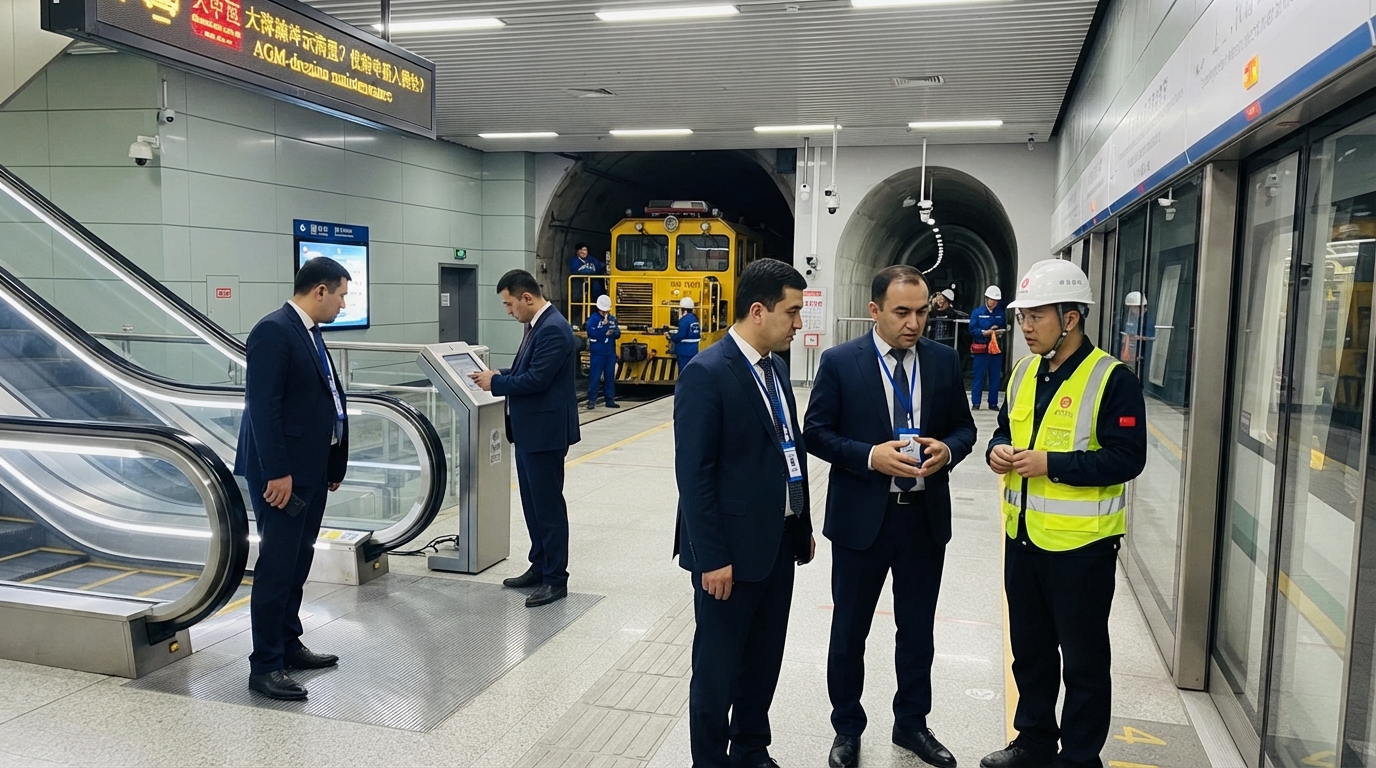
A delegation from Tashkent Metro JSC is on a working visit to China, where they are studying advanced technologies, equipment, and metro operating experience with a view to their subsequent implementation in Tashkent, according to a statement from Tashkent Metro JSC.
The visit is organized in accordance with the objectives set by Decree No. PP-191 of the President of the Republic of Uzbekistan and is aimed at studying foreign metro solutions and implementing modern technologies.
In China, Tashkent Metro representatives are holding meetings and technical discussions with leading metro infrastructure manufacturers, research and development institutes, and design institutes. The focus is on the technical capabilities of the equipment, its operation and maintenance, and the adaptation of Chinese solutions to the conditions of the Tashkent metro.
One of the areas studied was platform sliding doors (PSD). The delegation learned about their operating principles, control systems, maintenance features, and modern solutions aimed at improving passenger safety.
The specialists also examined modern elevators and escalators, focusing on their technical specifications, energy efficiency, safety requirements, and opportunities to improve passenger comfort.
AGM railcars—specialized equipment for repair and maintenance work in subway tunnels and other technical areas—were also examined. The delegation learned about the equipment's design features, capabilities, and operational experience.
During the visit to the Shanghai Metro Design Institute, they exchanged experiences in infrastructure design, engineering solutions, and the development of modern metro systems. The parties also discussed strengthening scientific and technical potential.
Furthermore, the Uzbek delegation examined modern metro ventilation systems used to ensure air exchange in tunnels and stations, manage the microclimate, and improve energy efficiency.
A key part of the program was a visit to the Shanghai Metro. Representatives from the Tashkent Metro learned about the system's infrastructure, traffic management, passenger flow management, maintenance, and operational processes.
The trip will also explore Chinese experience in ensuring safety, improving passenger service quality, and implementing modern management and engineering solutions.
Following the visit, it is planned to use the experience gained to further develop the Tashkent Metro infrastructure, implement modern technologies, improve passenger safety and comfort, and enhance the operations of Tashkent Metro JSC.