

Tashkent discussed social support measures for the population and improving energy efficiency
An information meeting was held in Tashkent dedicated to social support measures for the population during tariff reforms and opportunities to increase energy efficiency. Participants discussed current mechanisms for compensating electricity and natural gas expenses, proposals to expand social assistance to needy families, and state subsidies for implementing energy-saving technologies. The event took place with the participation of the Project Office "Green Economy Project Center" under […]
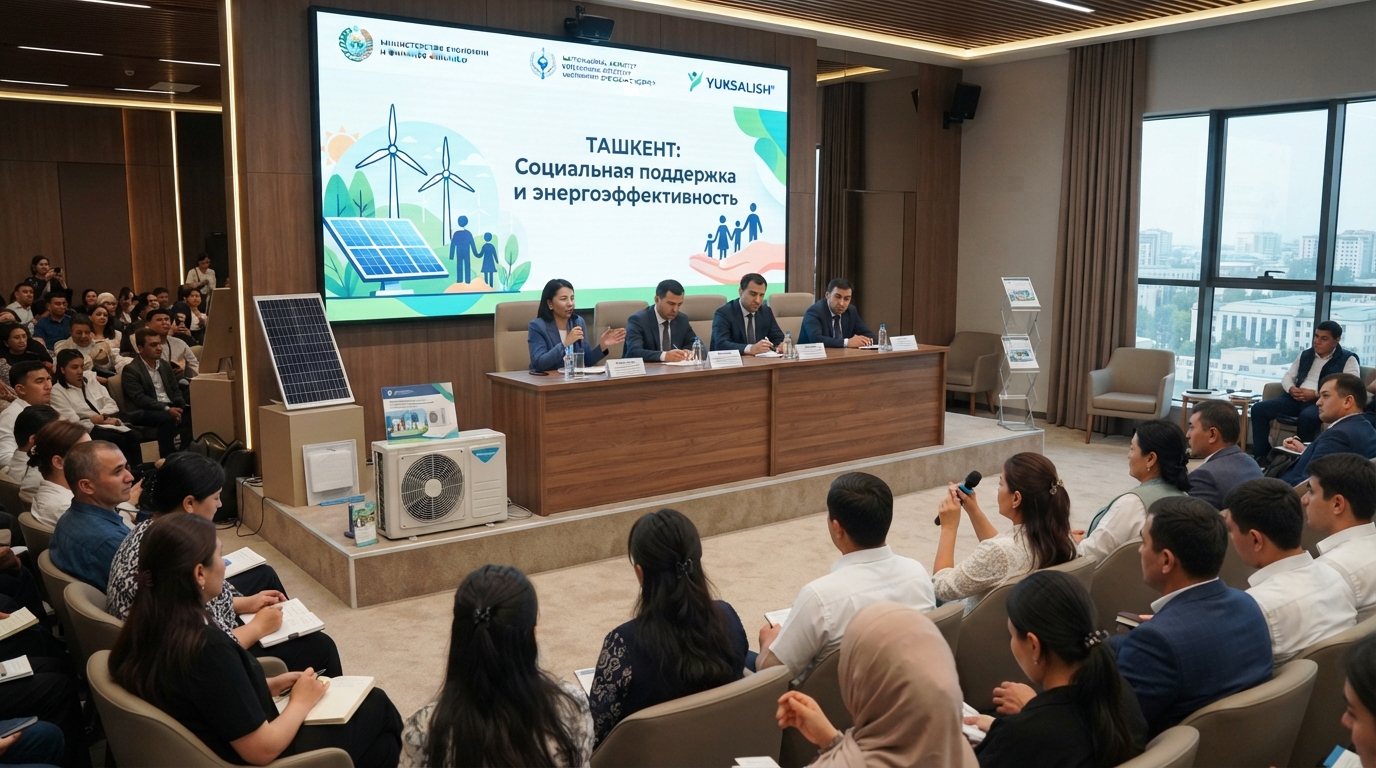
Social support for the population and improving energy efficiency were discussed in Tashkent
An information meeting was held in Tashkent dedicated to social support measures for the population during tariff reforms and opportunities for increasing energy efficiency. Participants reviewed current mechanisms for compensating electricity and natural gas expenses, proposals to expand social assistance to families in need, as well as state subsidies for the implementation of energy-saving technologies.
The event took place with the participation of the Project Office "Center for Green Economy Projects" under the Ministry of Economy and Finance of the Republic of Uzbekistan, the National Social Protection Agency under the President of the Republic of Uzbekistan, the National Energy Efficiency Agency under the Cabinet of Ministers, and the "Yuksalish" Movement. Representatives of government agencies, non-governmental non-profit organizations, businesses, and the mass media attended the meeting.
Madina Azizova, Chief Specialist of the National Social Protection Agency, presented information on current support measures for families in need, the procedure for providing compensation for electricity and natural gas, as well as proposals to expand the coverage of social assistance.
According to the presented data, 156.6 billion soums were allocated for compensation payments in 2025 and the first nine months of 2026. More than 470 thousand families received support. Currently, compensation amounts to up to 37.5 thousand soums per month for electricity and from 135 to 225 thousand soums for natural gas, depending on the season.
Participants paid special attention to social protection measures for the autumn-winter period of 2026–2027. Among the voiced proposals were a one-time financial aid payment of 1 million soums for 1 million 17 thousand families, an increase in the income criterion for receiving compensation from 1.5 to 2 times the minimum consumer expenditure, and expanding social assistance coverage to an additional 166 thousand families.
They also discussed extending the period for providing compensation for electricity and natural gas until April 1, 2028, supporting expenses for the purchase of coal and liquefied gas, as well as increasing the basic electricity consumption allowance from 200 to 350 kWh during the heating season in areas with no or limited gas supply.
Obid Ahmedov, Head of Department at the National Energy Efficiency Agency, spoke about current financial incentive measures for the adoption of energy-saving technologies by the population and entrepreneurs.
Among the provided support measures are full reimbursement of expenses for conducting energy audits of residential premises, a 20% compensation for the cost of solar panels, and up to 40% of the cost of heat pumps. Incentive mechanisms for implementing renewable energy sources and conducting energy audits are also provided for enterprises.
Shokhijakhon Khurramzoda, Head of Department at the iCRAFT Project Group, implemented with the participation of the World Bank, also took part in the discussion. He noted the importance of interaction between government bodies, civil society, and other stakeholders to increase the effectiveness of social support measures and promote energy-efficient solutions.
During the meeting, participants were able to ask questions to representatives of state departments, discuss practical difficulties in obtaining social assistance, and exchange proposals for improving existing support mechanisms.
Following the event, the need to further inform the population about government programs, expand access to energy-efficient technologies, and strengthen cooperation between the state, civil society, and business was emphasized.
The organizers noted that raising citizens' awareness of available support measures and energy-saving opportunities is of key importance for improving the population's well-being and developing Uzbekistan's green economy.