

"Smart" video surveillance systems that detect drowning and dangerous situations will be installed in reservoirs
Artificial intelligence systems will be introduced at reservoirs in Uzbekistan to monitor water levels online and detect drownings and hazardous situations in real time. Additionally, an urgent warning mechanism via sirens and SMS will be launched.
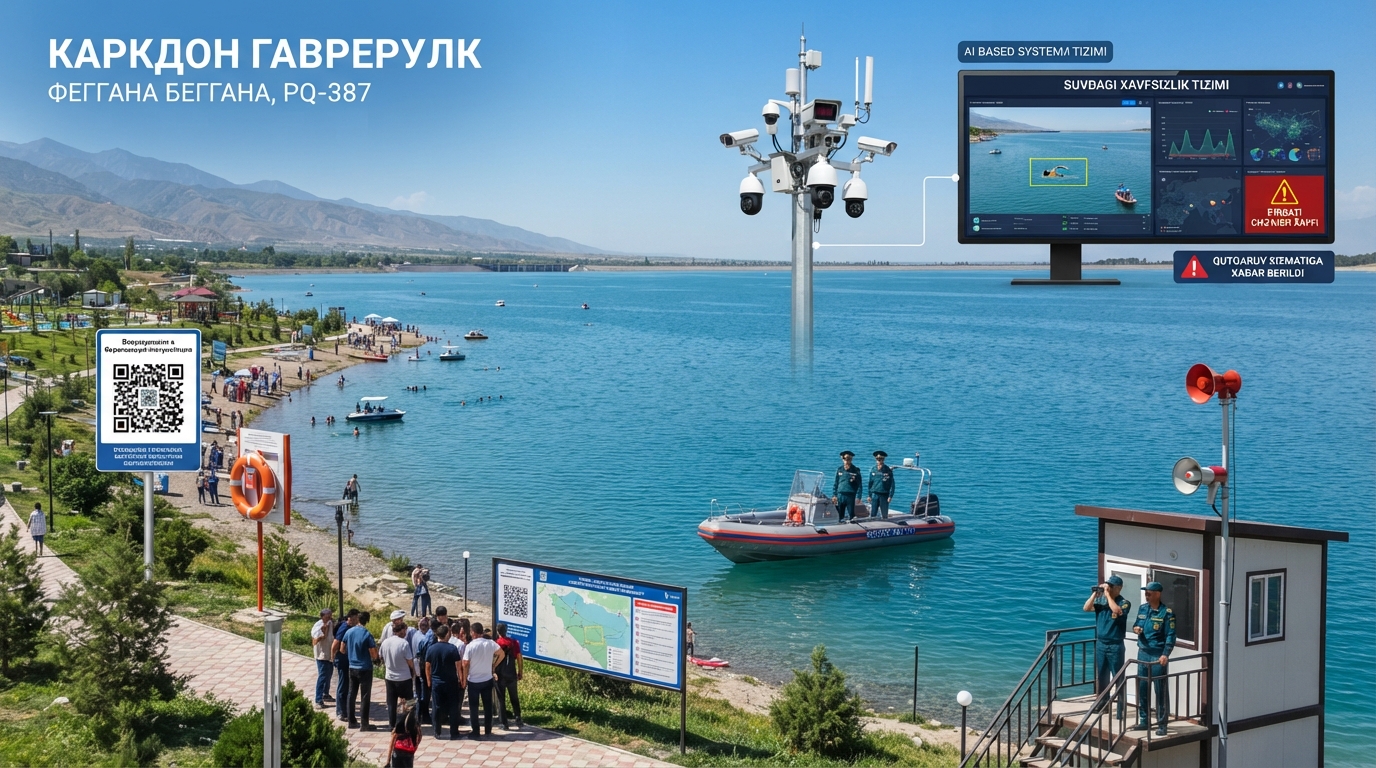
“Smart” video surveillance systems detecting drowning and dangerous situations to be installed at reservoirs
On October 27, a presidential decree [PD-387] was adopted in Uzbekistan, aimed at ensuring safety and digitalizing processes in reservoirs and their adjacent territories.
According to the document, "smart" systems based on artificial intelligence and video surveillance technologies will be installed at tourism facilities around reservoirs. This system will detect drowning hazards, entry into prohibited areas, and dangerous crowds of people in real-time, automatically sending alerts to rescue services.
Additionally, equipping tourism facilities with rescue boats, watchtowers, local wastewater treatment facilities, and QR-code evacuation maps has been made mandatory. Sirens, voice warning devices, and an SMS notification system will be introduced to warn the population and tourists about emergency situations.
Furthermore, a special rescue detachment of the Ministry of Emergency Situations will be established in the area of the Karkidon reservoir in Fergana region, with 36 staff positions allocated to it starting from 2027.
By June 1, 2027, a unified electronic information system for online monitoring of water levels and hydrological conditions at reservoirs, as well as early detection of emergency situations, will be launched.
This system will aggregate and process data from weather stations, automatic sensors, and geoinformation data. In the event of a sharp change in water levels or a threat to dam safety, artificial intelligence algorithms will forecast the risk in advance and alert the relevant services.
Meanwhile, the Committee for Sanitary-Epidemiological Welfare and Public Health will continuously monitor water quality in reservoirs and input the indicators into an automatic diagnostic and control system.
Earlier, we reported that vacant lands around reservoirs in Uzbekistan would be put up for auction for the construction of tourism facilities, and tax and customs privileges would be granted to entrepreneurs who establish tourism activities around reservoirs.