

September 8 – the day the foundation for New Uzbekistan and the Third Renaissance began to be built!
The article highlights the reforms that began in 2017 and their impact on the state, society, and human life.
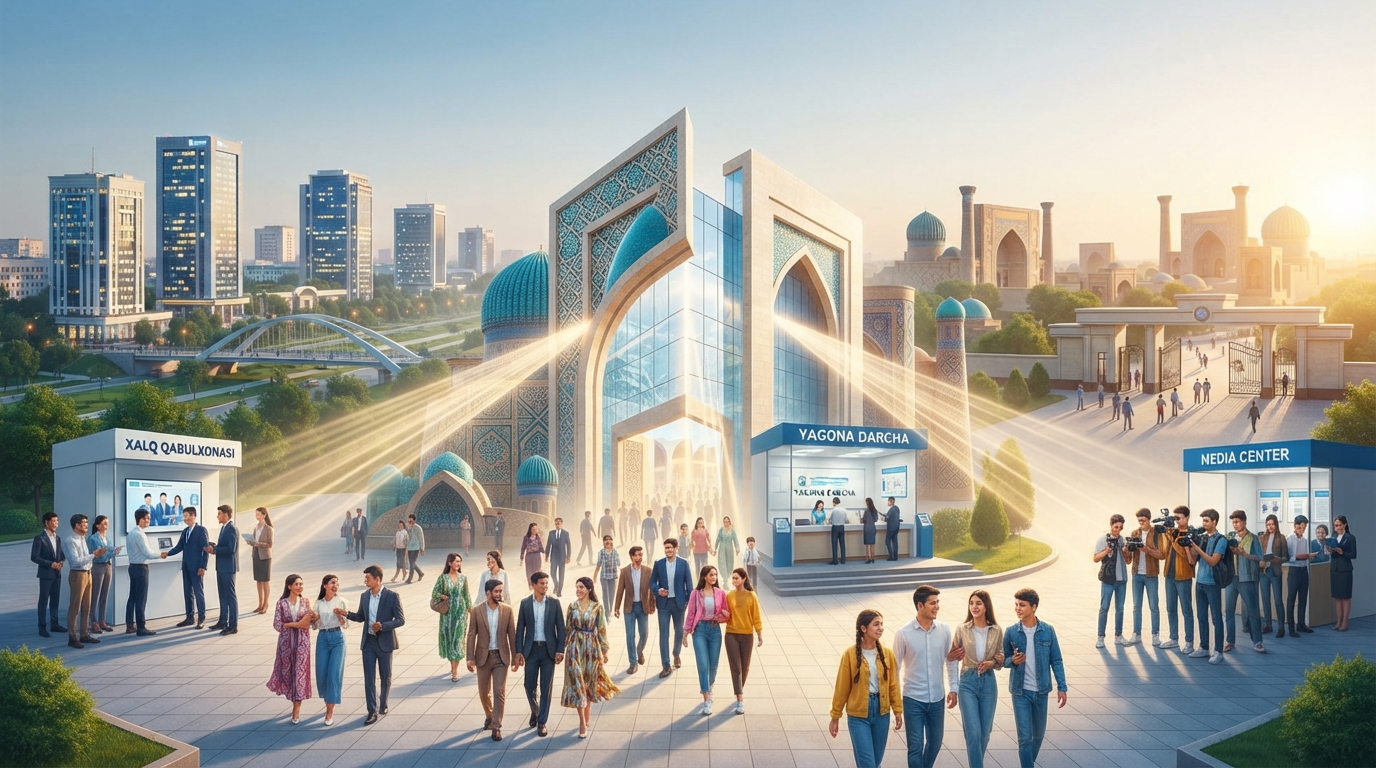
September 8 — the date when the foundation for New Uzbekistan and the Third Renaissance began to be built!
Radical changes started very quickly
On September 8, 2016, Shavkat Miromonovich Mirziyoyev was approved as the Acting President of the Republic of Uzbekistan at a joint session of the chambers of the Oliy Majlis. He won the election for the post of President of the Republic of Uzbekistan held on December 4, 2016, with 88.61 percent of the vote and was elected President. He officially took office on December 14, 2016.
At that time, many of us had various thoughts, wondering what the new leader could give to the people. However, as soon as Shavkat Mirziyoyev began taking his first steps as Acting President, sweet dreams began to awaken again in the hearts of our people, whose hope for a prosperous life had faded in the period leading up to 2016.
The reason was that as soon as Shavkat Mirziyoyev was elected to the post of Acting President, he immediately went to the regions and directly communicated with ordinary people and representatives of various professions, became more widely acquainted with local achievements and shortcomings, as well as existing problems, and listened to people's opinions. During the election campaign, as a presidential candidate, he presented a completely new and people-oriented program to the voters.
Based on the pre-election program and the proposals made by the population during direct meetings with the people, the "Strategy of Actions on Five Priority Areas of Development of the Republic of Uzbekistan in 2017-2021" and, within its framework, the State Program for 2017, "The Year of Dialogue with the People and Human Interests," were developed under the leadership of the President. That is, the people became the real creator and co-author of the Action Strategy and the State Program for 2017, participating directly in their creation! This was huge news for our people, who until then had been accustomed to the state making decisions as it saw fit without involving them!
Thinking about the activities of President Shavkat Mirziyoyev in 2016-2017, one circumstance amazes me. From September 8, 2016, he immediately launched measures for the radical reconstruction of the country. In my view, the new leader deeply felt that our society had reached a dead end, and for many years he had been maturing in his mind the ideas, thoughts, and reflections on how to quickly change it, which were later recognized as the "Strategy for Building New Uzbekistan" and "Creating the Foundations of the Third Renaissance."
Otherwise, upon coming to the leadership of the state today, he could not have immediately started such thoroughly thought-out and radical reforms aimed at bringing the development of society to a completely new level...
Restoring the people's trust in the state was extremely important...
Yes, indeed, restoring the people's trust in the state, which had been lost in the period leading up to 2016, was an extremely important task. Therefore, in New Uzbekistan, the idea "Everything for the human being, for his dignity" was defined as the main criterion of state policy.
In 2017, the most important measure to restore public trust in our country was the declaration of the year as "The Year of Dialogue with the People and Human Interests" and the adoption of a special State Program in this regard.
To regain trust, it was very important to establish a direct dialogue between the people and the state. For this purpose, first, the Virtual Reception of the President of the Republic of Uzbekistan and People's Receptions on the ground were established. This system dramatically increased trust in the state by quickly resolving the population's problems that had accumulated over the years.
Due to the fact that for many years the people had been separated from state bodies, and ministries and agencies had worked without considering the interests of the population, the number of appeals to them was very high. In particular, in 2017, more than 1.4 million appeals from physical and legal entities were received by the Virtual Reception of the President of the Republic of Uzbekistan and People's Receptions. Of these appeals, 1 million 338 thousand were resolved on their merits, more than 919 thousand were satisfied, and legal explanations were provided for more than 418 thousand.
The significance of the Virtual Reception and People's Receptions was very great. First of all, they established direct contact between the people and state bodies. As a result, every citizen had the opportunity to convey their problem to the highest leadership without bureaucratic obstacles. The receptions began to systematically resolve the problems that had accumulated until then. Thousands of issues that had been pending for many years were resolved positively. Executive control was strengthened. That is, the responsibility of ministries and agencies in working with applications and complaints was sharply increased, and personal liability was established for violations of the law.
The Address to the Oliy Majlis was introduced
On December 22, 2017, the President of the Republic of Uzbekistan delivered his first Address to the Oliy Majlis. The significance of the President's Address to the Oliy Majlis, introduced into the life of our country from that year, is very great. First of all, the President's Address is the most important strategic and program document that determines the directions of the political, economic, and social development of the country.
This is because it outlines the main tasks of the country's domestic and foreign policy in the near and long term, and based on the ideas and initiatives put forward in the document, the state program for the coming year, legislative acts, sectoral and regional strategies are developed. Important legislative initiatives are put forward for the legal regulation of urgent areas in the country.
The Address places a huge responsibility on the executive branch, state bodies, and officials. It serves as a transparent and open platform that clearly shows the future development directions of Uzbekistan to the population, the international community, and investors, and serves to ensure openness and transparency of governance.
The Public Services Agency was established
In restoring public trust in state bodies, the radical renewal of the public services delivery system was of revolutionary importance. That is, in order to facilitate citizens' communication with state bodies, the Public Services Agency was established under the Ministry of Justice.
As a result, the population now had the opportunity to resolve matters, which they previously spent months running around dozens of organizations and offices to complete, at the "single window" centers of the Public Services Agency, i.e., in one place and in a short time. This eliminated corruption risks and simplified documentation processes to the maximum extent.
The "single window" principle ensured transparency and speed in processing documents. For example, the process of registering business entities, obtaining licenses, and assigning social benefits was reduced from several days to several minutes.
Thanks to this innovation, the level of satisfaction of the population with state bodies changed in a positive direction. That is, the increase in the quality of public services and the reduction of execution times restored the population's trust in the government system in a short period and brought it to a high level.
The mass media turned to the people
Starting from 2017, President Shavkat Mirziyoyev began to implement radical changes in ensuring open dialogue with citizens in all spheres and at any level, as well as the freedom of the mass media, paying great attention to the media becoming the "fourth estate" in the true sense of the word.
One of the greatest achievements in this regard was the abolition of the censorship system. That is, the atmosphere of absolute closedness and censorship that existed in the media space of Uzbekistan until 2017 was abolished. In its place, an atmosphere of healthy and open debate was created.
Under the direct personal initiative and leadership of the President, the attitude towards the press and its employees in society was radically changed. The media began to write fearlessly about the real problems existing in society, the shortcomings of the executive branch, organizations, and agencies, as well as cases of corruption. Government representatives began to pay special attention to the publications of the mass media and appeals to them.
Using international experience, national media centers were established in Uzbekistan, and they began to play an important role in the life of society. In particular, platforms for live direct dialogue, such as the International Press Club (IPC), were opened. In the IPC, the practice of senior leaders, ministers, and khokims openly answering questions in front of the people was established.
In the previous period, there was no right to freely obtain information. This right was restored. Access to foreign and local information resources, which had been technically blocked in the period leading up to 2016, was restored.
The state created the necessary conditions for the growth of the blogging movement. As a result, they became an active monitoring force in the life of society, and a system was established for state bodies to quickly study and respond to their publications.
The people began to participate in decision-making
In building a mature society, ensuring that citizens can freely express their opinions is not enough. The participation of the broad masses of the people in the preparation and adoption of state decisions is very important.
Therefore, starting from 2017, a radical reorganization of public control activities began. The legal basis for non-governmental non-profit organizations was re-developed, wide opportunities were created for their activities, and they were recognized as the main partner of the state in the implementation of social programs.
True, it must be admitted that the portal for public discussion of draft regulatory legal acts (regulation.gov.uz) was launched back in 2015. However, many did not know about the existence of this portal, and those who did did not trust it and did not use it. Because it was a useless exercise, and the portal was established merely for show. That is, the people did not participate in the preparation and discussion of regulatory documents. Everyone had already become accustomed to this, and it had become a common occurrence.
Therefore, in 2017, appropriate preparations were made to correct this shortcoming, and on July 24, 2018, a radically updated version of the portal with wide capabilities was launched. Thus, citizens gained the opportunity to make proposals to draft regulatory documents being prepared and to influence the content of the law.
The activity of the mahalla system reached a new level
The institution of mahalla has existed in our society since ancient times, and it is a unique self-governing system that has been tested and refined over a long period of time.
Starting from 2017, the role of mahallas in society was further strengthened. In this regard, Decree No. PF-4944 of the President of the Republic of Uzbekistan "On measures to further improve the mahalla institution," signed on February 3, 2017, was of great importance.
From 2017, the mahalla institution began to take a central place in organizing social protection and providing targeted support to the population. Mahalla chairpersons and activists were given broad powers to work in a targeted manner with low-income families, women, and youth in the area, and to involve them in entrepreneurship.
Their role in cooperating with state bodies was also increased. In particular, mahallas were turned into an important link of public control evaluating the activities of regional internal affairs, employment, and healthcare institutions.
The judicial-legal and human rights protection system changed radically, the "black list" was abolished
Starting from 2017, a path was taken towards implementing radical changes in the judicial-legal system and the protection of human rights. That is, work began to ensure judicial independence and restore the criteria of justice. Reforms in this area were also directed towards protecting human honor and dignity.
The pronouncement of acquittal verdicts, which had hardly been observed for many years, was established. Hundreds of citizens were cleared of unjust charges, and their honor and rights were restored. The rejection of unlawful evidence began. A procedure was introduced to not recognize in court evidence obtained under torture or pressure during the investigation process.
Separate criminal liability was established for falsifying (fabricating) evidence. It was made mandatory to equip pre-trial detention centers (SIZO) and special reception centers with video surveillance devices. Lawyers were given the right to collect and present evidence in criminal cases, and it was made mandatory for this evidence to be verified by the court.
The beginning of the abolition of "black lists" and social tolerance in our country from 2017 went down in history as one of the greatest steps restoring the state's trust in its citizens.
Based on the principles of social and religious tolerance, the process of removing citizens who had mistakenly joined religious-extremist movements from special control, i.e., the "black lists" in popular parlance, began in 2017. In that year alone, about 16,000 out of 17,000 people on the list were removed from control.
Restrictions in the religious sphere were eased, freedoms of religious education and worship were expanded, which strengthened religious tolerance and interethnic harmony in society. The penitentiary system began to be radically reformed in accordance with human rights and international standards.
The liberalization of the economy and monetary policy began
One of the revolutionary changes implemented in restoring the population's trust in state bodies and ensuring transparency in the economy was the liberalization of economic freedom and monetary policy.
Starting from 2017, huge freedoms were granted to entrepreneurs. In particular, entrepreneurs gained the opportunity to purchase raw materials and modern technologies from abroad without any artificial barriers.
Business support and tax reforms also made a huge contribution to restoring the population's trust in state power. In particular, a moratorium on inspections was established. That is, unjustified inspections of the activities of business entities were stopped. Unscheduled inspections, which were a hotbed of corruption, were abolished. The customs and tax systems were simplified. The number of documents required for export-import operations was reduced. "Green corridor" systems were introduced, ensuring a several-fold increase in foreign trade turnover.
From September 5, 2017, the convertibility of the soum began. This measure was of great importance in restoring the population's trust in state power. Because long-standing inappropriate restrictions on the purchase and sale of foreign currency were abolished. Investment attractiveness increased. The opportunity for free repatriation of profits (taking them to their home country) was created for foreign investors, which dramatically increased the flow of foreign capital into the country.
Foreign policy also changed towards human interests
Another radical turn implemented in restoring the population's trust in the state was carried out in the field of foreign policy. That is, the process of abolishing the "closed system" that had been in force in Uzbekistan for many years and "opening up to the world" also began precisely in 2017.
This created great conveniences for the population in daily life, travel, entrepreneurship, and labor activity. In particular, borders were opened, and opportunities for free interstate movement were created for everyone.
The system of traveling abroad and visas was simplified. In particular, the exit permit (red sticker) was abolished, and a modern biometric passport for traveling abroad (red passport) was introduced. The number of countries that can be visited without a visa increased. That is, systems for visa-free entry or obtaining a simplified electronic visa to many countries of the world were established for citizens of Uzbekistan.
In foreign policy, great attention was paid to strengthening relations with neighboring countries. For this purpose, President Shavkat Mirziyoyev put forward the "Good Neighborliness" doctrine. This started a new era in relations with neighboring countries.
The strengthening of relations with Central Asian states was also very beneficial for the population of these countries. In particular, border posts with Kyrgyzstan, Tajikistan, and Turkmenistan, which had been closed for years, were opened. Millions of people gained the opportunity to visit their relatives and move freely.
In general conclusion, the reforms started by Shavkat Mirziyoyev from the very first days of his coming to the leadership of the state, especially the radical changes implemented in 2017, began to completely change the political, economic, and social face of Uzbekistan.
The adoption of the Action Strategy, which had a revolutionary character, and its consistent implementation started an era of revolutionary renewals of a strategic nature. As a result, not only the worldview of our country but also of our people changed, and the lost trust of the people in state bodies began to be restored again.
The radical reforms started in 2017 created a sense of involvement of citizens in their country and their own destiny, awakening society from a long sleep. It paved the way for Uzbekistan to take its place among democratic, legally, and economically developed countries, and was engraved in history as the year when the era began in which human dignity is glorified, the civic voice has become a force of progress, and the people's trust in their state has been restored.
The results of the radical reforms implemented during one year indicate that just as our great ancestor Temur once laid the foundation for the Second Renaissance, President Shavkat Mirziyoyev also essentially started creating the foundation of the Third Renaissance and building New Uzbekistan from September 8, 2017! Therefore, it is precisely this date that went down in history as the day when the creation of the foundation of New Uzbekistan and the Third Renaissance began!