

Scientists have revealed which country is the safest in the event of a global catastrophe
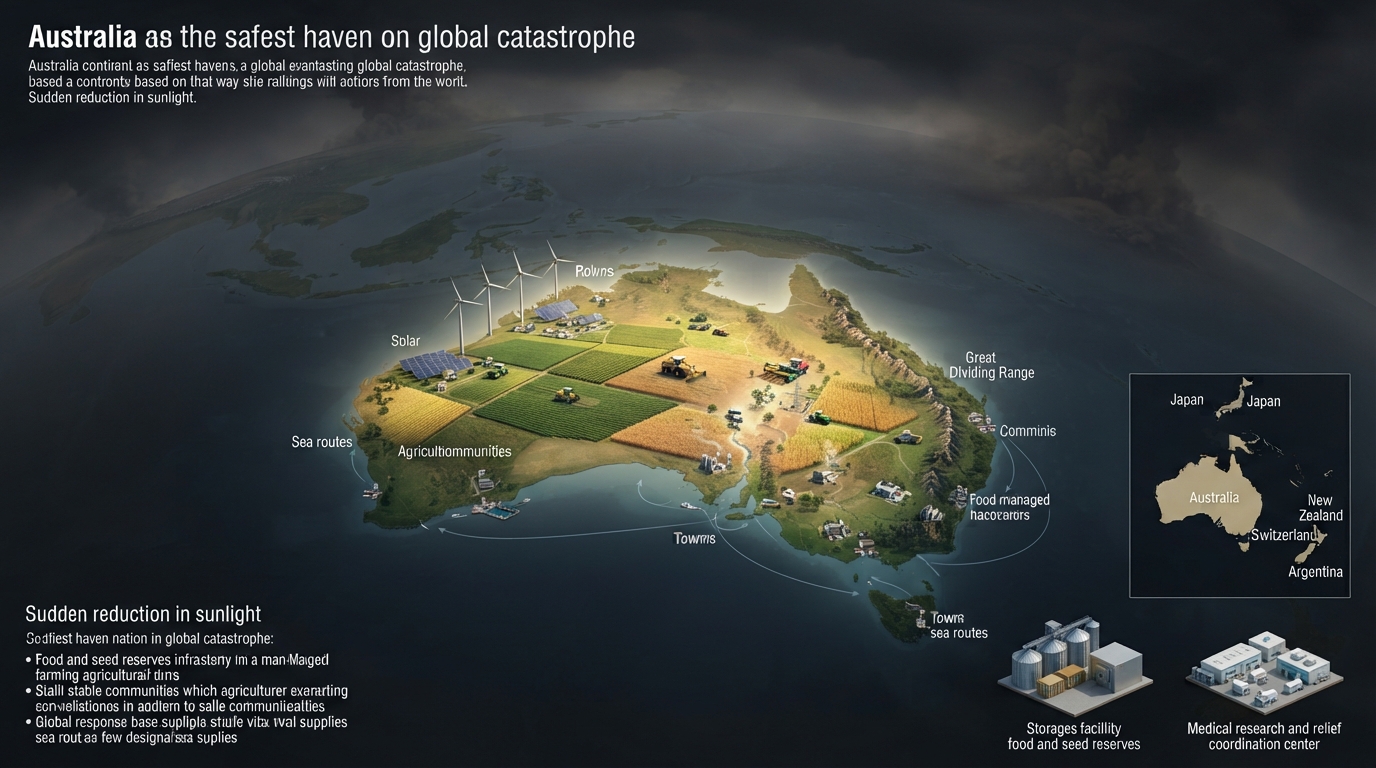
Scientists have identified the safest country in the event of a global catastrophe.
Science fiction and films often depict life after terrible global catastrophes. Experts believe that such events are likely to occur in real life. Therefore, an international team of scientists studied which countries have the best chance of survival in the event of a catastrophe on Earth.
The study considered events that would kill at least 10 percent of the world's population over a period of months or years to be global hazards. The authors divided these hazards into three main categories:
**Sudden reduction in sunlight**
A powerful volcanic eruption, nuclear war or asteroid impact on the planet could block sunlight. This would lead to a sharp cooling, climate change and a decrease in productivity, as well as a serious blow to international food trade.
**Complete infrastructure collapse**
A nuclear explosion, a powerful geomagnetic storm, or a global cyberattack could cause a long-term blackout. Since almost all manufacturing and agriculture rely on electricity, this would disrupt social systems and drastically reduce food supplies.
**Global biological threats**
A highly contagious and deadly infection could kill hundreds of millions of people. As a result, a shortage of labor would lead to famine, and the health system would collapse.
**Which countries are the most resilient?**
The researchers also looked at the ability of countries to recover and become self-sufficient after such a major shock. Factors such as strong state control, population well-being, developed industry, geographical isolation from other regions, and low dependence on foreign trade were taken into account.
According to the final conclusion, Australia was found to be the most stable and secure country in the world. Its main advantages are its remoteness from other continents, developed agriculture and high industrial potential. However, Australia cannot be called completely perfect either. As a result, the country is heavily dependent on imports of fuel, medicines and mineral fertilizers.
The list of countries with a high chance of survival during a global disaster also includes New Zealand, Japan, Switzerland and Argentina. However, most of these countries are located in seismically active zones and, due to the length of their coastlines, may be at risk of a strong tsunami.
According to experts, in the event of global disasters, it is these countries that can become centers for storing food and seed reserves for all humanity, as well as bases for international measures against global disasters.